 lop News
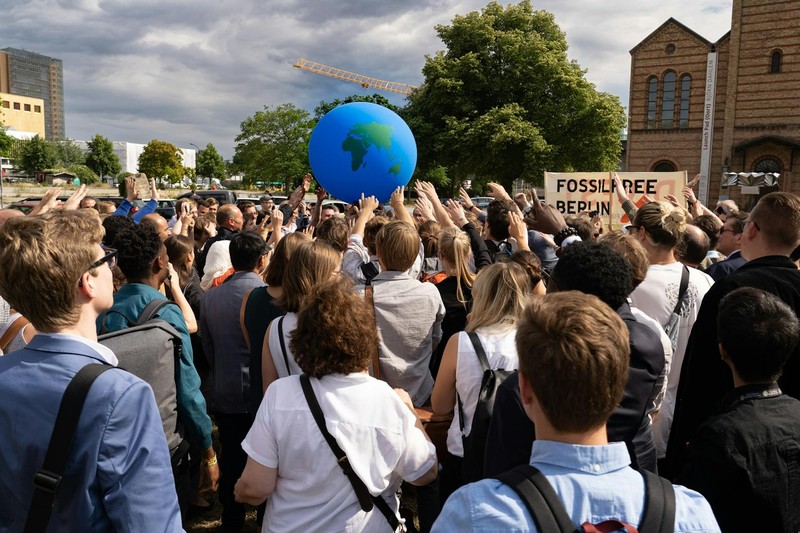
Thirty-four years of climate negotiations. Zero formal discussions on how to phase out fossil fuel production. That streak broke in April, when 57 countries gathered in Santa Marta, Colombia, for the first summit dedicated to planning the end of coal, oil, and gas.
The meeting was born out of frustration. At COP30 in Belém, Brazil last November, roughly 80 nations pushed for a formal “roadmap” away from fossil fuels. Major oil-producing nations blocked it. The consensus-based UN process, where every country holds an effective veto, had once again produced deadlock on the single largest driver of climate change.
Colombian environment minister Irene Vélez Torres and Dutch climate minister Stientje van Veldhoven responded by organising something unprecedented: a summit outside the COP framework, open only to countries willing to discuss the transition in concrete terms.
A Deliberate Guest List
The US, China, India, and Russia were not invited. Vélez Torres told journalists the hosts wanted to avoid a rehashing of lengthy COP30 debates and sought countries that had demonstrated a genuine willingness to engage. Some attendees backed the approach. Panama’s climate representative Juan Carlos Monterrey Gómez told journalists it was the “right decision”, adding: “This first meeting had to be done with those that wanted something to be done.”
Others were less sure. UK climate envoy Rachel Kyte said China should feel “welcome to be here”, adding: “China has to be part of this equation for multiple reasons.” One veteran observer told Carbon Brief the hosts had been “overly cautious”, noting that countries like Indonesia — which have active energy transition programmes — were absent.
The 57 participating countries represent roughly one-third of the global economy and one-fifth of fossil fuel supply, according to the Colombian government and Carbon Brief’s reporting. Several are oil producers themselves, including Nigeria, where minister Abubakar Momoh told the summit that the question is “not whether extraction should decline, but how to organise it so it is manageable, fair and politically viable”.
What Actually Came Out
The summit produced three voluntary workstreams. The first focuses on developing national and regional roadmaps away from fossil fuels, tied to countries’ existing UN climate plans and supported by a newly launched science panel. The second addresses financial reform — identifying fossil fuel subsidies and tackling debt traps that keep developing nations dependent on extraction. The third targets fossil-fuel-intensive trade, with backing from the OECD.
Nothing is binding. The organisers were explicit that Santa Marta is not a replacement for COP but a complement — a space for frank conversations without the pressure of formal negotiation. Delegates described the closed-door format, where ministers and civil society members sat in circles without laptops, as “refreshing” and “groundbreaking”.
Tuvalu and Ireland will co-host the next summit in 2027.
The Physics Behind the Diplomacy
Prof Johan Rockström of the Potsdam Institute told the BBC that the world is on track to breach the 1.5°C warming threshold within three to five years. “Breaking through 1.5C means we enter a far more dangerous world — with more frequent and intense droughts, floods, fires and heatwaves,” he said.
Meanwhile, conflict in the Middle East has pushed up oil prices, reinforcing the energy security argument. Rockström noted that European demand for electric vehicles has spiked — a market response to volatility, not a policy choice.
Colombia itself illustrates the gap between ambition and reality. Under President Gustavo Petro, the country banned new oil exploration and launched a $2 billion solar programme. Solar and wind’s share of the energy mix rose from 2% in 2022 to 17% in 2026, according to government figures. In 2025, coffee exports overtook coal exports for the first time.
Yet oil and gas still account for 30% of Colombia’s exports and 4% of GDP. Economist Tomas Gonzalez told El Tiempo that oil revenues bring in nearly $15 billion annually for a country running a deficit.
The Hard Part Starts Now
Santa Marta’s conclusions will feed into Brazil’s informal fossil fuel roadmap ahead of COP31 in Turkey this November. Whether that roadmap carries weight depends on whether the coalition of 57 can grow — and whether the world’s largest producers and consumers can be drawn into a conversation they deliberately weren’t invited to this time.
After three decades of negotiators circling the question, a group of nations has finally agreed to sit in a room and discuss the answer. The meeting itself may prove more significant than anything it produced.
Sources
- First ever talks to ditch fossil fuels as UN deadlock deepens — BBC News
- Santa Marta: Key outcomes from first summit on ‘transitioning away’ from fossil fuels — Carbon Brief
- High-level talks begin on moving away from fossil fuels at Colombia conference — Associated Press
- Colombia hosts climate talks in bid to lead global transition away from fossil fuels — France 24
Discussion (10)