 lop News
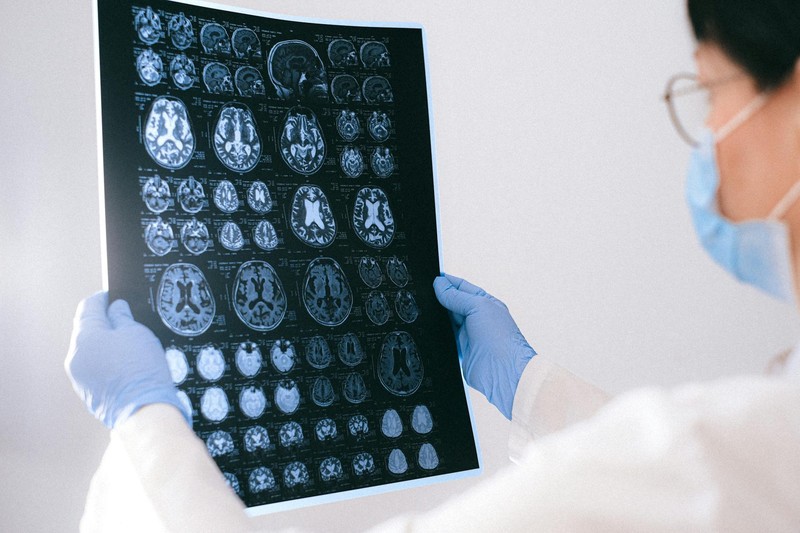
Every stroke treatment in modern medicine shares the same strategy: race the clock. Clot-busting drugs, surgical interventions, blood pressure management — all of it aims to limit damage before brain tissue dies. None of it tries to fix what’s already broken.
A study published in Nature Communications may represent the first break in that paradigm. Researchers at UCLA Health have identified a drug that appears to repair brain connections destroyed by stroke — not by preventing further cell death, but by reversing the neural disconnection that leaves millions disabled long after the initial attack.
The drug, called DDL-920, restored significant movement control in laboratory mice that had suffered strokes, reproducing the effects of physical rehabilitation in pharmaceutical form.
“The goal is to have a medicine that stroke patients can take that produces the effects of rehabilitation,” said Dr. S. Thomas Carmichael, the study’s lead author and professor and chair of UCLA Neurology.
The Scale of the Problem
Stroke is the leading cause of adult disability. The reason is brutally straightforward: brains do not regrow destroyed tissue, and the only treatment available for post-stroke recovery — physical rehabilitation — is only modestly effective. Most patients simply cannot sustain the intensity of therapy needed for meaningful improvement.
“Rehabilitation after stroke is limited in its actual effects because most patients cannot sustain the rehab intensity needed for stroke recovery,” Carmichael said.
While cardiology, infectious disease, and oncology have all built deep pharmacological arsenals, stroke recovery still relies on a physical medicine approach that has remained fundamentally unchanged for decades. Carmichael puts it plainly: “We need to move rehabilitation into an era of molecular medicine.”
How the Brain Disconnects After Stroke
To understand what DDL-920 does, it helps to understand what a stroke actually does beyond the immediate damage at the injury site.
Carmichael’s team discovered that stroke does not just kill neurons where the blockage or bleed occurs. It also severs connections between brain cells far from the damaged area — a kind of remote neural isolation. Brain regions that should fire in concert to produce coordinated movement simply stop communicating.
The researchers pinpointed the problem in a specific cell type: the parvalbumin neuron. These neurons generate gamma oscillations — rhythmic electrical patterns that synchronize groups of neurons into functional networks. Think of gamma oscillations as the brain’s metronome, keeping different neural ensembles firing in time so they can produce coordinated behavior like walking or reaching for a cup.
When stroke disrupts parvalbumin neurons, the metronome goes silent. The brain loses the electrical synchrony needed for coordinated movement.
Physical rehabilitation works — to the extent it does — partly by restoring these gamma oscillations. Carmichael’s team confirmed this in both mice and human stroke patients undergoing therapy: successful rehabilitation brought gamma oscillations back and repaired parvalbumin neuron connections.
The Drug as Rehabilitation in a Pill
DDL-920 takes a more direct route. Rather than requiring months of grueling physical therapy, the drug directly stimulates parvalbumin neurons, restoring gamma oscillations and the neural coordination they support.
The UCLA team identified two candidate drugs designed to excite parvalbumin neurons. One of them — DDL-920, developed in the UCLA lab of Varghese John, a co-author on the study — produced significant recovery in movement control. The drug effectively mimicked the central mechanism of physical rehabilitation, but without the therapy itself.
What Comes Next
The results are compelling, but the caveats are real. DDL-920 has demonstrated efficacy in mice, not humans. The path to any treatment runs through extensive further studies to establish safety and efficacy before clinical trials in people could even begin.
The study’s significance extends beyond a single compound. By identifying the specific neural circuit — parvalbumin neurons and the gamma oscillations they produce — the UCLA team has given stroke researchers something they have never had: a concrete molecular target for recovery. Drug development for stroke rehabilitation now has a mechanism to aim at, which is more than the field had yesterday.
Discussion (9)