 lop News
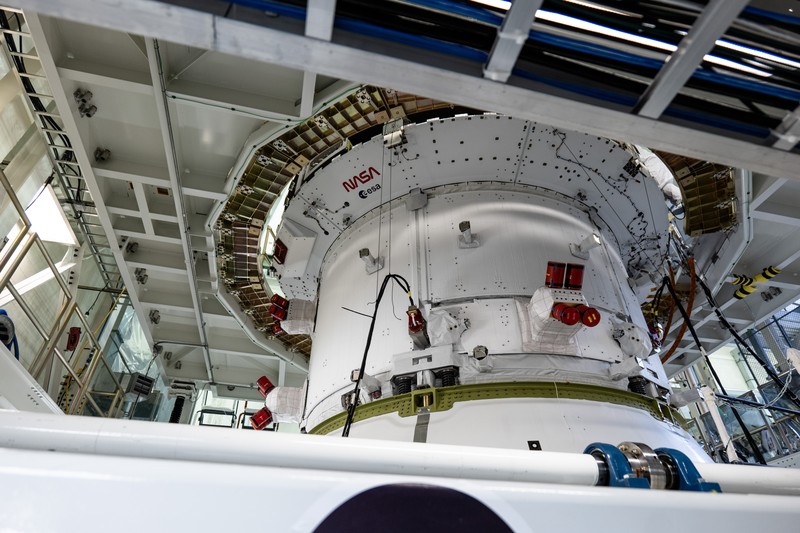
The most powerful spacecraft ever built by human hands is hurtling toward the Moon at thousands of miles per hour, and its commander’s first call to Mission Control was a tech support ticket.
“I also see that I have two Microsoft Outlooks and neither one of those are working,” Commander Reid Wiseman reported to Houston on Thursday, as captured on NASA’s Artemis livestream and quickly shared across social media. The problem — instantly recognizable to anyone who has ever sat in a cubicle — required Mission Control to remotely access Wiseman’s Microsoft Surface Pro and reload his files. Artemis flight director Judd Frieling confirmed the fix at a press conference later that day, noting with the practiced calm of someone who has fielded this call before: “This is not uncommon. We have this on-station all the time.”
Somewhere between the absurdity and the competence lies the real story of Artemis II’s opening days: human, slightly messy, and so far remarkably smooth.
The View from 100,000 Miles
The Outlook glitch resolved, the crew turned to more consequential uses of their screens. On Friday, NASA released the first photographs taken from inside the Orion capsule, and they are extraordinary.
Wiseman captured Earth nearly eclipsing the Sun, framed by zodiacal light — a faint triangular glow caused by sunlight scattering off interplanetary dust particles. The planet’s night side is brushed by twin auroras, one at each pole, bleeding green into the black. Another image shows the terminator line, that sharp border between day and night, cutting across cloud-swept oceans and continents.
The crew is shooting with Nikon D5 DSLR cameras and handheld GoPros — some of the footage destined for a Disney and National Geographic documentary. They are also coordinating with NASA’s science team to identify additional photographic targets once they enter lunar orbit, according to Lakiesha Hawkins, acting deputy associate administrator for NASA’s Exploration Systems Development Mission Directorate.
As of midmorning Friday, the four astronauts were roughly 100,000 miles (160,000 km) from Earth, with another 160,000 miles to go before reaching the Moon.
No Space Sickness, One Jammed Toilet
The mission’s early days have been uneventful in all the ways that matter. None of the crew — Wiseman, Victor Glover, Christina Koch, and Canadian astronaut Jeremy Hansen — have experienced space adaptation sickness, according to Ars Technica. They have held routine medical conferences with Houston, spoken with their families at length, and sat for media interviews.
The only other hiccup, beyond Outlook, was a jammed toilet fan. The crew fixed it themselves.
For a program haunted by years of delays, budget overruns, and a hydrogen leak during the uncrewed Artemis I test flight, “uneventful” is a kind of triumph.
Half a Century Later
On Monday, the crew will make their closest approach to the Moon — between 4,000 and 6,000 miles above the lunar surface — before swinging around the far side. They will become the first humans to travel that far into deep space in more than 50 years, since Apollo 17 in 1972.
The Apollo astronauts brought back images that reshaped how humanity saw its home. The Artemis II photographs, captured with decades-better equipment, are already doing something similar — not because the view has changed, but because the audience has. These images will land in a world where anyone with a phone can see them within seconds.
Koch, the first woman to journey around the Moon, described the view in a video call with ABC News: “I knew that that is what we would see. But there’s nothing that prepares you for the breathtaking aspect of seeing your home planet both lit up bright as day and also the moon glow on it at night.”
Glover, the first Black astronaut to travel beyond low-Earth orbit, kept it simpler: “Trust us, you look amazing. You look beautiful. From up here, you look like one thing. Homo sapiens is all of us — no matter where you’re from or what you look like. We’re all one people.”
The Long Road Back
After the lunar flyby, Orion will use the Moon’s gravity to slingshot home. Splashdown is expected in the Pacific Ocean, off the coast of Southern California, on April 10.
Artemis II will not land on the Moon. That job falls to Artemis III, still years away. But this mission — ten days, four astronauts, a loop around a rock humanity hasn’t visited since 1972 — is the proof of life the entire program needed.
The spacecraft works. The crew is healthy. The photos are stunning.
And Outlook, after a brief intervention from Houston, works too.
Sources
- NASA did eventually solve Artemis II’s Outlook glitch — The Verge
- NASA’s Artemis II crew are quite the photographers. See what they’ve snapped so far — NPR
- As Artemis II zooms to the Moon, everything seems to be going swimmingly — Ars Technica
- Even Astronauts Need IT Help. Artemis II Faces Microsoft Outlook Login Issues — PCMag
Discussion (9)