 lop News
Firing squads, electrocution, and lethal gas are coming to federal death row.
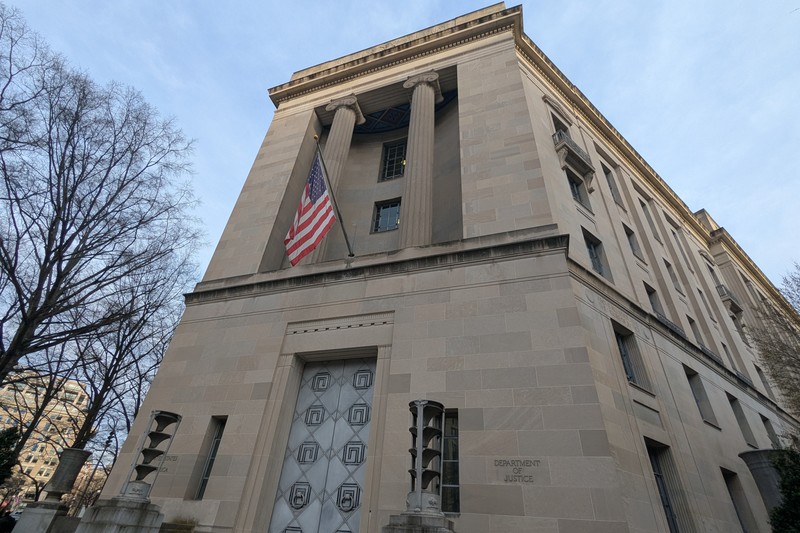
The Trump Justice Department announced on Friday that it will expand the methods available for executing federal prisoners beyond lethal injection, reinstating the pentobarbital protocol from the president’s first term while adding three alternatives that most developed nations abandoned long ago.
The policy reversal, detailed in a department report and press release, instructs the Bureau of Prisons to adopt execution methods “currently provided for by the law of certain states” — specifically firing squads, electrocution, and the nitrogen gas asphyxiation technique Alabama first used in 2024. The department said the expansion would ensure it is “prepared to carry out lawful executions even if a specific drug is unavailable” — a reference to the difficulty of obtaining lethal injection chemicals, as pharmaceutical companies refuse to sell them to prison systems, partly to comply with a European Union ban.
Acting Attorney General Todd Blanche framed the move as a corrective to the Biden administration, which imposed a moratorium on federal executions and, in its final days, commuted the death sentences of 37 of the 40 inmates on federal death row.
“The prior administration failed in its duty to protect the American people by refusing to pursue and carry out the ultimate punishment against the most dangerous criminals, including terrorists, child murderers, and cop killers,” Blanche said in a statement.
A first-term precedent
The announcement returns federal execution policy to the posture of Trump’s first term, when 13 federal prisoners were put to death by lethal injection in the administration’s final months — more than under any president in modern history, according to the Associated Press. That spree ended a nearly two-decade hiatus in federal executions.
The three men remaining on federal death row are among the most notorious defendants in recent American history: Dzhokhar Tsarnaev, convicted in the 2013 Boston Marathon bombing; Dylann Roof, who killed nine Black congregants at a Charleston, South Carolina, church in 2015; and Robert Bowers, convicted of killing 11 worshippers at Pittsburgh’s Tree of Life synagogue in 2018. None have received execution dates.
Blanche has already authorized seeking death sentences against nine defendants, including three MS-13 members accused of murdering a federal witness. The department said it has authorized seeking death sentences against 44 defendants in total.
Complications with every method
Lethal injection remains the most common execution method in the US, but it has a higher rate of botched procedures than most alternatives. Opponents argue that autopsies of prisoners executed with pentobarbital show evidence of pulmonary edema — suggesting the condemned may experience a sensation of drowning before death.
The Justice Department’s report dismissed the Biden-era assessment that “significant uncertainty” existed about whether pentobarbital causes unnecessary pain, arguing the prior administration “got the standard and the science wrong.”
The new methods carry their own complications. An autopsy of a prisoner executed by firing squad in South Carolina last year suggested none of the bullets struck his heart, prolonging his death, according to Al Jazeera. Brad Sigmon, convicted of murdering his ex-girlfriend’s parents, had chosen the firing squad because he feared the state’s alternatives — electric chair and lethal injection — would be more painful.
Alabama’s nitrogen gas asphyxiation, first used in 2024, has since been adopted by Arkansas, Louisiana, Mississippi, and Oklahoma. Five states currently allow firing squads: Idaho, Mississippi, Oklahoma, South Carolina, and Utah. Idaho is set to make firing squads its primary method in July.
A global outlier
The expansion places the United States sharply at odds with its allies. Approximately 141 countries have abolished the death penalty in law or practice, while roughly 55 retain it, according to data cited by Al Jazeera. All European nations except Belarus have abolished it. Canada and Mexico did so decades ago.
The countries that still regularly carry out executions include China, Iran, Saudi Arabia, and North Korea — company that American policymakers do not typically seek to keep, but that the data makes difficult to avoid.
The Death Penalty Information Center estimates that at least 202 people in the US have been exonerated after receiving death sentences since 1973, a statistic opponents cite as evidence of the practice’s irreversibility and unreliability.
The Justice Department’s announcement also includes plans to empower states to streamline federal habeas review of capital cases — which the department says could reduce the period between conviction and execution by years in state capital cases — and to restrict death-row inmates from submitting clemency petitions until their direct appeals and first collateral challenges are exhausted.
Legal challenges to the expanded methods are all but certain. But the US Supreme Court has never found an adopted execution method to be unconstitutional, and the current court’s conservative majority offers the administration little reason to expect that streak to end.
Sources
- The Justice Department Takes Actions to Strengthen the Federal Death Penalty — US Department of Justice
- Justice Department to allow firing squads for executions in move to ramp up capital punishment — Associated Press
- Justice Department is bringing back firing squads in federal executions — NBC News
Discussion (9)