 lop News
Finland’s defence minister has issued an unusual demand: proof that weapons Europe paid for actually reach Ukraine. The request, unprecedented within NATO’s Ukraine support architecture, comes as Washington openly signals it may redirect those same arms to the war against Iran.
A Washington Post report revealed this week that the Pentagon is considering diverting crucial military equipment — including air defence systems vital for intercepting Russian missiles and drones — from Ukrainian forces to the Iran theater.
The arms in question were purchased through NATO’s Prioritised Ukraine Requirements List, or PURL, a mechanism established after President Donald Trump’s return to office that allows European NATO members to buy weapons from US military contractors on Ukraine’s behalf. Finland’s Defence Minister Antti Häkkänen told Euronews that Helsinki now intends to verify those contracts are being honoured.
“Every time we are assessing how the money is being spent, and we are trusting that the mechanism is working. If there are problems of course, then we have to reassess that,” Häkkänen said in an interview at the defence ministry in Helsinki.
The Numbers Behind the Anxiety
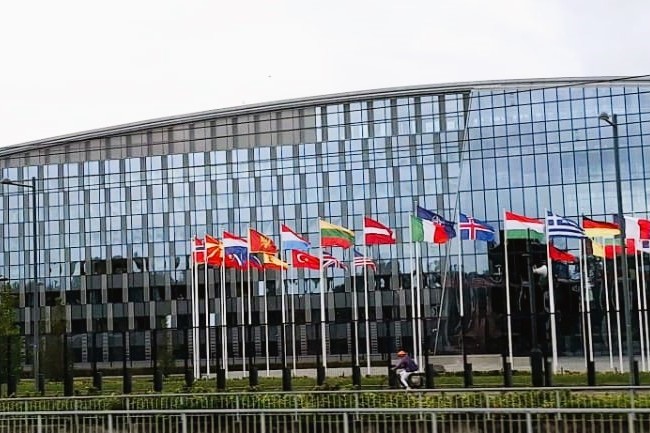
NATO Secretary General Mark Rutte sought to reassure allies on Thursday, telling journalists at alliance headquarters in Brussels that essential equipment for Kyiv, including interceptors, “is continuing to flow into Ukraine.”
The scale of PURL’s contribution to Ukraine’s survival underscores why European capitals are nervous. Rutte said the programme has supplied approximately 75% of all missiles for Ukraine’s Patriot batteries and 90% of ammunition used in other air defence systems. Those are not marginal figures — they represent the backbone of Ukraine’s ability to blunt Russian air attacks.
Secretary of State Marco Rubio, speaking in Paris after G7 talks on Friday, confirmed no diversions had occurred yet. But he was explicit about what might come.
“Nothing yet has been diverted, but it could,” Rubio said. “If we need something for America and it’s American, we’re going to keep it for America first.”
A Veiled Ultimatum
Rubio went further, linking continued American support for Ukraine to European cooperation on the Iran campaign — specifically, securing the Strait of Hormuz.
“Ukraine is not America’s war, and yet we’ve contributed more to that fight than any other country in the world,” Rubio told reporters. “So, it’ll be something to examine that the president will have to take into account down the road.”
The framing landed poorly in Helsinki. Häkkänen cited Finland’s 1,350-kilometre border with Russia as reason enough to refuse any redirection of resources to the Gulf. “We’re a small country neighbouring Russia. All our resources are involved into our readiness in this area, so there’s no options or potential” to participate in the Iran campaign, he said.
Finnish President Alexander Stubb was blunter still. The Iran war is “not a NATO matter,” he told a press conference following a meeting of the Joint Expeditionary Force, a Nordic-Baltic defence coalition. The alliance’s founding commitment is collective defence, not expeditionary wars of choice.
A Separate Rift
The diversion debate surfaced alongside a diplomatic flare-up between Washington and Kyiv. Rubio accused Ukrainian President Volodymyr Zelenskyy of lying after Zelenskyy said in an interview that the United States was pressing Ukraine to cede the eastern Donbas region to Russia before finalising post-war security guarantees.
“That’s a lie,” Rubio said. “What he was told is the obvious: security guarantees are not going to kick in until there’s an end to a war, because otherwise you’re getting yourself involved in the war.”
“That was not attached to, unless he gives up territory,” Rubio added.
The attack on Zelenskyy was striking coming from Rubio, a former senator previously seen as more sympathetic to Ukraine than others in Trump’s circle. The episode recalled the February 2025 Oval Office scene where Rubio sat silently as Trump and Vice President JD Vance berated Zelenskyy for ingratitude over American assistance.
The Strain of Two Theaters
For European NATO members, the calculation is now stark. Weapons they funded, purchased from American contractors, and earmarked for Ukraine’s defence could be rerouted to a Gulf war most of them have no intention of joining. The question Finland is asking — did these weapons actually arrive? — is the kind of verification step allies reserve for adversaries, not partners.
Rutte insists the flow continues. Finland is checking whether that assurance holds.
Discussion (9)