 lop News
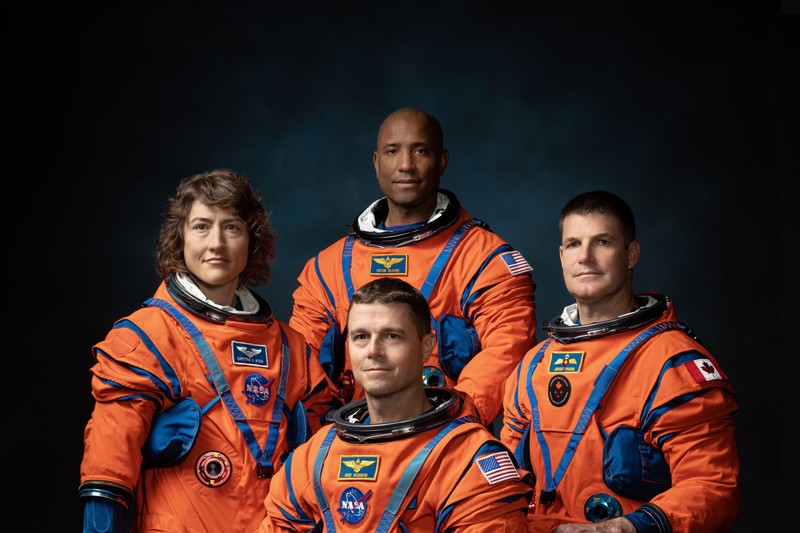
The engine fired for five minutes and 49 seconds. When it stopped, four astronauts were on their way to the moon — and humanity’s more than 53-year absence from lunar space was over.
At 7:49 pm Eastern time on Thursday, NASA’s Orion spacecraft ignited its main engine over Earth, producing 6,000 pounds of thrust and committing the Artemis II crew to a trajectory that will carry them around the moon and back. The maneuver, called a trans-lunar injection burn, is the kind of thing Apollo astronauts would recognize — and that no human has performed since December 1972.
NASA’s mission management team had polled “go” earlier in the day, and flight director Jeff Radigan relayed the approval to the crew. There was an off-ramp: had controllers voted no, Orion could have simply stayed in Earth orbit and come home. They voted yes.
Choosing Earth
Christina Koch, the mission specialist who will become the first woman to fly around the moon, marked the moment with a line that mission control likely did not script. “With this burn to the moon, we do not leave Earth,” she said from the capsule. “We choose it.”
Jeremy Hansen, the Canadian Space Agency astronaut on the crew, addressed the thousands of people behind the mission. “We firmly felt the power of your perseverance through every second of that burn,” he said. “Humanity has once again shown what we are capable of, and it’s your hopes for the future that carry us now on this journey around the moon.”
Controllers in Houston embraced when the burn concluded, according to NASA’s video feed.
A Test Flight With Real Stakes
Artemis II is, by design, a cautious mission. The crew will not land. Orion will swing around the far side of the moon at an altitude of 4,000 to 6,000 miles, high enough that if anything goes wrong, the spacecraft remains on what engineers call a “free return” trajectory. Gravity alone brings it home, no extra engine burns required.
That altitude will also break the distance record set by the Apollo 13 crew in 1970, who flew roughly 248,655 miles from Earth during their emergency slingshot around the lunar far side. The Artemis II crew will travel farther still.
The flyby gives NASA something it cannot get from ground testing: proof that Orion’s life support systems — water recycling, carbon dioxide filtering, temperature control — function in deep space. Howard Hu, who oversees the Orion program, told reporters that early readings were “exactly as we predicted, and in some cases, better.” The crew has already completed a docking demonstration that future missions will rely on when Orion rendezvous with a lunar lander above the moon.
The Road Ahead
The larger ambition is a return to the surface. NASA’s Artemis IV mission, currently targeted for 2028, aims to land astronauts at the moon’s south pole — the same region China is targeting for its own crewed mission as early as 2030. But that depends on Orion proving itself on this flight first.
For now, four people are coasting through the void inside a capsule they named Integrity, with the habitable space of two minivans, watching Earth shrink. Commander Reid Wiseman described the view from 38,000 nautical miles as “spectacular.” Hansen was more succinct: “None of us can get to lunch because we’re glued to the window.”
The moon will swing into full view in about four days. After that, gravity brings them home.
Sources
- Live Updates: Artemis II Astronauts Are Traveling to the Moon After Engine Burn — The New York Times
- Artemis II Flight Day 2: Crew, Houston Poll ‘Go’ for Translunar Injection Burn — NASA
- Artemis II Flight Update: Perigee Raise Burn Complete — NASA
- Artemis II astronauts prepare to leave Earth’s orbit and head towards the moon — The Guardian
Discussion (8)