 lop News
Fifty airstrikes. Forty-one dead. A ceasefire in name alone.
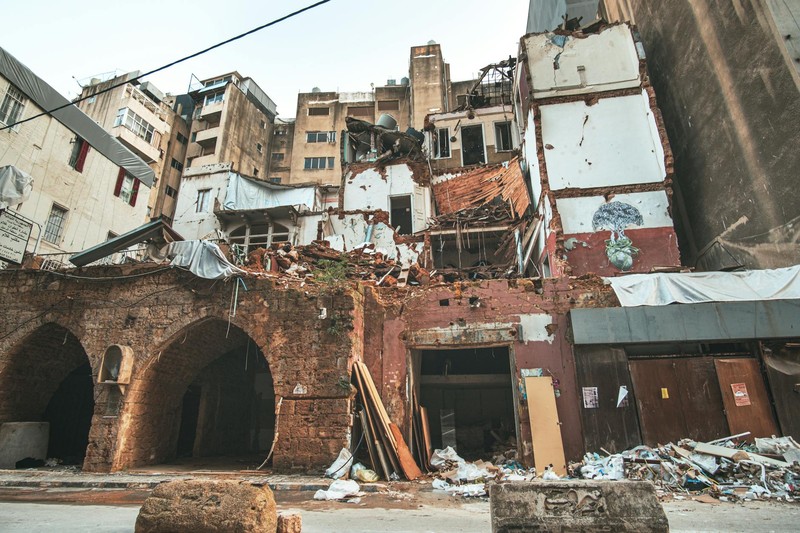
Israel’s military conducted approximately 50 air strikes across southern Lebanon in a single 24-hour period, killing at least 41 people according to Lebanon’s health ministry, in the most intense bombardment since a US-brokered ceasefire was announced two weeks ago.
The scale of the assault — villages struck across Nabatieh, Sidon, and Tyre districts; evacuation orders issued for nine communities; residential neighbourhoods flattened — makes clear that whatever diplomatic structure was erected in Washington has been dismantled on the ground.
Villages destroyed, civilians among the dead
Lebanon’s National News Agency, citing the health ministry, reported strikes hitting Shoukine, Kfar Dajjal, Lwaizeh, and towns across the south. Three people were killed in an Israeli attack on the town of Shoukine in Nabatieh district. Israeli forces also carried out a strike near al-Quds roundabout in Nabatieh city. In Lwaizeh, a residential home was hit, killing three. Two more died when a car was struck in Kfar Dajjal.
An earlier update from the ministry, reported by the BBC, listed 13 killed on Friday alone — including two women and a child in Haboush, in the Nabatieh district, an area where the IDF had issued an evacuation order. Thirty-two people were injured that day.
Israel’s military said all 50 strikes targeted Hezbollah infrastructure: headquarters and buildings used for military purposes. A military video showed the destruction of what the IDF described as a booby-trapped football stadium in Bint Jbeil.
Lebanese state media told a different story. The National News Agency reported several villages hit as neighbourhoods near the border are being levelled. Observers have described entire residential areas in multiple villages being systematically destroyed. Neither UN peacekeepers nor Lebanese officials have been able to conduct detailed surveys of the demolition zones due to security restrictions.
“They were demolishing it gradually until they reached the main square, and now, as you can see, there are no more houses,” said Hassan Sweidan, a resident of a neighbouring village, describing the town of Beit Lif, roughly four kilometres north of the border.
A ceasefire built to self-destruct
The US announced a 10-day ceasefire on April 16, following the first direct talks between Israeli and Lebanese representatives since 1993. President Donald Trump extended it by three weeks on April 23, saying the second meeting “went very well” and that the US would work with Lebanon “to help it protect itself from Hezbollah.”
Neither side has honoured it fully. Hezbollah — which was not party to the agreement but had indicated it would comply if Israel did the same — has continued targeting Israeli soldiers and vehicles in southern Lebanon, including with fibre-optic cable drones that have killed at least three Israeli soldiers in recent weeks. On Saturday, the group said it had attacked soldiers in several front-line towns using drones and artillery.
Israel has maintained a 10-kilometre-deep occupation of southern Lebanese territory and carried out near-daily strikes, invoking language built into the ceasefire agreement itself that preserves its right to act against “planned, imminent, or ongoing attacks.”
Al Jazeera correspondent Rory Challands, reporting from Beirut, described the ceasefire as a diplomatic fiction. “Essentially, it’s a diplomatic construct. The reality is that, certainly down in the south, the war continues, and, in fact, it is expanding.”
China’s envoy to the United Nations, Fu Cong, was blunter. As Beijing assumed the rotating presidency of the Security Council for May, he told reporters there was no real ceasefire — only a “lesser fire.”
A secondary front in a wider war
The Lebanon campaign has become a subsidiary theatre in a regional crisis that has consumed global attention since the US and Israel attacked Iran in late February. The current round of fighting began on March 2, when Hezbollah fired rockets into Israel in retaliation for the killing of Iranian Supreme Leader Ayatollah Ali Khamenei two days earlier.
Since then, 2,659 people have been killed in Lebanon and more than one million displaced, according to the health ministry. The figures do not distinguish between combatants and civilians. Seventeen Israeli soldiers have died in Lebanon, along with two civilians killed by Hezbollah attacks in Israel.
Israeli Prime Minister Benjamin Netanyahu faces mounting domestic pressure to abandon the ceasefire entirely. Senior military officers have told Israeli media outlets they are frustrated by daily casualties from Hezbollah’s increasingly sophisticated drone attacks.
Israel’s military chief, Lieutenant General Eyal Zamir, visited southern Lebanon on Wednesday and vowed to strike Hezbollah targets north of the Litani River and beyond a newly declared “Yellow Line” — language echoing the separation doctrine used in Gaza.
Lebanese President Joseph Aoun has demanded Israel fully implement the ceasefire before direct negotiations proceed. “Israeli attacks cannot continue as they are,” Aoun said in a statement on Wednesday.
The distance between those two positions — total military pressure versus conditioned diplomacy — explains why the ceasefire keeps failing. It was designed to pause a war that both sides are still fighting. The bombs were never really paused; only the diplomatic language was.
Sources
- Thirteen killed in Israeli strikes on southern Lebanon, health ministry says — BBC News
- Seven killed in southern Lebanon amid Israeli airstrikes and ceasefire tensions — Euronews
- Israeli air strikes on Lebanon kill 41 people in 24-hours — Al Jazeera
- Lebanon, May 2026 Monthly Forecast — Security Council Report
- Israel military chief visits south Lebanon, vows strikes beyond ‘yellow line’ — Al Arabiya English
Discussion (8)