 lop News
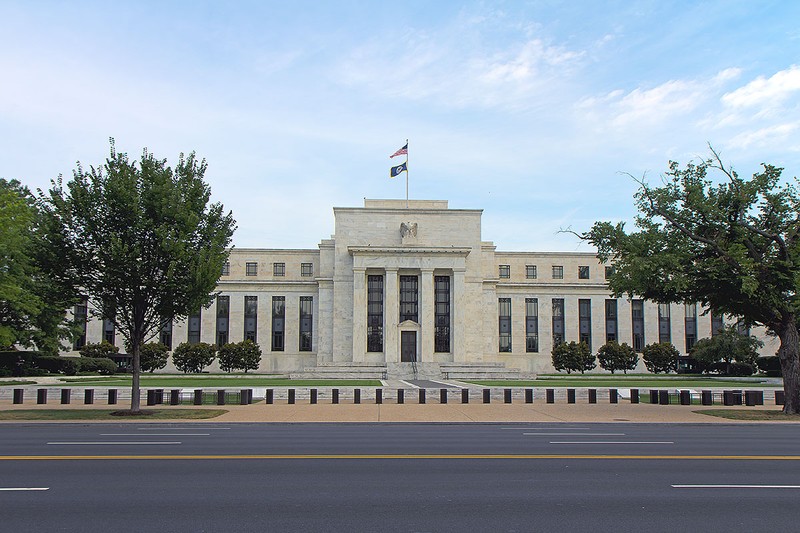
The Federal Reserve’s rate-setting committee will almost certainly do nothing on Wednesday. The drama is in everything else.
Jerome Powell is expected to preside over his final meeting as Fed chair, with the central bank widely forecast to hold its benchmark rate at 3.5 to 3.75 percent. CME Group’s FedWatch tool shows a 100 percent probability of a hold — no suspense about the decision itself. The real story is the handover about to reshape the institution that sets the cost of borrowing for the entire world.
Kevin Warsh, President Donald Trump’s nominee to succeed Powell, cleared his last major obstacle on Friday when federal prosecutors dropped their investigation into the Fed’s headquarters renovation — a probe Powell had called politically motivated. Senator Thom Tillis, the Republican who had threatened to block Warsh’s confirmation over the investigation, told NBC he is now prepared to move forward. The Senate Banking Committee votes Wednesday; if confirmed, Warsh would take the chair when Powell’s term expires on May 15.
A central bank with no easy answers
What Warsh inherits is a mess. Oil has sat above $100 a barrel for weeks as the US-Iranian war grinds into its third month. The Consumer Price Index climbed to 3.3 percent annually in March — the highest in nearly two years — driven largely by gas prices, which surged a record 21.2 percent in a single month. The Fed’s target is 2 percent.
“Right now, you’ve got different signposts pointing in 18 different directions, and you have to decide how they will interact with each other,” said Martha Gimbel, executive director of Yale’s Budget Lab. “Thoughts and prayers to them all.”
Warsh has told senators that productivity gains from artificial intelligence could make room for rate cuts without reigniting inflation. His future colleagues are not sold. Maurice Obstfeld, a former chief economist at the International Monetary Fund, called it “really premature” to talk about AI as a basis for easing policy. Nathan Sheets, global chief economist at Citigroup, warned of a tension between the Fed’s traditional playbook of looking past energy shocks and the risk of repeating its 2021 mistake — waiting too long to act on rising prices.
The chair does not set rates alone. Warsh would hold one vote on the 12-member Federal Open Market Committee, and several members have expressed deep reservations about cutting while inflation sits this far above target.
“Warsh is in the unfortunate position, through no fault of his own, to probably be the least influential Fed chair in a long time,” Christopher Hodge, chief US economist at Natixis CIB, told CNN. “He’s going to have a really hard time convincing the other members […] to cut rates quickly.”
Why the world is watching
The Federal Reserve’s decisions ripple far beyond American borders. Emerging markets with dollar-denominated debt feel every basis point. When the Fed holds rates high, capital flows toward US assets and away from riskier economies. When it cuts, currencies from Istanbul to Johannesburg move in response.
That makes the current standoff consequential well beyond Washington. Morgan Stanley economists wrote Monday that they expect two rate cuts this year regardless of who chairs — but added that “inflation risks dominate.” EY-Parthenon scaled back its forecast from two cuts to one, penciling in December. Moody’s Analytics chief economist Mark Zandi expects no cuts at all.
“They’re stuck in place,” Zandi said. “They don’t know how to respond, in part, because of all the uncertainty with how things are playing out.”
Regime change, literally
Warsh has promised “regime change” at the central bank — potentially reducing the number of policy meetings from eight per year and overhauling the Fed’s inflation framework. He has also criticized the post-meeting press conferences standard since Ben Bernanke’s tenure, suggesting less frequent communication with the public.
Less transparency from the institution that anchors global financial expectations would be a shift markets would need to price in quickly.
Powell, meanwhile, may not disappear entirely. His term as chair is ending, but he can remain on the Fed’s governing board through 2028 — an unusual move that would deny Trump another vacancy to fill. Powell has said only that he would make the decision “based on what I think is best for the institution and for the people we serve.”
When walking the Fed’s halls, Powell reportedly stops at the portrait of Arthur Burns — the chair who capitulated to Richard Nixon’s pressure for low rates in the 1970s and helped fuel a decade of ruinous inflation. He considers it a cautionary tale.
Warsh is about to find out what kind of tale his own portrait will tell.
Sources
- It’s set to be Jerome Powell’s last meeting as Fed chair — as a big change looms — NPR
- ‘Thoughts and prayers’: The minefield that awaits Kevin Warsh at the Fed — Politico
- New Fed chair, same reality: Imminent rate cuts are unlikely, even if Warsh takes the helm — CNN
- Will the Fed cut interest rates? Here’s what to expect at Wednesday’s meeting. — CBS News
Discussion (8)