 lop News
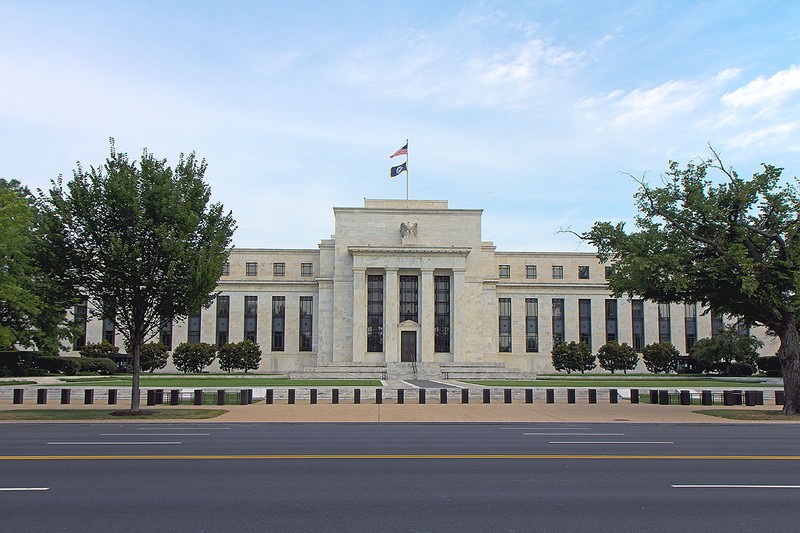
Kevin Warsh arrived at his Senate confirmation hearing calling for “regime change” at the Federal Reserve. He still doesn’t have the votes to get the job.
The most consequential moment of Tuesday’s hearing didn’t come from the Democratic side of the room. It came from Republican Senator Thom Tillis, who told President Donald Trump’s pick for Fed chair that he would not vote to confirm him — not because Warsh lacks qualifications, but because the Justice Department is investigating the man he’d replace.
“We have got to get rid of this investigation,” Tillis said, “so I can support your nomination.”
In a committee closely divided along party lines, with every Democrat opposed, one Republican holdout is enough to block the nomination entirely. The probe into current Fed Chair Jerome Powell concerns his testimony about cost overruns on the Fed building renovation — a matter that has spiraled into a broader standoff between the White House and the central bank.
What ‘Regime Change’ Looks Like
Warsh’s vision for the Fed is expansive and deliberately vague. He criticized the central bank’s “forward guidance” — the practice of signaling future rate moves — as “unhelpful,” telling senators he preferred “messier” meetings without “rehearsed scripts.” He questioned whether the Fed needs to meet every six weeks and called for “new tools” beyond interest rate changes and bond purchases, though he declined to name alternatives.
He also promised a “new inflation framework,” suggesting he would deviate from the Personal Consumption Expenditures price index the Fed currently uses as its primary gauge — without specifying a replacement. Consumer prices are rising at 3.3% annually, according to the Fed’s preferred measure, well above the 2% target. The war in Iran is adding upward pressure on gasoline costs.
For economists, the prospect of a Fed chair who wants less transparency and fewer meetings is unsettling. The communications framework Warsh wants to dismantle was developed over years to give markets greater clarity about the Fed’s intentions. Taking a sledgehammer to it could have the opposite effect — and a less predictable Fed would make global bond markets nervous.
The Independence Problem
Democrats came ready. Senator Elizabeth Warren called Warsh “uniquely ill-suited” and accused him of being Trump’s “sock puppet.” She pressed him on more than $100 million in financial holdings he hasn’t fully disclosed — including investments in SpaceX and Polymarket — and asked whether any funds were connected to Jeffrey Epstein. Warsh declined to answer directly, saying the Office of Government Ethics had approved his plan to divest within 90 days.
Senator Ruben Gallego, an Arizona Democrat, cited Wall Street Journal reporting that Trump had pressured Warsh to cut rates.
“Who’s lying here? Is it you or the president?” Gallego asked.
“I think those reporters need better sources,” Warsh replied.
Hours earlier, asked by CNBC if he would be disappointed if Warsh didn’t immediately cut rates, Trump responded, “I would” — a remark that undercut the nominee’s insistence that no political deal existed. Trump has repeatedly called for the Fed’s key rate, currently around 3.6%, to be slashed to as low as 1%, a position almost no economist shares.
What Comes Next
Powell’s term as chair ends May 15. He has said he’ll remain on the Fed’s governing board — which lasts until January 2028 — until the investigation is dropped. Trump has threatened to fire him. The Supreme Court is separately weighing whether Trump can remove Fed Governor Lisa Cook, with a ruling expected within weeks.
Senate Banking Chair Tim Scott and Tillis are floating a Congressional committee to examine Fed construction spending as an alternative to the DOJ probe. Tillis called it “a great idea” and “good governance.” Whether the Justice Department agrees is another matter.
A Fed chair who owes his position to a president demanding rate cuts, navigating an inflation spike, heading an institution he wants to gut and rebuild, with his predecessor still sitting in the room. The confirmation math is uncertain. The implications for global markets are not.
Sources
- Warsh says he got no pressure from Trump to cut rates even as president publicly pushes for them — Associated Press
- 3 takeaways from a fiery hearing to confirm Trump’s Fed chief pick — CNN
- From Epstein to sock puppets: Key takeaways from Kevin Warsh’s Fed confirmation hearing — BBC
- GOP senators eye off-ramp to end Warsh standoff — Politico
Discussion (8)