 lop News
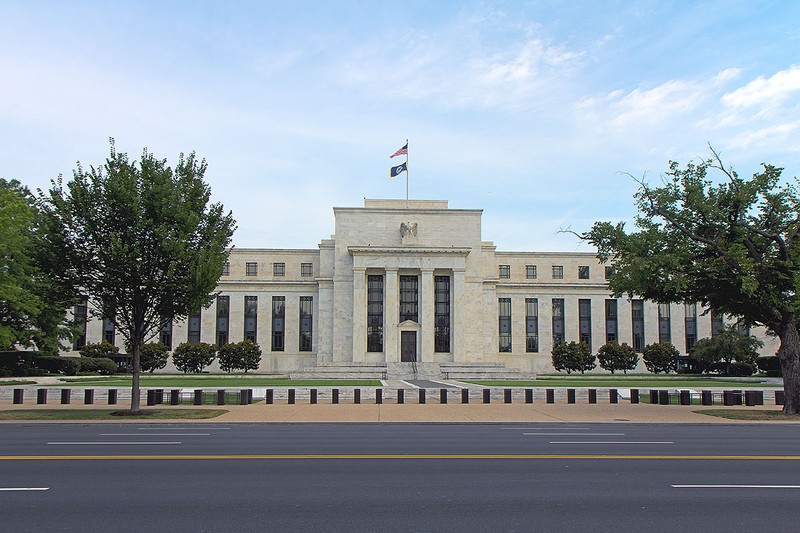
Kevin Warsh has a bargain for the Senate: hands off monetary policy, and the Federal Reserve will stop trying to fix everything else.
In prepared testimony released ahead of Tuesday’s confirmation hearing, President Donald Trump’s pick to lead the central bank laid out a vision both bold and narrow — absolute independence on interest rates, paired with a Fed that retreats from climate policy, social inequality, and anything else outside its statutory remit.
“Simply stated, Fed independence is largely up to the Fed,” Warsh plans to tell the Senate Banking Committee, according to a copy of his statement obtained by Politico. “The Fed must stay in its lane. Fed independence is placed at greatest risk when it strays into fiscal and social policies where it has neither authority nor expertise.”
A Hawk on Inflation, a Surgeon on the Mandate
The former Fed governor, who served from 2006 to 2011, is not auditioning as a dove. His testimony leans hard on inflation-fighting credentials at a moment when global markets are rattled by tariff whiplash and an oil shock driven by the Iran conflict. Core and headline consumer price inflation have exceeded the Fed’s 2% target for five straight years, according to ING.
“Inflation is a choice, and the Fed must take responsibility for it,” Warsh’s statement reads. Price stability is a mandate “without excuse or equivocation, argument or anguish.” Low inflation, he adds, is the Fed’s “plot armor, its vital protection [against] slings and arrows.”
That language signals to bond markets that Warsh will not simply deliver the rate cuts Trump has spent years demanding. The president has repeatedly pressed for lower rates, criticized current Chair Jerome Powell in starkly personal terms, and threatened to fire him.
Warsh’s response is calibrated. He says elected officials expressing views on rates does not threaten Fed independence. “Central bankers must be strong enough to listen to a diversity of views from all corners,” his testimony states. The formulation acknowledges Trump’s pressure without committing to fold — and without criticizing the president who nominated him.
The Balance Sheet Is Where the Money Lives
The real action lies not in the policy rate but in the Fed’s $6.3 trillion balance sheet. Warsh has argued that every $1 trillion in Fed bond holdings equates to roughly 50 basis points of monetary accommodation. Shrink the holdings, and you create room to cut rates without stoking inflation.
His specific target: the roughly $2 trillion in mortgage-backed securities accumulated during past crises. These are rolling off at a “slow trickle” given their long duration, according to ING. Warsh has called MBS holdings a particular problem requiring liquidation.
The mechanics are treacherous. Offloading $2 trillion in MBS could compress bank reserves from $3 trillion toward the danger zone — roughly 10% of GDP — where repo market disruptions have materialized before, as in 2019 and late 2025. ING suggests offsetting MBS sales with Treasury bill purchases, though that merely reshuffles the balance sheet rather than shrinking it.
For markets whipsawed by tariffs and oil spikes, the implication is a steeper yield curve. Long rates rise as MBS sales push mortgage-backed paper onto private buyers; short rates might fall if Warsh trims the balance sheet first. Treasury Secretary Scott Bessent has flagged the 10-year yield as the metric that matters — a steeper curve cuts against that priority.
Stay in Its Lane Means Less Regulation, Too
Warsh argues the Fed’s deference on rates does not extend to bank regulation or “stewardship of public monies” — a pointed phrase, given the DOJ’s investigation into the Fed’s multibillion-dollar headquarters renovation. For Wall Street, a Fed retreating from climate risk and fair lending oversight is a gift.
A Confirmation Path Littered With Obstacles
Senator Thom Tillis, a North Carolina Republican, has vowed to block the nomination from leaving the Banking Committee until the DOJ investigation is resolved. With the panel split 13-11, Tillis’s opposition produces a 12-12 deadlock, preventing a floor vote.
Powell’s term as chair expires May 15, but his governorship runs through January 2028 — he stays until a successor is confirmed. White House spokesman Kush Desai said Warsh’s credentials “make him eminently qualified to restore confidence and competence in Fed decision-making.”
The Supreme Court is weighing whether Trump can remove Fed Governor Lisa Cook. A ruling affirming broad removal power would reshape the dynamics Warsh inherits — making it harder for any chair to claim independence from the White House that appointed them.
Warsh makes his case under oath Tuesday. Markets will be listening for whether “stay in its lane” means the Fed retreats from regulation — or whether Warsh himself can hold a lane separate from the president who wants him in the chair.
Discussion (8)