 lop News
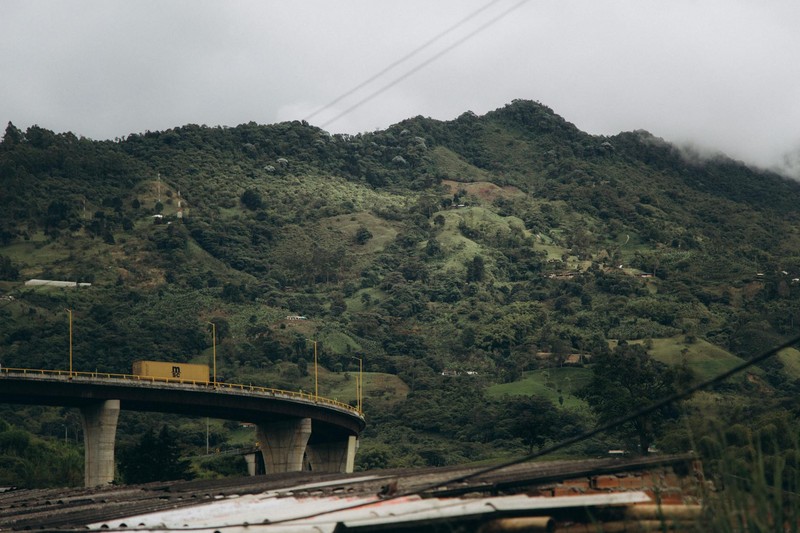
Fifteen women and five men, all adults, are dead after a bomb tore through the Pan-American Highway in southwestern Colombia on Saturday. Another 36 people were injured, including five children who were reported to be out of danger. Three of the wounded remained in intensive care.
The blast left a crater measuring 200 cubic metres and flipped several vehicles, according to Octavio Guzmán, governor of Cauca department, where the attack occurred. Buses and vans were mangled along the highway — the main arterial road connecting the Andean nation to Ecuador and points south.
Guzmán called it the area’s “most brutal and ruthless attack against the civilian population in decades.”
Military chief Hugo López told a press conference on Saturday that assailants had blocked traffic using a bus and another vehicle before detonating the explosive. “It is a terrorist attack against the civilian population,” López said.
President Gustavo Petro blamed the bombing on Iván Mordisco — the alias of Colombia’s most-wanted criminal, who leads a dissident faction of the now-defunct Revolutionary Armed Forces of Colombia (FARC). On X, Petro called the attackers “terrorists, fascists and drug traffickers” and demanded that Colombia’s best soldiers confront them. Petro has previously compared Mordisco to the late cocaine kingpin Pablo Escobar.
A weekend of coordinated violence
The highway bombing was not an isolated event. On Friday, a bomb struck a military base in Cali, Colombia’s third-largest city, injuring two people. According to López, 26 separate attacks were recorded across the Valle del Cauca and Cauca departments over the course of the weekend.
Defence minister Pedro Sánchez said authorities had boosted military and police presence in the affected areas.
The coordinated assault fits a familiar pattern. FARC remnants who rejected the 2016 peace deal with the government have been actively working to disrupt stalled peace talks with Petro’s administration. These armed groups finance operations through drug trafficking, illegal mining, and extortion — and have a long history of attempting to influence Colombian elections through violence.
A campaign already marked by blood
The bombing comes just over one month before the 31 May presidential election, in which Colombian voters will choose a successor to Petro, the country’s first leftist president.
Security was already the defining issue of the race. Last June, Miguel Uribe Turbay — a young conservative senator and presidential frontrunner — was shot in broad daylight while campaigning in Bogotá. He died of his injuries two months later. The assassination sent shockwaves through Colombian politics and shattered any illusion that the 2016 peace deal had put an end to political violence.
Leftist senator Iván Cepeda, an architect of Petro’s controversial policy of negotiating with armed groups, currently leads the polls. He is trailed by rightwing candidates Abelardo de la Espriella and Paloma Valencia, both of whom have pledged a hard-line military approach against rebel factions. All three have reported receiving death threats and are campaigning under heavy security.
A state struggling to project authority
The attack laid bare the Colombian state’s difficulty projecting authority in the southwest — a region long contested by armed groups, coca cultivators, and illicit mining operations. The Pan-American Highway is not some remote mountain track; it is the backbone of overland commerce in the western Andes. Striking it was a deliberate signal.
For Colombia, the 2016 peace accord with the FARC was supposed to mark a turning point after more than five decades of conflict. The deal disarmed the guerrilla army and transformed it into a political party. But factions that refused to lay down weapons — Mordisco’s among them — retreated into the country’s vast rural interiors and drug corridors, regrouping rather than surrendering.
Petro’s attempt to extend negotiations to these remaining armed groups has produced little tangible progress, and the weekend’s violence has given his critics fresh ammunition. The rightwing candidates’ promise of military resolve now competes directly with the president’s record of dialogue.
Twenty civilians dead on a major highway does not require much elaboration. It is, by itself, an argument — one that Colombian voters will weigh at the ballot box next month, under the protection of a state that has just shown how easily its roads can be shut down and its citizens killed.
Discussion (10)