 lop News
Labour won a parliamentary landslide in July 2024. Less than two years later, it has lost every single council seat in Wigan — a former mining community the party controlled for more than half a century.
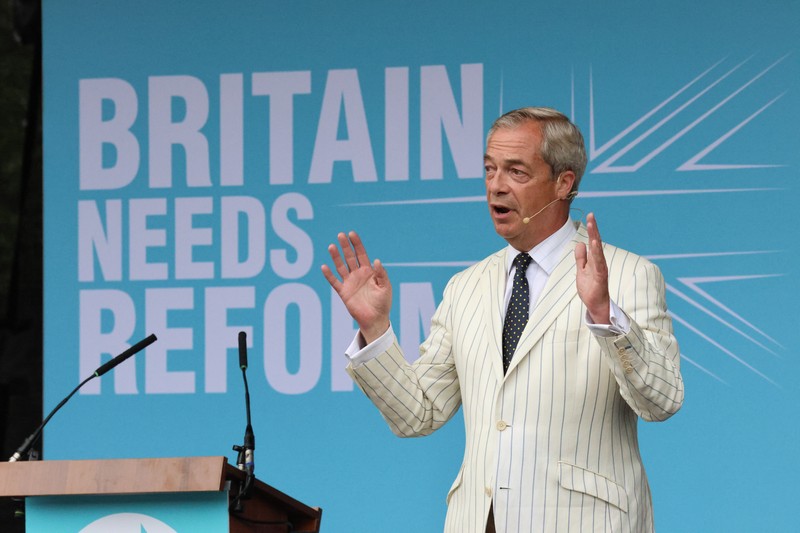
Overnight results from England’s local elections confirmed what polls have been signalling for months: British politics has fractured beyond recognition. Nigel Farage’s Reform UK emerged as the dominant force, winning the most seats declared so far and making deep incursions into the industrial heartlands that once formed Labour’s electoral foundation.
According to BBC analysis of over 500 wards, Reform averaged 26% of the vote. In wards where more than 60% voted for Brexit in 2016, that figure surged to 41%. Where fewer than 49% backed Leave, it dropped to 10%. Britain’s populist insurgency maps almost precisely onto old Brexit dividing lines.
Councils that Defected
Labour lost control of councils in Hartlepool, Tameside, Redditch, and Tamworth as of Friday morning, according to Guardian reporting. In Tameside, Greater Manchester, the party lost the council for the first time in nearly 50 years — Reform picked up all 14 seats Labour was defending. In nearby Salford, Labour held just three of the 16 seats it was defending. In Wigan, it lost all 20.
The pattern was consistent: the places where Labour was previously strongest suffered its heaviest defeats. BBC polling expert Sir John Curtice noted that Labour’s vote share dropped 16 points compared with 2022, and 19 points compared with the 2024 general election. Losses were magnified in wards with large Muslim populations — a sign of discontent extending beyond the party’s traditional working-class base.
Reform secured outright control of at least two councils: Newcastle-under-Lyme in the north, and Havering in east London. It also made significant inroads in Bolton, Salford, and Halton — all longstanding Labour territory.
A Defiant Prime Minister
Starmer acknowledged the damage on Friday morning. “The results are tough, they are very tough, and there’s no sugarcoating it,” he said, adding that he took responsibility.
But he rejected calls to resign. “The voters have sent a message about the pace of change, how they want their lives improved,” Starmer said, according to the Associated Press. “I was elected to meet those challenges, and I’m not going to walk away from those challenges and plunge the country into chaos.”
The question hanging over Westminster is whether that refusal represents resilience or a failure to read the moment. Labour MP Jonathan Brash, who represents Hartlepool, told the Guardian that Starmer should address the nation and set out a timetable for his departure. Former shadow chancellor John McDonnell said the leadership question was “inevitably” on the agenda. Deputy Prime Minister David Lammy countered: “You don’t change the pilot during the flight.”
Cabinet loyalty has held so far, but results from the devolved parliaments in Scotland and Wales — where Labour could lose power altogether — have not yet been fully counted.
The End of Two-Party Politics
The Conservatives suffered too, losing roughly 150 seats, mostly to Reform. They regained Westminster Council from Labour — but even there, their own vote share fell by five points. Curtice characterized the emerging picture bluntly: Britain is entering an era where “none of the parties are very big.”
The Greens averaged 16% of the vote — a seven-point increase on 2022 and their strongest-ever local election showing — though they converted that support into relatively few council gains. The Liberal Democrats gained seats primarily by profiting from the collapse of the main parties.
The pattern mirrors a broader European trend. Populist and insurgent parties have gained ground across the continent, typically feeding on discontent with established parties seen as unresponsive to economic anxiety and immigration concerns. Farage’s pitch — anti-establishment, anti-immigration, explicitly channelling Brexit-era grievances — fits squarely within that current.
For Starmer, the immediate challenge is survival. His government has been marked by policy U-turns and a rotating cast of advisers. The appointment of Peter Mandelson as ambassador to Washington proved disastrous — he was dismissed nine months into the role over links to convicted sex offender Jeffrey Epstein, Al Jazeera reported. External pressures have compounded the damage: the US-Israeli war with Iran has choked oil shipments through the Strait of Hormuz, making economic recovery harder, according to AP.
The longer-term challenge is more fundamental. Labour won in 2024 on a promise of stability after 14 years of Conservative chaos. Stability, it turns out, is not what voters wanted — it may be precisely what they were voting against.
Discussion (10)