 lop News
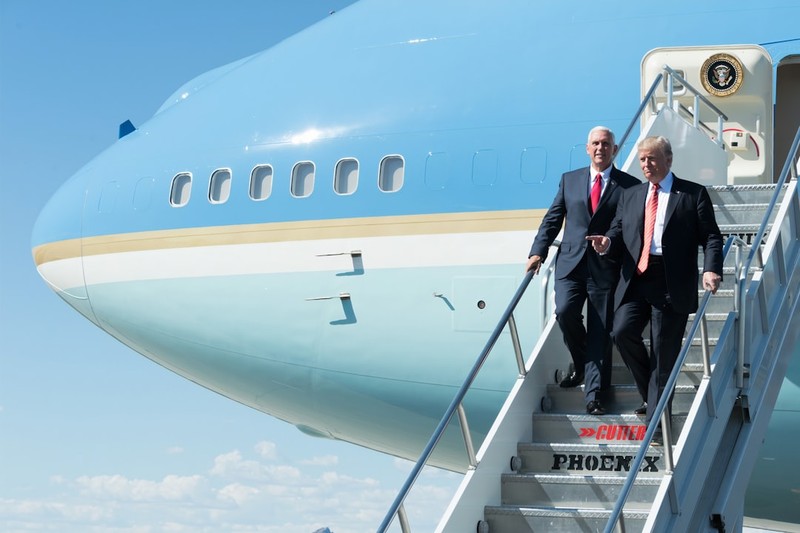
Every bridge. Every power plant. That is what Donald Trump says the United States will destroy in Iran if Tehran refuses the deal American negotiators plan to present in Islamabad this week.
The threat, posted Sunday on Trump’s Truth Social platform, marked a sharp escalation in rhetoric — from sanctions and naval blockades to the promise of nationwide infrastructure annihilation. “The United States is going to knock out every single Power Plant, and every single Bridge, in Iran,” Trump wrote. “NO MORE MR. NICE GUY!” A separate, expletive-laden post declared that “Tuesday will be Power Plant Day, and Bridge Day, all wrapped up in one, in Iran.”
The threats come at a precarious moment. A Pakistan-mediated ceasefire between the US-Israeli coalition and Iran is set to expire on Wednesday. The Strait of Hormuz — through which roughly one-fifth of the world’s oil normally flows — has effectively returned to closure after a brief, chaotic reopening on Friday. And negotiators for both sides are scrambling to arrange a second round of talks in Islamabad before the window slams shut.
A Strait That Won’t Stay Open
The Strait of Hormuz has been the war’s most volatile pressure point since the US and Israel launched strikes on Iran on February 28. Iran’s closure of the waterway is perhaps its most powerful leverage — and both sides know it.
On Friday, Iran briefly reopened the strait in what Foreign Minister Abbas Araghchi described as a gesture linked to a 10-day ceasefire between Israel and Hezbollah in Lebanon. Ships began moving. Hope flickered. Then Trump announced the US blockade on Iranian ports would “remain in full force” until a comprehensive deal was reached.
Iran reversed course within hours. The Islamic Revolutionary Guard Corps declared the strait would “not return to its previous state” and that the waterway was now “under strict management and control” by Iran’s armed forces. Iranian gunboats fired on at least two India-flagged merchant vessels attempting transit on Saturday, forcing them to turn around. India summoned Iran’s ambassador in response.
“It is impossible for others to pass through the Strait of Hormuz while we cannot,” parliament speaker Mohammed Bagher Ghalibaf, Iran’s chief negotiator, said in remarks aired on state television.
Lloyd’s List, the maritime tracking firm, reported that traffic through the strait had ground to a halt. The global energy crisis, already eight weeks old, threatens to deepen.
The Islamabad Calculus
Trump announced Sunday that US negotiators would travel to Islamabad on Monday evening. Vice President JD Vance, who led the first round of marathon talks last weekend — 21 hours of negotiations that ended without a breakthrough — will return to the Pakistani capital alongside envoys Steve Witkoff and Jared Kushner.
Pakistani authorities have tightened security in Islamabad, with advance US teams already on the ground, according to a regional official who spoke on condition of anonymity. Pakistani Foreign Minister Ishaq Dar said his country was working to “bridge” differences between Washington and Tehran.
But the talks face an immediate obstacle. Iran’s Tasnim news agency reported Sunday that Tehran is not sending a negotiating delegation to Pakistan “as long as there is a naval blockade.” Ghalibaf struck a more diplomatic note, saying there had been “progress” but that “there are many gaps and some fundamental points remain.”
“We are still far from the final discussion,” he said.
The death toll underscores what is at stake. The war has killed at least 3,000 people in Iran, more than 2,290 in Lebanon, 23 in Israel, and more than a dozen in Gulf Arab states, according to the Associated Press. Fifteen Israeli soldiers have died in Lebanon and 13 US service members have been killed across the region.
Nuclear Dust and Red Lines
The deepest disagreement concerns Iran’s nuclear program. Trump has demanded that Tehran hand over its stockpile of roughly 440 kilograms of enriched uranium, referring to it as “nuclear dust” and suggesting the US would “start excavating with big machinery” to recover material believed buried at sites hit by US strikes last year.
Iran’s Deputy Foreign Minister Saeed Khatibzadeh told the AP that surrendering the enriched uranium was “a nonstarter.” Iran maintains its nuclear program is civilian in nature — a position that received notable support from within the US government. National Intelligence Director Tulsi Gabbard told Congress in March 2025 that the intelligence community “continues to assess that Iran is not building a nuclear weapon and Supreme Leader Khamenei has not authorised the nuclear weapons programme he suspended in 2003.”
That assessment was delivered before the killing of Supreme Leader Ayatollah Ali Khamenei in the opening US-Israeli strikes on February 28. His son, Mojtaba Khamenei, has been named his successor. What Iran’s new leadership might do with its nuclear capabilities under existential threat remains an open question.
Iranian President Masoud Pezeshkian rejected the demands outright. “Trump says Iran cannot make use of its nuclear rights, but doesn’t say for what crime,” Pezeshkian said, according to the Iranian Students’ News Agency. “Who is he to deprive a nation of its rights?”
Coercive Diplomacy or Prelude to War
Trump has a pattern of issuing dramatic deadlines and then extending them. He first threatened to “obliterate” Iran’s power plants on March 21, giving Tehran 48 hours. That deadline was pushed to March 28, then to April 6, and now to Tuesday evening — April 21 — at 8 PM Eastern time. Each extension has come with language about productive talks and good progress.
Whether the latest threat represents genuine intent or another round of coercive theater is the question confronting every government with a stake in the outcome.
Iran’s response has been defiant. General Ali Abdollahi Aliabadi of Iran’s central military command called Trump’s threat a “helpless, nervous, unbalanced and stupid action,” warning that “the gates of hell will open” for the American president.
The rhetoric on both sides is amplified by the fact that the war is already destroying infrastructure. Israel has struck Iranian petrochemical facilities and is reportedly waiting for US approval to hit more energy sites. US-Israeli strikes hit the Qasem Soleimani international airport in south-western Iran on Sunday. Iran has continued firing drones and missiles at Israel and Gulf allies. A ballistic missile struck a residential building in Haifa, injuring four. Fires burned at a petrochemical facility in Abu Dhabi after falling debris from an Iranian missile. Kuwait reported severe damage to oil and petrochemical facilities from Iranian drone strikes.
On the conflict’s margins, Yemen’s Houthi rebels threatened to close the Bab al-Mandab Strait — the other critical chokepoint connecting the Red Sea to the Gulf of Aden. “If Sanaa decides to close the Bab al-Mandeb, then all of mankind and jinn will be too helpless to open it,” senior Houthi official Hussein al-Ezzi posted on X.
The ceasefire expires Wednesday. The negotiators are packing. The strait is sealed. And the gap between what Washington demands and what Tehran can accept remains, in Ghalibaf’s careful phrasing, a matter of “one or two” fundamental issues — the kind that wars are started over, or stopped by.
Sources
- Trump says US negotiators will head to Pakistan on Monday for talks with Iran — Associated Press
- Trump issues expletive-laden threat to Iran over Hormuz Strait blockage — BBC News
- What to know about US-Iran standoff over the Strait of Hormuz — Al Jazeera
- Trump threatens Iranian bridges as talks set to continue — Deutsche Welle
Discussion (14)