 lop News
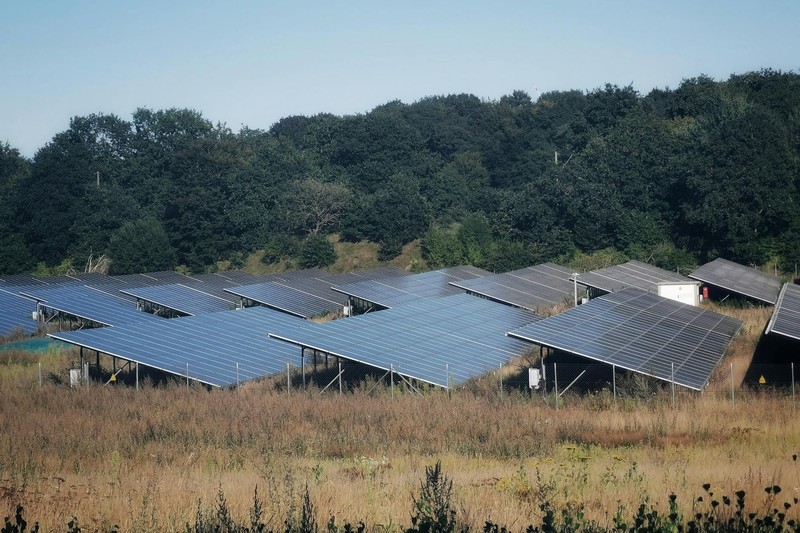
Europe installed solar panels at a furious pace for a decade. Now, on sunny days, it throws the electricity away.
About 40 terawatt-hours of solar power — enough to supply Greater London for a year — is expected to be curtailed in the coming months, according to Bloomberg. That’s up a quarter from 2025. Grid operators order producers to shut down because transmission networks cannot move the electricity to where it’s needed. The generation records keep falling; the infrastructure to handle them doesn’t.
Solar is now Europe’s single largest installed power source at roughly 490 gigawatts, surpassing gas, wind, nuclear, and coal. Around 80 GW more will be added this year — the equivalent of installing roughly six panels every second. But the grids were built for a different era. In Spain, about 16% of solar generation was curtailed in the first quarter of 2026, roughly double the figure from a year earlier, according to London Stock Exchange Group data. Germany’s curtailment rate climbed to about 13%, from 7%.
The waste carries a price tag. Congestion management costs across Europe neared €9 billion in 2024, according to Aurora Energy Research, while 72 TWh of mostly renewable energy — roughly Austria’s annual electricity consumption — was curtailed due to grid bottlenecks. Consumers end up paying twice: once for the subsidies that fueled the boom, and again when producers are compensated for switching off. Power prices plunge below zero during peak solar hours, falling to around minus €500 per megawatt-hour in Germany and France this spring.
The European Commission estimates €1.2 trillion in grid investment will be needed by 2040. In some member states, permitting for new high-voltage lines can take a decade or more. More than 1,000 GW of renewable capacity currently sits awaiting grid connection approval.
As EON CEO Leonhard Birnbaum put it: “Solar panels that cannot feed electricity into the grid do not offset a single ton of CO2.”
Sources
- Solar Power Is So Big in Europe That Electricity Is Being Wasted — Bloomberg (via Financial Post)
- Europe wastes record solar power as ageing grids fail to keep pace — Brussels Signal
Discussion (6)