 lop News
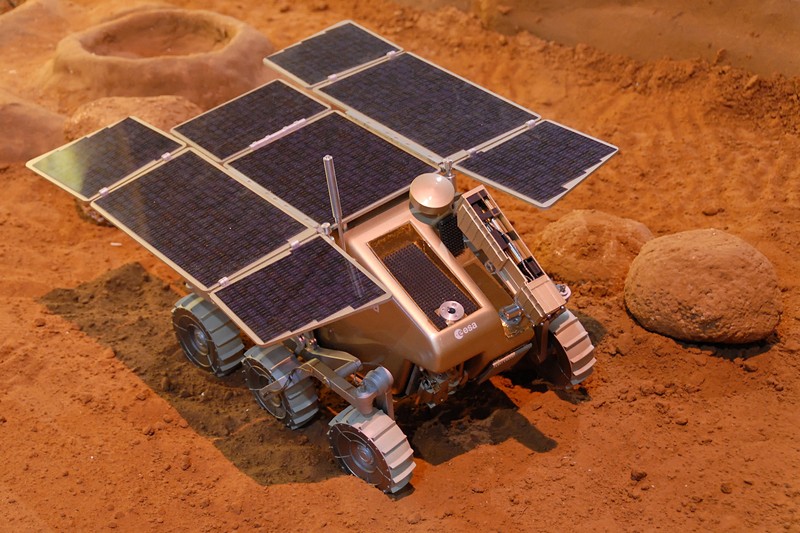
Europe’s Rosalind Franklin rover has a ride to Mars. It only took four rockets, two partner changes, one invasion, and roughly two decades of waiting.
NASA confirmed Thursday that SpaceX’s Falcon Heavy will launch the European Space Agency’s flagship Mars rover from Kennedy Space Center, no earlier than late 2028. It is the fourth vehicle slated to carry the mission skyward — a distinction no program manager would have wished for.
The saga began in the early 2000s, when ESA envisioned launching its first Mars rover on a Russian Soyuz by 2009. By 2009, the plan had morphed into a joint NASA-ESA venture, with twin rovers riding United Launch Alliance Atlas V rockets in 2018. That arrangement lasted less than three years. The Obama administration pulled NASA out of the ExoMars program in 2012, citing budget pressures including cost overruns on the James Webb Space Telescope, according to Ars Technica.
ESA turned back to Russia, which agreed to supply both the launch vehicle and a landing platform. Then Russia invaded Ukraine, and the partnership collapsed.
Now Falcon Heavy takes the baton. NASA is back as a partner, providing the launch service, radioisotope heater units, braking engines for the lander, and a mass spectrometer for the rover’s primary science instrument, NASA announced.
If Rosalind Franklin reaches the surface, it will do something no Mars rover has done: drill up to 2 meters beneath the ground to collect samples shielded from surface radiation and extreme temperatures. Its organic molecule analyzer will then search those samples for the chemical building blocks of life at a landing site called Oxia Planum.
ESA leads the mission. NASA supports it. SpaceX launches it. The rover carries the name of a scientist whose contributions went unrecognized in her lifetime. Some parallels don’t need spelling out.
Discussion (6)