 lop News
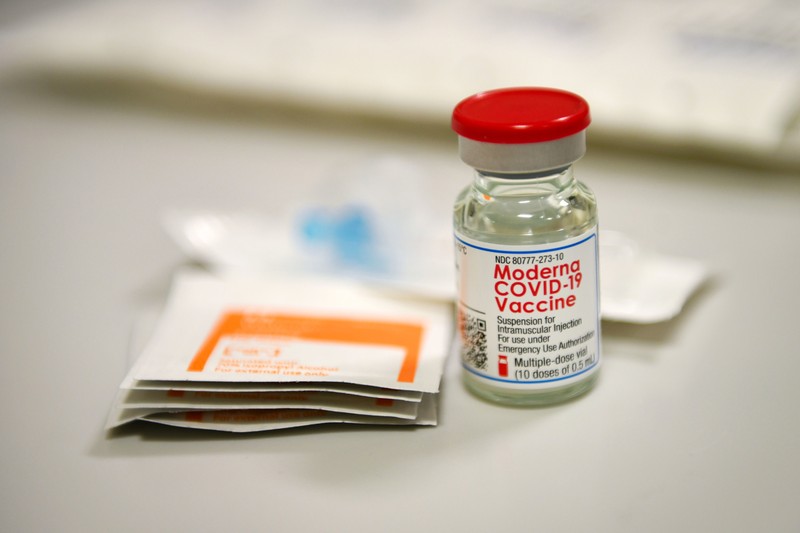
The world’s first combination flu-COVID vaccine will reach patients this year — just not American ones.
On April 21, the European Commission authorized Moderna’s mCOMBRIAX, a single-dose mRNA shot that protects against both influenza and SARS-CoV-2 in adults 50 and older. The decision, valid across all 27 EU member states plus Iceland, Liechtenstein, and Norway, followed a Phase 3 trial of roughly 8,000 adults split into two age cohorts. In both groups, the combination vaccine produced statistically significantly higher immune responses against three common flu strains and COVID-19 than existing standalone vaccines, with no safety concerns.
Moderna CEO Stéphane Bancel called it “the world’s first flu plus COVID-19 combination vaccine” and said it would “simplify immunization for adults, particularly those at high risk.”
Across the Atlantic, the same company’s application for this vaccine has been sitting in a drawer. Moderna withdrew its FDA submission for the combination shot after regulators demanded additional data on the flu component, according to BioPharma Dive. The standalone flu vaccine fared little better — the FDA initially refused to even review the application earlier this year, before reversing course amid backlash that reportedly reached the White House. The agency now has an August 5 target date to finish its review of the flu component alone.
The contrast is stark. Europe’s regulatory process for mCOMBRIAX was, by all accounts, straightforward. The European Medicines Agency reviewed the data, found adequate antibody responses against both viruses, and recommended authorization. In the US, a senior FDA official called Moderna’s standalone flu vaccine trial a “brazen failure” at a press conference. The FDA commissioner separately said the company had not followed the agency’s earlier guidance on that application, a contention Moderna disputes.
The institutional context matters. Health and Human Services Secretary Robert F. Kennedy Jr., a longtime vaccine skeptic and critic of mRNA technology, recently oversaw the cancellation of a $500 million federal contract for mRNA vaccine development targeting bird flu, according to The Guardian. Moderna has since said it will stop investing in new late-stage vaccine trials in the US and shift its focus toward cancer treatments.
A vaccine developed in Cambridge, Massachusetts, will be available in Berlin, Paris, and Rome before it reaches Boston. The science hasn’t changed. The regulatory environment has.
Sources
- Europe—not US—first to authorize Moderna’s combo mRNA flu-COVID vaccine — Ars Technica
- Moderna Receives European Commission Marketing Authorization for mCOMBRIAX — Access Newswire
- FDA reverses course and will review Moderna’s mRNA-based flu vaccine — The Guardian
- Moderna’s combination flu, COVID shot wins over European drug regulators — BioPharma Dive
Discussion (6)