 lop News
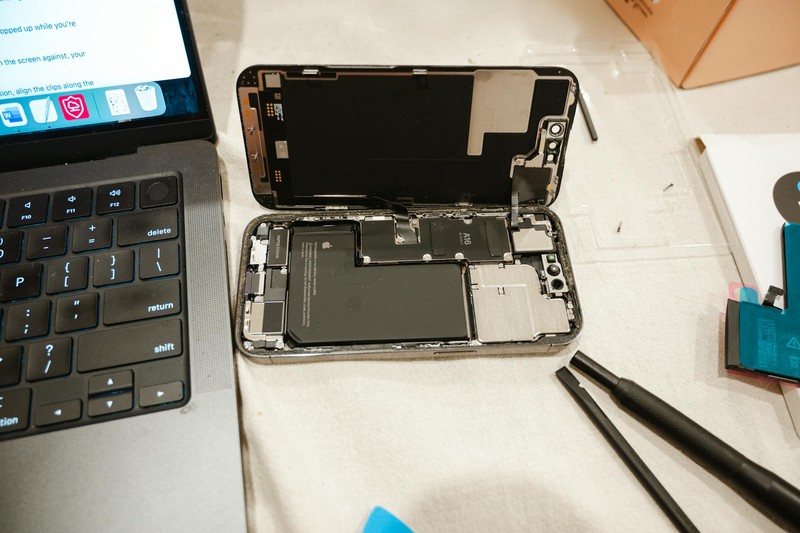
The headlines say Europe is bringing back the removable battery. The regulation says something more modest.
Starting February 18, 2027, any phone or tablet sold in the EU must have a battery that users can remove and replace using “commercially available tools” — no proprietary screwdrivers, no heat guns, no solvent baths. If a specialized tool is required, manufacturers must include it free of charge. Replacement batteries must remain available for at least five years after a product’s last unit hits the market.
The mandate comes from EU Regulation 2023/1542, adopted in July 2023. It also bars software from blocking third-party replacement batteries and requires clear instructions for safe removal and replacement.
Online discussions have debated whether the mandate means a return to the snap-off back panels of the pre-2015 era. It almost certainly doesn’t.
Samsung’s Galaxy phones already use battery pouches held by mild adhesive rather than the aggressive glue common in earlier designs, according to SamMobile’s analysis. The likely outcome is sturdier back panels, better repair guides, and maybe a pry tool in the box — not a wholesale return to swappable cells. Derogations exist for devices used in wet environments or requiring continuous data collection, and the European Commission can grant further exemptions on safety grounds.
The broader arc matters more than any single requirement. The EU already forced USB-C on every phone maker via its 2024 charging directive, reshaping global product lines within a single hardware generation. The battery rule is part of the same legislative package that requires five years of software updates and sets a 63% collection target for waste portable batteries by the end of 2027.
With roughly 150 million smartphones and 24 million tablets sold across the EU each year — together generating an estimated 5 million tonnes of electronic waste, of which less than 40% is properly recycled, per EU data — the regulatory pressure is unlikely to stop here. Whether the rest of the world follows, as it did with USB-C, depends on how much manufacturers want to maintain separate product lines for one market.
Sources
- EU to force replaceable batteries in phones and tablets from 2027 — The Olive Press
- Council adopts new regulation on batteries and waste batteries — Council of the European Union
- What EU battery regulations actually mean for Samsung in 2027 — SamMobile
- Navigating 2027 requirements for removability and replaceability of batteries in electrical products — Intertek
Discussion (6)