 lop News
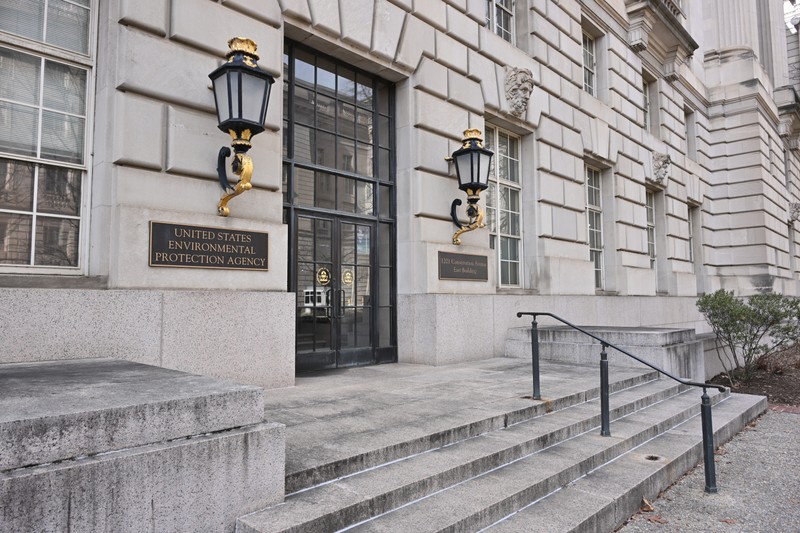
The average person swallows roughly 4,000 microplastic particles a year through drinking water alone, according to estimates cited by the advocacy group Food & Water Watch. Those particles have turned up in human blood, breast milk, lungs, arterial plaque, and brain tissue. On Thursday, the Environmental Protection Agency acknowledged as much — by putting microplastics on a list.
Just a list.
The EPA’s draft Sixth Contaminant Candidate List (CCL 6) adds microplastics and pharmaceuticals as priority contaminant groups for the first time, alongside per- and polyfluoroalkyl substances (PFAS), disinfection byproducts, 75 individual chemicals, and nine microbes. The list, mandated every five years under the Safe Drinking Water Act, identifies substances that may warrant future regulation. Emphasis on may.
EPA Administrator Lee Zeldin called it a “historic step” and framed it as a victory for the Make America Healthy Again movement. Health Secretary Robert F. Kennedy Jr., appearing alongside Zeldin, announced a separate $144 million research initiative called STOMP — Systematic Targeting of Microplastics — to develop tools for measuring and eventually removing microplastics from the human body.
The staging was political theater in the clearest sense: two cabinet officials, a movement hungry for wins, and an announcement that changes exactly nothing about the water coming out of your tap.
What the List Actually Does
The Contaminant Candidate List is a research prioritization tool. It tells local water systems and scientists which substances the EPA thinks deserve attention. It does not set limits, mandate monitoring, or require utilities to do anything at all.
In five cycles of this process, the EPA has determined that no regulatory action is appropriate for most contaminants it considered, according to the Associated Press. Just last month, the agency announced it would not develop regulations for any of the nine pollutants from the most recent list it had been evaluating.
“It’s the beginning of a very long process that routinely ends in nothing,” Erik Olson, a senior attorney at the Natural Resources Defense Council, told the AP.
Mary Grant of Food & Water Watch, one of several groups that petitioned the EPA for stronger action, said that based on Thursday’s announcement alone, it could be a decade or more before any enforceable regulation materializes.
What’s Missing
The critical gap is monitoring. Food & Water Watch led a campaign — including petitions from seven state governors — to get microplastics added to the Unregulated Contaminant Monitoring Rule (UCMR), which would require the EPA to actually collect data on how much plastic is in the water supply. That rule is currently under review at the White House. Thursday’s announcement did not mention it.
“Without monitoring of our drinking water, we can’t know the full scale of this crisis,” the group said in a statement.
The EPA did release human health benchmarks for 374 pharmaceuticals — giving states and local utilities reference points for assessing risk when drug residues turn up in water. But benchmarks are not enforceable limits.
The MAHA Irony
The political dynamics are worth sitting with for a moment. The MAHA movement, led by Kennedy, has made plastic pollution and toxic chemical exposure central concerns. Thursday’s announcement was explicitly framed as a MAHA victory. But the same administration has aggressively rolled back environmental regulations — including Biden-era limits on PFAS in drinking water finalized in April 2024.
In May 2025, the EPA rescinded regulations for several PFAS compounds and extended compliance deadlines for others. Some estimates, based on EPA’s own testing data, suggest as many as 30 million Americans are served by water systems with PFAS concentrations exceeding the limits that were rescinded, according to Food Safety Magazine.
Katherine O’Brien, an attorney with Earthjustice, didn’t mince words: “I think it’s fair to call this theater. It’s a distraction from the real harm that these very same agencies are doing to public health by undermining actual legal protections against toxic chemical exposure in our drinking water, and in our food.”
What Should You Actually Worry About?
The science on microplastics and human health is genuinely unsettled. Animal studies show disease causation; human studies show correlation but not yet proof. Researchers have found plastic particles in virtually every organ they’ve examined, but they cannot yet say with confidence which types cause the most harm, or at what doses.
That’s the gap STOMP is designed to fill. The $144 million program, run through the Advanced Research Projects Agency for Health, will develop standardized measurement tools and eventually explore removal methods. ARPA-H Director Alicia Jackson put it plainly: “The field is working in the dark. STOMP is turning on the lights.”
So here is the honest framing. Microplastics in drinking water are a real and growing concern. The EPA’s acknowledgment is a necessary first step. The research funding is genuine money directed at a genuine problem.
But the distance between identifying a contaminant and regulating it is measured in years — often many years — and this administration’s track record suggests that even existing protections are not safe. The stuff in your water isn’t going anywhere soon. Neither, it seems, is the bureaucratic process required to do something about it.
Sources
- EPA flags microplastics, pharmaceuticals as contaminants in drinking water — NPR
- EPA Takes Bold Action to Ensure Drinking Water is Safe from Microplastics, Pharmaceuticals, and Potential Hidden Contaminants — U.S. EPA
- EPA moves to designate microplastics and pharmaceuticals as contaminants in drinking water — Associated Press
- ARPA-H launches groundbreaking, $144 million program to combat toxic microplastics in the human body — U.S. HHS
- EPA Must Do More to Address Microplastics Crisis — Food & Water Watch
- EPA Addresses Microplastics, PFAS in Drinking Water; HHS to Study Microplastics in Humans — Food Safety Magazine
Discussion (8)