 lop News
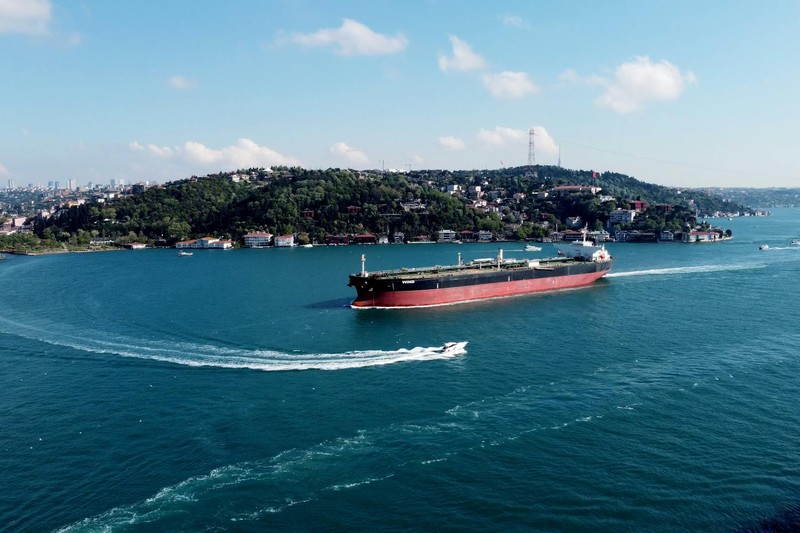
Three transmission channels. One chokepoint. And 700 million people absorbing the blow.
The Strait of Hormuz has been effectively closed since late February, and the economic aftershocks rolling through Southeast Asia follow a grimly predictable chain: energy prices surge, fertiliser costs follow, and food inflation lands hardest on the nations least equipped to handle it.
Sultan Nazrin Shah of Perak, one of Malaysia’s most prominent royal figures, laid out the stakes in blunt terms at the Putrajaya Forum on Tuesday, during the Defence Services Asia and National Security Asia 2026 exhibitions.
“The surging prices of energy, fertilisers and transport are driving up food prices, increasing production and distribution costs, and fuelling inflation. The worst affected are countries with low energy reserves,” he said. “An economic crisis is looming. Livelihoods will continue to be affected for months even if the strait is reopened in the near term.”
His remarks anchor a growing recognition that Southeast Asia is the underreported economic front of the Middle East conflict — not because of military involvement, but because of structural exposure to a waterway through which over half the region’s oil imports normally transit.
The Chokepoint by the Numbers
Roughly 13 million barrels of crude per day flowed through Hormuz in 2025, representing 31% of all seaborne oil, according to energy consultancy Kpler. The strait also handled about 20% of global LNG exports, primarily from Qatar. When Iran’s Revolutionary Guard declared the waterway shut in late February, and US President Donald Trump compounded the closure with a naval blockade after failed April 12 negotiations, those flows stopped.
Brent crude has since climbed above $118 per barrel, according to the Lowy Institute — roughly 60% above pre-conflict levels.
For ASEAN’s net energy importers, the arithmetic is punishing. Thailand carries the biggest net oil import burden in Asia at 4.7% of GDP, with each 10% rise in oil prices worsening its current account by roughly half a percentage point, according to Nomura. The Philippines imports all its crude, 98% from the Middle East, and petrol prices have surged 76%. Vietnam sources 88% of its crude imports from the Gulf. Even Indonesia, a former OPEC member, has been a net oil importer since 2003 and holds domestic reserves covering barely 20 days of consumption.
The Fertiliser Fuse
The second-order damage may exceed the first. The conflict has locked up roughly one-third of globally traded fertilisers, according to Eco-Business. Qatar’s force majeure on LNG has squeezed nitrogen fertiliser production elsewhere — natural gas is a primary feedstock. Urea prices have risen more than 50% since January and may not have peaked.
Cambodia, Laos, Myanmar, the Philippines and Thailand are the most dependent on imported nitrogenous fertilisers in the region. Farmers typically take one to three months to adjust planting decisions; another three to nine months pass before higher costs show up on supermarket shelves.
Rice, the regional staple, has temporary cover: the current growing season’s fertiliser has already been applied. The next cycle is another matter. With only about 10% of global rice production traded internationally, any squeeze in that thin export margin will drive import prices up fast. Thailand, Vietnam and Cambodia face reduced rice exports. Indonesia and the Philippines will need more imports at higher prices.
The Agency Gap
Six weeks into what the Lowy Institute calls the worst energy disruption in modern history, ASEAN’s response has been pragmatic but entirely reactive. Indonesia froze fuel prices and expanded subsidies. The Philippines declared a national energy emergency. Thailand reactivated coal plants and rationed diesel. Vietnam suspended crude exports.
What none of them has done is shape the crisis. No ASEAN member state has influenced the blockade decision, the ceasefire terms, or the conditions for reopening. The bloc has issued no substantive collective statement and proposed no coordinated diplomatic position. The Lowy Institute’s assessment is blunt: “Resilience without agency is adaptation on someone else’s terms.”
Policy options exist — pooling fertiliser purchases, fast-tracking supplier switches, accelerating renewables. But damage to Qatari LNG and fertiliser infrastructure could constrain supplies for up to five years, Eco-Business reports, even if the war ended tomorrow.
The sultan’s directive was clear: “It is therefore imperative that negotiations to end the West Asian (Middle East) conflict are concluded swiftly and successfully.” Swiftly and successfully being, of course, the two things those negotiations have conspicuously failed to be.
For Southeast Asia, the question is no longer whether the shock arrives. It is how many months of food inflation governments can absorb before the fiscal cushion runs out — and whether ASEAN is willing to build the institutional muscle to ensure this does not happen again.
Sources
- Malaysian sultan warns Asean staring at ‘economic crisis’ over Hormuz closure — South China Morning Post
- Strait of Hormuz closure: which countries will be hit the most — CNBC
- ASEAN’s energy crisis is not about energy — Lowy Institute
- What the Hormuz shutdown means for Asean’s energy security, renewables: 10 things to know — Gulf News
- Chokepoint in the Gulf: What the US-Israeli war on Iran means for Southeast Asia’s food security — Eco-Business
Discussion (9)