 lop News
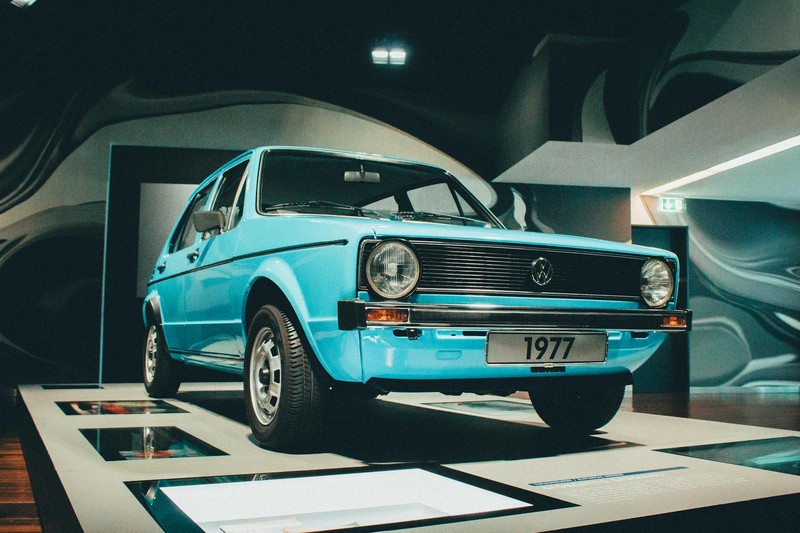
Volkswagen’s chief financial officer delivered the number on an earnings call last week: US tariffs are costing the company €4 billion a year. And that was before Donald Trump threatened to make things much worse.
Last Friday, the White House announced plans to raise tariffs on European vehicles to 25 percent, up from the 15 percent agreed under last summer’s Turnberry Deal. When continental markets opened on Monday, the sell-off was immediate. Continental, the tyre giant, fell 5 percent. Mercedes-Benz dropped nearly 3 percent. BMW slid more than 2 percent. Porsche shed 1 percent. Volkswagen, already reeling from earnings that missed forecasts — earnings per share came in almost 45 percent below expectations — fell another 1.8 percent.
Who Pays, Who Moves, Who Leaves
The damage falls unevenly. Volkswagen absorbed the single largest hit, but it also has options: the company operates a major plant in Chattanooga, Tennessee, building the Atlas and the electric ID.4. Mercedes-Benz produces many of its SUVs in Alabama. BMW builds its X-series models in Spartanburg, South Carolina. All three can shift some production stateside.
Porsche and Audi, both owned by Volkswagen, have no US manufacturing footprint. Every vehicle they sell in America is imported. Ferrari and Lamborghini are in the same position — all of their cars are built in Italy, making them impossible to shield through production reshuffling. Porsche has reportedly considered expanding US production to offset tariff exposure, according to Automotive News.
“It has more impact on higher-end cars since those are the ones primarily imported as finished items,” Rachel Ziemba, adjunct senior fellow at the Center for a New American Security, told Al Jazeera. Mid-level vehicles are more likely to be produced domestically, taking advantage of USMCA trade incentives.
The numbers explain the urgency. The US is the number-one destination for EU-built cars, absorbing 29 percent of the bloc’s total auto export value, according to the European Automobile Manufacturers’ Association. Car trade accounts for 8 percent of all EU-US commerce.
The Turnberry Deal Unravels
The current crisis traces back to an agreement struck at Trump’s Turnberry golf course in Scotland last July. Both sides agreed the US would cap tariffs at 15 percent on EU goods, while the EU would eliminate all tariffs on US industrial products. The European Parliament gave conditional approval in March but attached safeguards — notably, requiring the US to exclude European steel and aluminium goods from its 50 percent metals tariffs.
Ratification has been delayed twice: first over Trump’s threat to invade Greenland, then over a US Supreme Court ruling that struck down some of the president’s broader tariff powers. That foot-dragging is what triggered Trump’s latest ultimatum. After a phone call with European Commission President Ursula von der Leyen, Trump said he would give the EU until July 4 — America’s 250th birthday — before escalating to “much higher” tariffs.
Von der Leyen said the bloc remains “fully committed” to implementing the deal and that “good progress is being made towards tariff reduction by early July.” Trade negotiators are scheduled to meet again on May 19 in Strasbourg.
A Structural Reckoning
The tariff threat is forcing decisions that extend far beyond quarterly earnings. Volkswagen CFO Arno Antlitz told analysts that “incremental cost measures will not be enough” and that the company must “fundamentally reshape our business model through structural, lasting improvements.”
The more profound question is whether this accelerates a strategic pivot. Carmakers with US plants can localize production to sidestep tariffs, but that means investing billions in new American capacity while factories in Germany and Eastern Europe run below potential. Those without US manufacturing face a blunter choice: absorb the tariffs and compress margins, or raise prices and cede ground to American, Japanese, and Korean competitors.
A sustained 25 percent tariff regime would cost German carmakers nearly €15 billion in the short term and up to €30 billion over the longer haul, according to the Kiel Institute for the World Economy.
With the US market becoming less predictable and Chinese electric-vehicle makers capturing growing market share in Asia, European executives face a calculation that no earnings call script can smooth over: restructure fast, or watch the numbers keep climbing.
Sources
- European carmakers slam on the brakes after Trump tariff shock — MSN / The Times
- US plans to hike tariffs on EU cars to 25% will hit luxury market the most — Al Jazeera
- Tariffs or not? How EU is dealing with US ‘dealmaking’ — Deutsche Welle
- Trump threatens EU if no trade deal is signed by new deadline — CNBC
- Trump gives EU ultimatum deadline to approve trade deal with US — BBC
Discussion (9)