 lop News
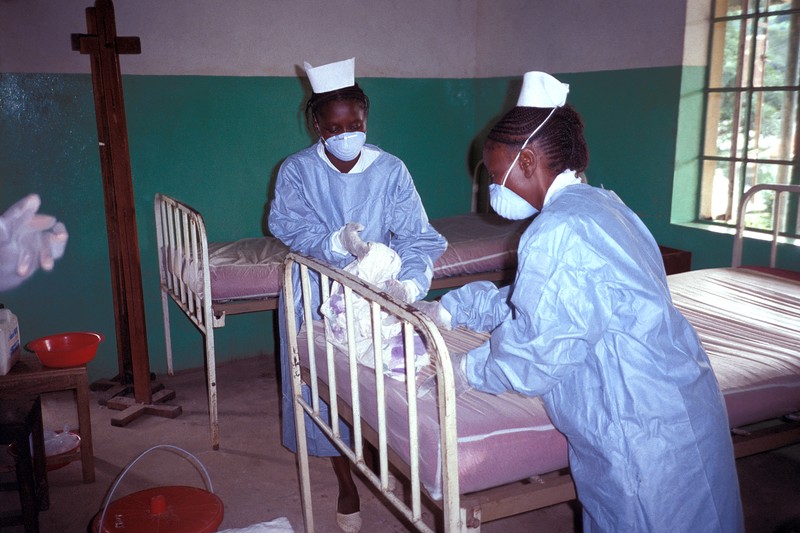
A Congolese man checked into a hospital in Kampala, Uganda, on Tuesday. Three days later he was dead. His posthumous Ebola test, returned on Friday, confirmed what public health officials had been dreading: the outbreak in neighboring Congo had crossed an international border.
And the virus responsible isn’t the one the world has spent decades preparing for.
Africa’s top public health body, the Africa Centres for Disease Control and Prevention, confirmed Friday that Congo’s Ituri province has 246 suspected Ebola cases and 65 deaths. The outbreak is centered on the Mongwalu and Rwampara health zones, with suspected cases also reported in Bunia, the provincial capital near the Ugandan border.
But the Uganda case changes the calculus. An “imported” infection — a patient who contracted the virus in Congo before traveling to the capital — transforms this from a Congolese emergency into a regional crisis. Uganda’s Health Ministry said all contacts linked to the deceased man have been quarantined and no local transmission has been confirmed. His body has been returned to Congo.
The strain, however, may matter more than the border crossing.
A Virus the Vaccines Weren’t Built For
Preliminary laboratory results from Congo’s Institut National de Recherche Biomédicale have detected Ebola in 13 of 20 samples tested. Early sequencing suggests this is not the Zaire ebolavirus — the strain behind most of Congo’s 16 previous outbreaks and the 2014–2016 West Africa epidemic that killed more than 11,000 people.
According to reporting by Reuters, cited by CIDRAP, the outbreak involves the Bundibugyo strain. Uganda’s Health Ministry separately confirmed the Kampala patient was infected with the Bundibugyo virus, a variant that has been endemic in Uganda.
This matters because the world’s Ebola arsenal is built almost entirely for Zaire. The Ervebo vaccine was shown to cut deaths in half during the 2018–2020 Congo outbreak, according to a study published in The Lancet Infectious Diseases. It is effective only against the Zaire strain. There are no licensed vaccines or treatments for Bundibugyo — or for Sudan ebolavirus, the third strain known to cause large outbreaks.
“Right now, we have treatments for the Zaire strain. We have vaccines for the Zaire strain. We do not for other strains,” Dr. Céline Gounder, a CBS News medical correspondent and former aid worker during the West Africa outbreak, told the network.
Bundibugyo is uncommon. Before this outbreak, it had caused only two known epidemics: 56 cases in Uganda in 2007 and 57 cases in Congo in 2012. Its historical fatality rate — roughly 36 to 40 percent — is lower than Zaire’s staggering 60 to 90 percent. But with just two small prior outbreaks, the medical literature on Bundibugyo is thin. Doctors are navigating this response with a fraction of the knowledge they carry for Zaire.
Borders, Mines, and Militants
The geography amplifies every risk. Ituri province sits in Congo’s far east, more than 620 miles from Kinshasa, sharing borders with Uganda and South Sudan. Mongwalu is a mining hub with a constant churn of transient workers. Rwampara and Bunia are densely populated. Multiple armed groups — including the ISIS-linked Allied Democratic Forces — operate in the region, displacing populations and complicating health workers’ ability to test, trace, and isolate the sick.
Africa CDC said it is “concerned about the risk of further spread due to intense population movement, mining-related mobility in Mongwalu, insecurity in affected areas, gaps in contact listing and control challenges.”
The parallels to the early days of the West Africa outbreak are uncomfortable. “It was partly because you had it in urban areas, you were dealing with different country borders and you had migrant workers,” Gounder said of the 2014 epidemic. “And we have exactly that same pattern this time.”
Africa CDC Director-General Jean Kaseya said the agency was convening an urgent coordination meeting Friday with health authorities from Congo, Uganda, and South Sudan, along with the WHO, UNICEF, and officials from the US, Europe, Canada, and China. WHO Director-General Tedros Adhanom Ghebreyesus said the agency has had experts in Ituri since May 5 and is releasing $500,000 to support the response. Maria van Kerkhove, WHO’s director of epidemic and pandemic preparedness, said the agency is prepared to deploy vaccines “should it turn out to be a strain where a vaccine can be used” — phrasing that quietly acknowledges the current gap.
Dr. Gabriel Nsakala, a public health professor involved in past Ebola responses in Congo, said the country’s health workers are experienced. “In terms of training, people already know what they can do,” he said. “Now, the expertise and equipment need to be delivered quickly.”
This is Congo’s 17th Ebola outbreak since the virus was first identified there in 1976. The country knows this disease intimately. But this time the pathogen is one it has barely encountered, and the tools that worked before are, for now, irrelevant.
Discussion (10)