 lop News
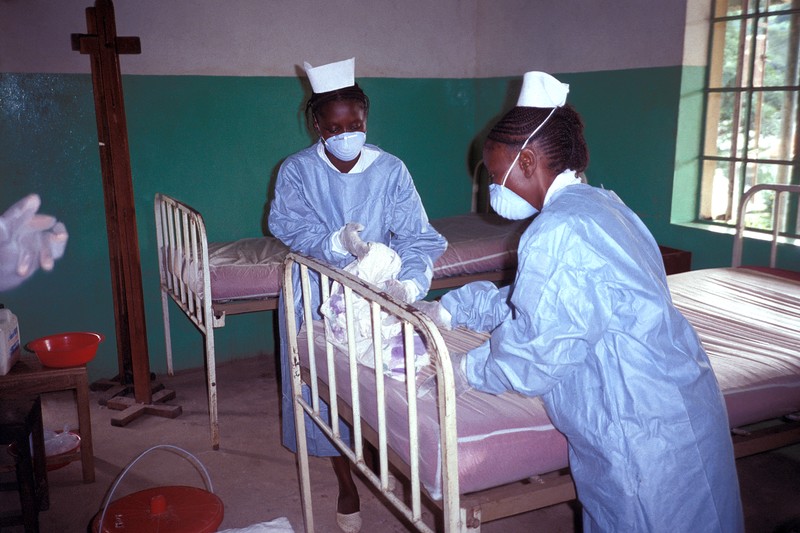
Sixty-five people are dead. Two hundred and forty-six are suspected of infection. And the virus responsible is spreading through a corner of the Democratic Republic of Congo where armed groups control the roads, health workers risk ambush, and the national capital, Kinshasa, lies more than a thousand kilometers away, connected by poor roads through contested territory.
Africa CDC, the continent’s top public health authority, confirmed the outbreak Friday in Ituri province, northeastern DRC. Laboratory testing detected Ebola virus in 13 of 20 samples collected from affected communities. Sequencing is underway to identify the exact strain — preliminary results suggest it is not the Zaire ebolavirus, the species responsible for most of Congo’s previous outbreaks and the one for which an approved vaccine exists.
Most cases cluster in the Mongwalu and Rwampara health zones, areas defined by artisanal gold mining and the constant population movement that comes with it. Four of the 65 reported deaths are laboratory-confirmed. Suspected cases have also surfaced in Bunia, Ituri’s provincial capital — which means the virus has reached an urban center.
A Landscape Built to Defeat Containment
Ituri is the kind of place where disease response goes to fail. Not for lack of expertise, but because geography and politics conspire against every logistical plan.
The province sits more than 1,000 kilometers from Kinshasa, connected by roads that range from poor to nonexistent. Movement between towns follows informal mining routes and population flows no health authority can easily track.
Then there are the men with guns.
Ituri and neighboring North Kivu are contested by multiple armed factions. The Islamic State-linked Allied Democratic Forces (ADF) has operated in Ituri for years, staging massacres in civilian communities. An Amnesty International report published this month documented ADF fighters attacking villages, burning homes, and — directly relevant to this outbreak — raiding health facilities. In November 2025, ADF fighters killed at least 17 civilians at a health center in the village of Byambwe and set fire to four wards. A survivor described crawling out of the burning building: “You couldn’t stand; they shot at anything that moved.”
When responders need armed escorts to reach patients, and the armed groups are the ones attacking responders, the math of outbreak control becomes grim.
Meanwhile, the Rwanda-backed M23 rebel group has seized territory across eastern Congo since launching a rapid offensive in January 2025, diverting government troops and international attention from the ADF’s operations in Ituri.
What Global Health Infrastructure Looks Like Now
This is Congo’s 17th Ebola outbreak since the virus was first identified there in 1976. The previous one was declared over roughly five months ago after killing 43 people. The one before that, from 2018 to 2020, killed more than 1,000 — also in eastern Congo, also complicated by armed interference with response teams.
The question global health officials are asking is whether the post-COVID era has left the world better equipped or simply exhausted.
Africa CDC’s response has been swift. The agency convened an urgent coordination meeting Friday with health authorities from the DRC, Uganda, and South Sudan, along with a sprawling coalition that includes the WHO, UNICEF, the US CDC, the European CDC, pharmaceutical companies including Merck, Moderna, and Gilead Sciences, and humanitarian organizations like Médecins Sans Frontières.
The breadth of the coalition reflects a lesson learned from previous outbreaks: Ebola does not respect borders, and Ituri’s proximity to Uganda and South Sudan makes cross-border surveillance essential.
But during last year’s outbreak, the WHO struggled to deliver vaccines due to limited access and scarce funding. The same constraints — insecurity, remote terrain, underfunded local health systems — remain in place.
Dr. Jean Kaseya, Director General of Africa CDC, acknowledged the challenge: “Given the high population movement between affected areas and neighbouring countries, rapid regional coordination is essential.” The agency is preparing support across surveillance, laboratory coordination, infection prevention, and — once the strain is identified — assessment of available medical countermeasures.
The Clock and the Sequencing Machine
The immediate unknown is the strain. If this outbreak is driven by a non-Zaire species, the existing Ebola vaccine may not be directly effective, though research into broader candidates has advanced significantly since 2020. Sequencing results are expected within 24 hours.
Until then, the response runs on the tools that always matter most in an Ebola outbreak’s early days: contact tracing, isolation, safe burials, and community trust — all of which are harder to build when the people you need to reach are also trying to survive a war.
Africa CDC has urged communities in affected areas to report symptoms promptly and avoid direct contact with suspected cases. Sound advice. In a province where armed groups have burned health centers and shot civilians fleeing for their lives, following it is another matter entirely.
Sources
- Africa CDC calls urgent regional coordination meeting following Ebola virus disease outbreak in Ituri Province, DRC — Africa CDC via MSN
- Africa’s Top Health Body Confirms New Ebola Outbreak In Remote Congo Province — NDTV
- DRC: Rampant ADF abuses against civilians ‘war crimes which the world must not continue to ignore’ – new report — Amnesty International
Discussion (10)