 lop News
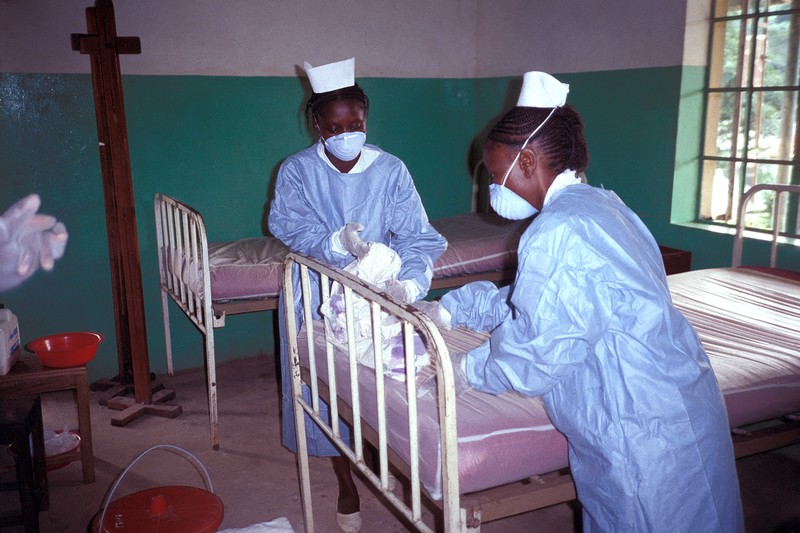
Three US airports are screening arrivals for fever. Brazil has isolated two patients. Italy has triggered Ebola protocols in Sardinia. In eastern Congo, where the outbreak is actually happening, health workers cannot reach many of the affected areas.
The Democratic Republic of the Congo’s Ebola outbreak, declared just over two weeks ago on May 15, has already surpassed 1,000 suspected cases with nearly 250 deaths, according to the Africa Centres for Disease Control and Prevention. Neighboring Uganda has confirmed at least seven cases and one death. The WHO has warned that the true number of infections is likely far higher, as the virus was probably circulating well before detection.
This is already the third-largest Ebola outbreak since the virus was discovered half a century ago.
A Virus With No Vaccine
The outbreak is caused by the Bundibugyo strain — a rare variant discovered in 2007 that has caused only four outbreaks since. Unlike the Zaire strain, which prompted development of the effective rVSV-ZEBOV vaccine during the 2018-2020 DRC outbreak, Bundibugyo has no licensed vaccine and no approved therapeutic.
That leaves public health authorities with two tools: contact tracing and isolation. Both are failing.
“In many affected areas, health facilities are either non-functional or operating under severe constraints due to insecurity,” WHO Director-General Tedros Adhanom Ghebreyesus said during a visit to Bunia. At least four Ebola treatment centers have been attacked. Eastern DRC’s decades-long armed conflict and poor roads make contact tracing, in Tedros’s words, “nearly impossible.”
Confirmed Cases Doubled in Four Days
According to the ECDC, confirmed DRC cases stood at 125 with 17 deaths as of May 28. By June 1, DRC communications ministry data showed 282 confirmed cases and 42 deaths — 157 new confirmed infections in roughly four days. The case fatality rate among suspected cases is approximately 14.3%, according to Reliefweb data compiled by CIDRAP.
The suspected case count is harder to track precisely. A DRC data revision in late May removed non-cases and reclassified some as confirmed, temporarily lowering the suspected figure. But the trajectory is unambiguous: the outbreak is growing faster than the response. Uganda has closed its border with the DRC.
WHO designated the outbreak a Public Health Emergency of International Concern in May, though it stopped short of calling it a pandemic emergency. The designation was meant to galvanize resources. So far, the gap between response and outbreak keeps widening.
Screening Reaches Three Continents
The global nervousness is playing out at borders. In Brazil, two patients arriving from African countries were isolated after exhibiting Ebola-like symptoms. A 37-year-old man who had traveled to the DRC was diagnosed with meningitis and remains under Ebola investigation in São Paulo. A second patient in Rio de Janeiro, arriving from Uganda, tested positive for malaria and has since tested negative for Ebola, Brazil’s Ministry of Health said.
Italy triggered Ebola protocols in Cagliari, Sardinia, after a symptomatic patient was hospitalized following travel from Congo, local newspaper Il Sole 24 Ore reported.
The US has enhanced screenings at three airports — Houston, Washington, and Atlanta — and will quarantine Americans from affected areas in Kenya rather than fly them home. “We cannot and will not allow any cases of Ebola to enter the United States,” Secretary of State Marco Rubio told President Trump during a cabinet meeting.
Brazilian authorities and the ECDC rate the risk of Ebola reaching their regions as “very low.” The danger remains in eastern Congo — but if containment at the source keeps failing, border screenings are buying time, not safety.
Recoveries, and Their Limits
Four nurses and a laboratory worker have recovered from Bundibugyo Ebola in Bunia — the first documented recoveries during this outbreak. Tedros noted that while no licensed treatment exists, the disease “is not without hope” when patients receive supportive care early.
Nurse Ezo Étienne, tested seven times before confirmation, described a treatment regimen that was purely supportive: anti-nausea medication, fluids, pain relievers. “That was all they could provide,” he said.
Recovered patient Baraka Bulambulu described the overwhelming uncertainty of not knowing what disease he and other patients had. “Many people who were in the same situation died,” he said.
Supportive care works when patients reach a functioning clinic. In Ituri and North Kivu, that is increasingly not guaranteed.
Sources
- Brazil isolates two suspected Ebola cases as Congo outbreak surpasses 1,000 infections — France 24
- Ebola cases near 1,000 as world scrambles to contain outbreak — CIDRAP
- Ebola disease outbreak in the Democratic Republic of the Congo and Uganda — ECDC
- Italian and Brazilian authorities investigate possible Ebola cases as outbreak grows — ABC News Australia
Discussion (9)