 lop News
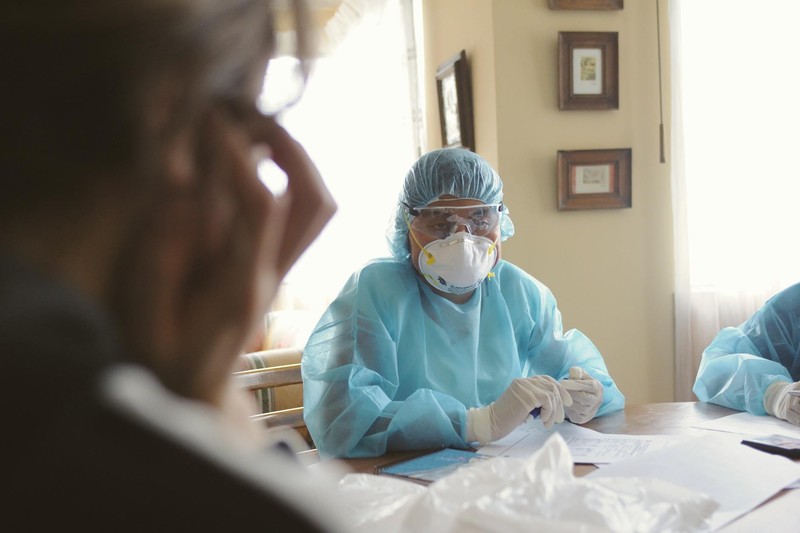
The Bundibugyo strain of Ebola was first identified in humans in 2007. Eighteen years later, there is still no vaccine, no approved treatment, and no rapid diagnostic test calibrated to detect it. The virus has now been spreading through eastern Democratic Republic of the Congo for at least six weeks, and the world is scrambling to catch up.
The World Health Organization declared the outbreak a public health emergency of international concern on May 17. By then, standard field tests — designed for the better-known Zaire strain — had returned false negatives for weeks, burning through precious response time. As of May 21, WHO figures showed roughly 600 suspected cases and 139 deaths in the DRC, with two confirmed cases in neighbouring Uganda. A new case reported Thursday in South Kivu province, an area controlled by armed rebel groups, underscored how far the virus has spread and how difficult containment will be.
A strain the world forgot
Bundibugyo Ebola has caused human outbreaks only twice before — Uganda in 2007 and the DRC in 2012 — killing roughly a third of those infected. Two licensed vaccines exist for the Zaire strain. For Bundibugyo, there is nothing.
The WHO said two candidate vaccines are in development, but the most promising is six to nine months from readiness. “Because early tests looked for the wrong strain of Ebola, we got false negatives and lost weeks of response time,” Matthew Kavanagh, director of Georgetown University’s Center for Global Health Policy and Politics, told the International Business Times.
Health facilities on the ground are overwhelmed. Trish Newport, an emergency programme manager with Médecins Sans Frontieres, said sites were telling her organization: “We are full of suspect cases. We don’t have any space.” Healthcare workers are among the dead — a particularly alarming signal for any viral haemorrhagic fever outbreak.
The US response: Title 42
On May 18, the US invoked Title 42 public health authority — the mechanism last used during COVID-19 — barring non-US passport holders who had been in the DRC, Uganda, or South Sudan in the previous 21 days. US citizens are exempt but face enhanced screening. The order lasts 30 days.
The trigger was partly the confirmation that an American physician, Dr Peter Stafford, had tested positive while treating patients near Bunia. Stafford and six other Americans are being evacuated to German biocontainment facilities, according to the CDC.
The CDC itself assessed the immediate risk to the American public as low. The WHO, in its emergency declaration, explicitly advised against travel restrictions, warning that such measures “push the movement of people and goods to informal border crossings that are not monitored, thus increasing the chances of the spread of disease.”
Partnership or punishment
Africa CDC issued the sharpest critique. While acknowledging every government’s right to protect its citizens, the body said generalized travel restrictions “can create fear, damage economies, discourage transparency, complicate humanitarian and health operations, and divert movement toward informal and unmonitored routes — potentially increasing public health risks rather than reducing them.”
Then came the harder point. The absence of a Bundibugyo vaccine, Africa CDC said, highlighted “a deeper structural injustice in global health innovation.” The virus was identified nearly two decades ago. “Africa CDC believes that if this disease had predominantly threatened wealthier regions of the world, medical countermeasures would likely already be available.”
Dr Githinji Gitahi, group CEO of Amref Health Africa, was more direct. “Travel bans don’t stop viruses, they stop solidarity,” he said. “Africa needs partnership, not punishment.”
Uganda’s information minister, Chris Baryomunsi, told Reuters the US was “overreacting,” noting that Uganda has contained Ebola outbreaks before.
What the outbreak actually needs
The ban has already created disruption beyond public health: a Detroit-bound flight was diverted to Canada because a DRC traveller was onboard, and the DRC football team’s World Cup preparations — the tournament opens in the US next month — are now uncertain.
Meanwhile, an Ebola case confirmed in Goma, the capital of North Kivu, has prompted urgent calls to reopen the city’s airport for aid deliveries. Researchers at Imperial College London have revised their outbreak estimates upward. The conflict zones, displacement camps, and porous borders of eastern Congo make every element of the response — surveillance, contact tracing, safe burials — exponentially harder.
The 2014 West Africa epidemic killed more than 11,000 people and cost the US over $5.4 billion. The lesson was clear enough at the time: contain outbreaks at the source, invest in local health infrastructure, and maintain the partnerships that make early detection possible. Much of that architecture no longer exists.
Sources
- Ebola: US ban on travellers from DRC, Uganda or South Sudan ‘not the solution’ — The Guardian
- How to Contain the Ebola Outbreak — The Atlantic
- Epidemic of Ebola Disease caused by Bundibugyo virus determined a Public Health Emergency of International Concern — World Health Organization
- CDC Statement on the Use of Public Health Travel Restrictions to Prevent Ebola Disease — Centers for Disease Control and Prevention
- Ebola outbreak in DR Congo: WHO says Ebola vaccine could take nine months as death toll rises further — BBC News
- Ebola Travel Ban Invoked for First Time Since COVID After American Doctor Tests Positive in Congo — International Business Times
Discussion (9)