 lop News
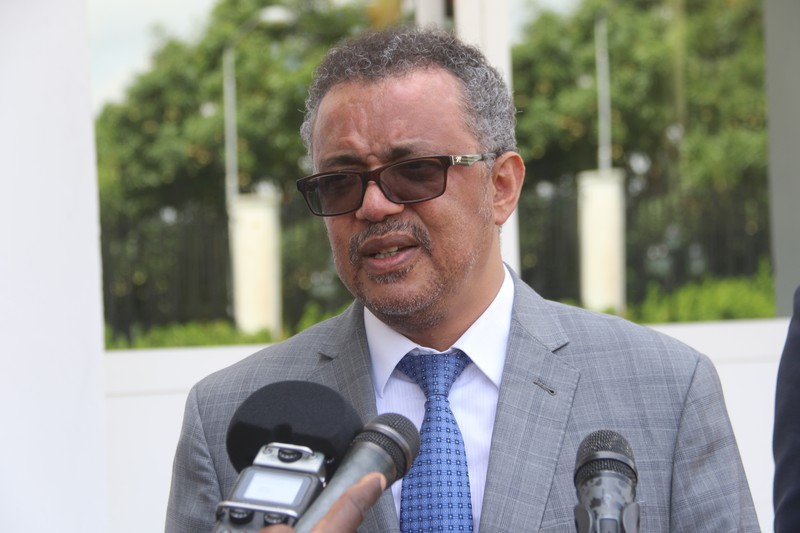
Up to five in ten. That is how many people infected with Ebola in the current outbreak in the Democratic Republic of the Congo are expected to die, according to the World Health Organization. Anaïs Legand, from the WHO’s high-threat pathogens team, did not dress up the number for reporters in Geneva. “It’s huge,” she said. “It means that up to five out of 10 people are likely to die.”
The strain responsible — Bundibugyo — has no approved vaccine and no approved treatment. The virus circulated undetected for roughly four weeks before laboratory confirmation on 15 May. And in much of the affected area, the people trying to contain it cannot safely reach the sick because armed groups control the roads.
“We are urgently scaling up operations, but at the moment, the epidemic is outpacing us,” WHO Director-General Tedros Adhanom Ghebreyesus told reporters this week, before flying to Kinshasa on Thursday to support the response in person.
The numbers on the ground
As of 28 May, the DRC Ministry of Health has reported 125 confirmed cases, including 17 deaths, and 906 suspected cases, including 223 suspected deaths, across the provinces of Ituri, North Kivu, and South Kivu, according to the European Centre for Disease Prevention and Control. The ECDC noted that suspected case figures had actually decreased from prior reports after Congolese authorities removed non-cases and reclassified some as confirmed. Neighbouring Uganda has confirmed nine cases — at least three linked to travel from the DRC — and one death.
The true scale is almost certainly larger. The first known patient, a health worker in Mongbwalu, developed symptoms on 24 April and died at a medical centre in Bunia. Four healthcare workers at Mongbwalu General Referral Hospital died within four days of each other, which the WHO cited as evidence of critical breaches in infection prevention and control. Unusual clusters of community deaths compatible with Ebola are being investigated across Ituri and North Kivu.
On 17 May, Tedros declared the outbreak a Public Health Emergency of International Concern — the highest alert under international health law — citing the geographic spread, the detection gap, the lack of medical countermeasures for the Bundibugyo strain, and the confirmed importation of cases into Uganda.
A pathogen in a war zone
Containing Ebola requires rapid case identification, contact tracing, isolation, safe burials, and community trust. Eastern Congo makes all of those things extraordinarily difficult.
The outbreak is centred on Ituri province, a mineral-rich region contested by armed groups including the Allied Democratic Forces, CODECO militias, and the Rwanda-backed M23. Active fighting restricts the movement of surveillance teams, limits deployment of rapid response units, and hinders secure transport of laboratory samples, according to the WHO’s risk assessment. Several listed contacts became symptomatic and died before they could be isolated.
“We cannot build community trust or isolate the sick while bombs are falling,” Tedros said.
The overlap with displacement and hunger compounds the crisis. More than 245,000 people have fled eastern DRC to neighbouring countries since January 2025, according to the UN refugee agency. In Ituri alone, 273,000 are internally displaced and 1.9 million need humanitarian assistance. Nearly 10 million people across Ituri, North Kivu, South Kivu, and Tanganyika face acute hunger through June 2026, according to the IPC, the UN-backed food security monitor.
“Hunger and disease are old companions,” Tedros said. “People weakened by hunger are far more vulnerable to infections.”
Tedros arrived in Kinshasa on Thursday and was due to travel to Ituri on Friday. He appealed directly to armed groups: “No cause, no conflict, no grievance is worth condemning innocent people to death from a preventable disease.”
No vaccine, no treatment
This is the 17th Ebola outbreak recorded in the DRC since the disease was first identified there in 1976. But the Bundibugyo strain has received far less investment than the Zaire strain that dominated previous epidemics. There is no licensed vaccine and no specific therapeutic. WHO advisory groups have recommended clinical trials of candidate vaccines and treatments. Jean Kaseya, head of the African Union’s health agency, said a vaccine could be ready by the end of the year.
For now, control relies entirely on public health measures: supportive care, early detection, infection prevention, contact tracing, safe burials, and community engagement.
One qualified piece of good news: a patient recovered from Ebola and was discharged from a health centre on 27 May after two consecutive negative tests — the first confirmed recovery in this outbreak.
Borders closing against WHO advice
The international response is fracturing along political lines, and in ways that public health experts warn could make the outbreak harder to contain.
Uganda has closed its border with the DRC and suspended flights, bus crossings, and boat services for four weeks. The US has banned entry to non-citizens who travelled to the DRC, Uganda, or South Sudan in the previous 21 days, extending the restriction to green card holders on 22 May. Canada, the Bahamas, Jordan, and Bahrain have imposed similar entry bans.
The WHO has explicitly advised against such measures. Its PHEIC declaration stated: “Such measures are usually implemented out of fear and have no basis in science. They push the movement of people and goods to informal border crossings that are not monitored, thus increasing the chances of the spread of disease.”
Tedros reinforced the point, saying the WHO did not support travel bans because they “don’t help much.”
The Kenya quarantine deal
The sharpest illustration of the political fault lines is in Nairobi. Kenya’s High Court on Thursday temporarily suspended plans for a 50-bed quarantine and treatment facility for US citizens exposed to Ebola, to be located at a Kenyan air force base.
The deal between Washington and Nairobi would have seen more than 30 staff from the US Public Health Service deployed to Kenya after three days of training. The US, meanwhile, would deny entry to anyone infected with the disease.
Judge Patricia Nyaundi ruled that Kenya could not admit anyone exposed to or infected with Ebola under the proposed agreement until a legal challenge from the Kenyan rights group Katiba Institute was heard. The lawsuit argues the plan raises “grave constitutional concerns regarding the rights to life, health, fair administrative action, public participation and parliamentary oversight.”
Kenya’s main medical union threatened strike action unless the agreement’s terms were released within 48 hours. Health officials warned the proposal could place additional strain on an already stretched healthcare system.
US Secretary of State Marco Rubio said the US planned to commit $13.5 million toward Kenya’s Ebola preparedness, on top of $112 million already pledged to the regional response. “The United States’s highest priority remains protecting the health and security of the American people by working to prevent the Ebola outbreak from reaching our shores,” he said.
The arrangement is striking: the same government funding the regional response is outsourcing quarantine for its own citizens to a country whose doctors are threatening to strike over the deal.
What comes next
The WHO has received 4.6 tonnes of aid at Bunia airport. UNICEF plans to send 100 tonnes. Community engagement teams are working with local leaders, deploying information materials in local languages.
But the underlying math is daunting: a virus killing up to half the people it infects, no vaccine, active conflict blocking access, and a four-week head start for the pathogen.
Ebola has killed more than 15,000 people in Africa over the past 50 years. The DRC’s deadliest outbreak killed nearly 2,300 between 2018 and 2020. Tedros insists “that thing can be stopped.” The question is whether the guns will allow it.
Sources
- WHO puts Ebola outbreak death rate at ‘huge’ 30-50% as chief arrives in DRC — The Guardian
- Ebola disease caused by Bundibugyo virus, Democratic Republic of the Congo – Disease Outbreak News — World Health Organization
- Epidemic of Ebola Disease caused by Bundibugyo virus determined a Public Health Emergency of International Concern — World Health Organization
- Ebola outbreak in DR Congo collides with conflict and hunger, WHO warns — UN News
- Ebola disease outbreak in the Democratic Republic of the Congo and Uganda — European Centre for Disease Prevention and Control
- Ebola outbreak: What travel restrictions have countries imposed? — Al Jazeera
Discussion (13)