 lop News
The World Health Organization’s annual assembly opened in Geneva on Monday under a convergence of pressures that would strain a fully funded agency. The WHO is neither.
Its budget has been cut by roughly 21 percent — nearly $1 billion. Its largest historical donor, the United States, is leaving. Argentina has announced its own withdrawal. And on the eve of the gathering, the agency declared an Ebola outbreak in the Democratic Republic of Congo a public health emergency of international concern, its second-highest level of alert.
Ninety-one people are believed dead from the outbreak, with roughly 350 suspected cases reported as of Sunday, according to Congolese Health Minister Samuel-Roger Kamba. The virus has already crossed into Uganda. Meanwhile, a rare hantavirus outbreak on a cruise ship — not officially on the assembly’s agenda — is expected to dominate hallway discussions in Geneva.
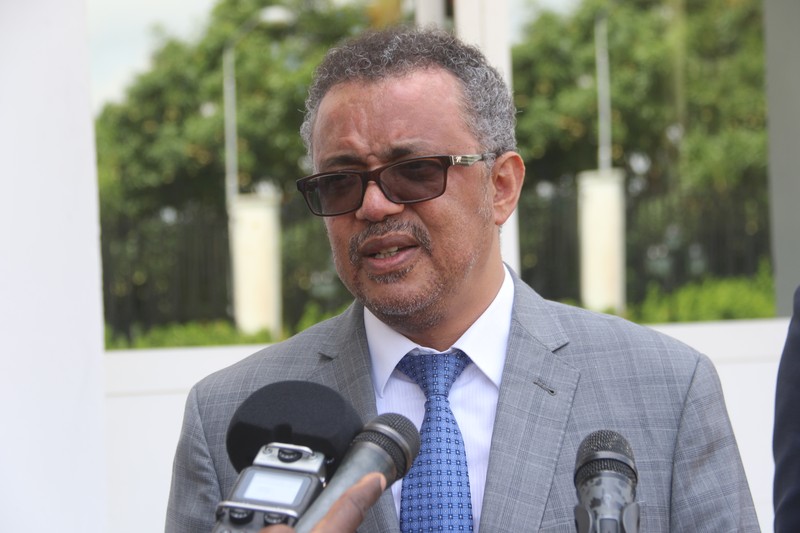
“From conflicts to economic crises to climate change and aid cuts, we live in difficult, dangerous and divisive times,” WHO Director-General Tedros Adhanom Ghebreyesus told the opening session.
A budget crisis meets a biological one
The timing could hardly be worse. The WHO’s representative in the DRC, Anne Ancia, said the organization has already emptied its stockpile of protective equipment in Kinshasa and is preparing a cargo plane to bring additional supplies from a depot in Kenya. This is the posture of an agency stretching dwindling resources against an expanding threat.
The Ebola strain responsible — Bundibugyo — has no vaccine and no specific treatment. Existing Ebola vaccines only work against the Zaire strain. Initial tests in this outbreak looked for the wrong strain, producing false negatives that cost weeks of response time.
“This crisis didn’t happen in a vacuum,” said Professor Matthew Kavanagh, director of the Georgetown University Center for Global Health Policy & Politics. “When you pull billions out of the WHO and dismantle frontline USAID programmes, you gut the exact surveillance system meant to catch these viruses early. We are seeing the direct, deadly consequences of treating global health security as an optional expense.”
The preparedness gap is widening
A report published Monday by the Global Preparedness Monitoring Board — a body co-established by the World Bank and the WHO after the 2014 West African Ebola outbreak — paints a bleak picture. Pandemic risk is outpacing investments in preparedness, the board found, and the world is “moving backwards” on equitable access to vaccines, tests, and treatments.
The data supports the claim. During recent mpox outbreaks, vaccines took nearly two years to reach affected African countries — slower even than the 17 months required for Covid-19 vaccines. Disease outbreaks are becoming more frequent and more damaging, driven by climate change and armed conflict, while geopolitical fragmentation undermines the collective action needed to respond.
UN Secretary-General Antonio Guterres, addressing the assembly by video, said global health challenges “have rarely felt more daunting.” Cuts to bilateral and multilateral aid, he said, “have disrupted health systems and widened inequalities.”
A treaty that didn’t materialize
Countries had hoped to finalise a pandemic agreement treaty before this week’s assembly. They missed the deadline, stalled by disagreements over guarantees of access to vaccines and treatments in exchange for sharing information about emerging pathogens.
The GPMB is now calling on leaders to establish a permanent, independent monitoring mechanism for pandemic risk, conclude the agreement, and secure financing for preparedness and rapid outbreak response.
“If trust and cooperation continue to fracture, every country will be more exposed when the next pandemic strikes,” said Joy Phumaphi, the board’s co-chair and a former health minister in Botswana.
That warning carries particular weight right now. The DRC’s Ituri province — the outbreak’s epicenter — sits in a densely populated, gold-rich region with intense cross-border population movement and multiple armed groups. Access for health workers is limited by insecurity. Congolese health authorities have dispatched teams to set up treatment centres, but the early response was slowed when affected communities initially attributed the illness to witchcraft, delaying people from seeking medical care.
The WHO will host an urgent scientific consultation on Ebola this Friday, bringing together experts to assess what is known about the Bundibugyo strain and where research on vaccines, tests, and treatments should be focused. The assembly runs through Saturday.
Whether the organization has the resources — and the political backing — to meet that moment is the question hanging over Geneva this week.
Discussion (10)