 lop News
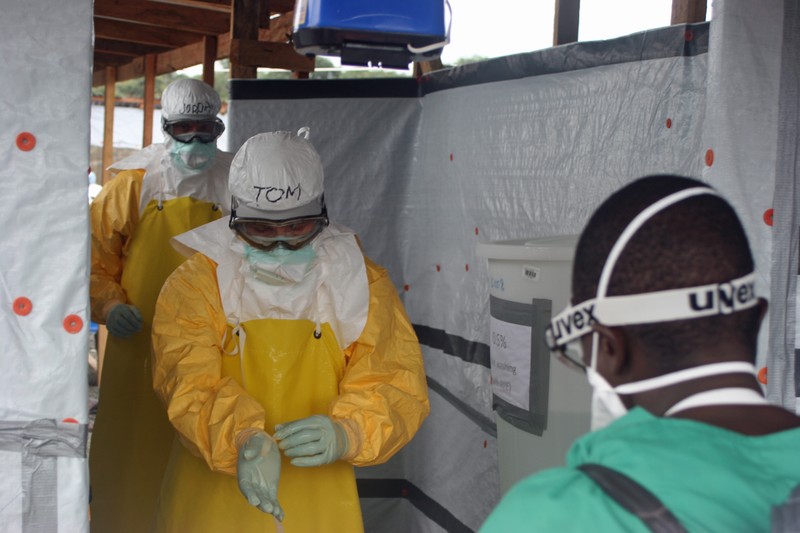
Five confirmed cases, two countries, no approved vaccine. The Ebola outbreak that went undetected in eastern Congo for weeks has crossed its first border — and regional health officials are running short on runway.
Uganda’s health ministry confirmed three new Ebola cases on Saturday, all linked to the outbreak in neighbouring Democratic Republic of Congo. The patients include a Ugandan driver who transported an infected Congolese national across the border, a health worker who treated that same patient, and a Congolese woman treated in Kampala for abdominal pains who tested positive only after returning to DRC.
All three are alive, the ministry said. That is about the only encouraging development.
Ten Countries on Alert
Jean Kaseya, head of the Africa Centres for Disease Control and Prevention, warned Saturday that ten nations — Angola, Burundi, the Central African Republic, the Republic of Congo, Ethiopia, Kenya, Rwanda, South Sudan, Tanzania, and Zambia — are at risk of the virus spreading within their borders.
The WHO raised its risk assessment for DRC to “very high” on Friday, while classifying regional risk as “high” and global risk as “low.” The agency declared the outbreak a Public Health Emergency of International Concern on May 17, citing the geographic spread, the high positivity rate among initial samples, and the absence of any approved vaccine or treatment for the strain involved.
The toll is substantial and likely an undercount. As of May 22, the US CDC reported a total of 83 confirmed cases, 744 suspected cases, and 176 suspected deaths — figures that include two confirmed cases and one death in Uganda among travelers from DRC. The three new Ugandan cases confirmed Saturday are not yet reflected in those figures. WHO Director-General Tedros Adhanom Ghebreyesus has acknowledged “significant uncertainties to the true number of infected persons and geographic spread.”
A Virus Without a Vaccine
This outbreak is caused by the Bundibugyo virus — one of four ebolavirus species known to sicken humans, and far less common than the Zaire strain that has dominated previous epidemics. Only two Bundibugyo outbreaks have ever been recorded: in Uganda in 2007-2008 and in DRC in 2012.
Bundibugyo kills roughly 30 to 40 percent of those infected, according to a 2024 global study cited by Reuters — lower than the Zaire strain’s rate of up to 90 percent, but still devastating. More critically, there are no approved vaccines or therapeutics for Bundibugyo — a striking gap given that effective vaccines exist for the more common Zaire strain. For now, the response relies entirely on classical public health measures: case detection, isolation, contact tracing, infection control, and safe burials.
Dr. Daniela Manno of the London School of Hygiene & Tropical Medicine told Reuters these measures “were critical in eventually controlling the 2014-2016 West Africa Ebola epidemic” — with the caveat that they must be “implemented rapidly and effectively.”
That caveat is doing enormous work.
Why Containment Is Failing
The virus appears to have circulated undetected since at least April. Kaseya said the earliest known suspected case — a 59-year-old man in Ituri province — developed symptoms on April 24 and died three days later. By the time health authorities learned of the outbreak through social media posts on May 5, approximately 50 deaths had already been recorded, according to Africa CDC.
The epicentre is eastern DRC, where armed conflict has raged for three decades. State health services in rural Ituri have been largely absent for years. The outbreak has spread to South Kivu, territory now controlled by the Rwanda-backed AFC/M23 militia — which has never managed a serious Ebola epidemic. At least four healthcare workers showing Ebola symptoms have died. A US doctor working in DRC has been infected and transported to Germany for treatment; high-risk contacts were moved to Germany and the Czech Republic.
What Happens Now
Uganda has suspended all public transport to DRC. The US CDC has imposed entry restrictions on non-US passport holders who have been in Uganda, DRC, or South Sudan in the previous 21 days, while enhancing screening at American ports of entry. The WHO has explicitly advised against border closures, calling them unscientific and fear-driven.
The ten nations on Africa CDC’s watch list span a vast corridor from Angola to Ethiopia. Whether they are prepared for the virus to arrive is an open question — one that public health officials will have days, not weeks, to answer.
Sources
- Uganda confirms three new Ebola cases as Africa CDC warns 10 countries ‘at risk’ — France 24
- Epidemic of Ebola Disease caused by Bundibugyo virus in the Democratic Republic of the Congo and Uganda determined a Public Health Emergency of International Concern — World Health Organization
- WHO declares global health emergency over Ebola outbreak in Congo and Uganda — Associated Press
- Ebola Disease: Current Situation — US Centers for Disease Control and Prevention
- The fast-spreading Ebola outbreak in central Africa — Reuters
Discussion (8)