 lop News
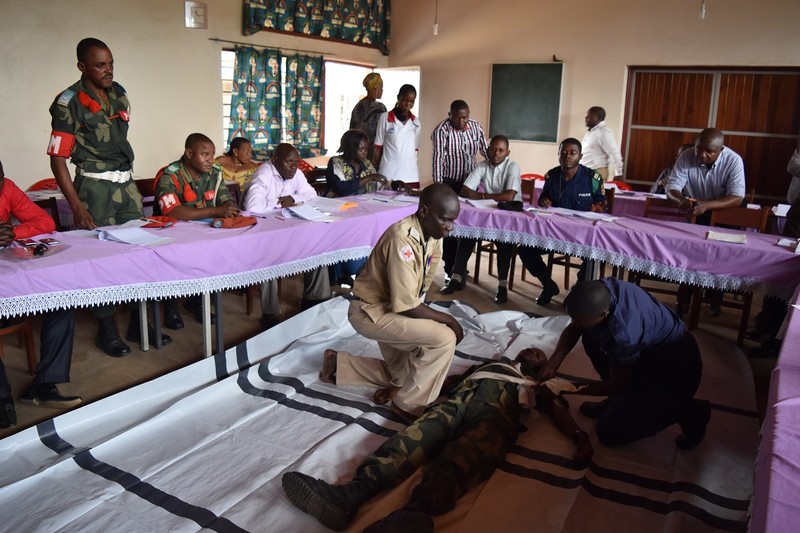
By the time WHO Director-General Tedros Adhanom Ghebreyesus declared a public health emergency on Sunday, the Ebola outbreak in eastern Congo had already killed an estimated 131 people. Three days later, that figure had climbed to 139 suspected deaths out of 600 suspected cases — a jump of nearly 100 cases in 72 hours. The outbreak is just five months removed from the DRC’s previous Ebola epidemic, which was declared over in December 2025.
This is the 17th Ebola outbreak the DRC has faced since the virus was first identified in 1976. What makes this one different is the pathogen at its center: Bundibugyo virus, a species of Ebola for which no vaccine exists and no approved therapy is available. The tools that have saved lives in recent outbreaks — the Ervebo vaccine, monoclonal antibody treatments — were developed for the Zaire strain. Against Bundibugyo, they are unproven at best, irrelevant at worst.
On Wednesday, Tedros told reporters in Geneva that WHO “assess the risk of the epidemic as high at the national and regional levels and low at the global level.” He had declared the emergency — formally, a Public Health Emergency of International Concern, or PHEIC — without first convening an emergency committee, an unprecedented step he attributed to the urgency of the situation.
“This is the first time a director general has declared a PHEIC before convening an emergency committee,” Tedros said Tuesday. “I did not do this lightly.”
A Strain the Tests Couldn’t See
The delay in identifying the outbreak compounds its danger. Early samples tested in Bunia, the capital of Ituri Province, came back negative — because local diagnostics were calibrated to detect Zaire Ebola, the more common strain. It was only after samples were sent to Kinshasa that Bundibugyo virus was identified.
That diagnostic blind spot means the virus circulated undetected for weeks. According to WHO experts, the first suspected death occurred on April 20. The outbreak may have begun even earlier. Speaking from Bunia, Ancia said investigators still have not identified “patient zero.”
What they have pieced together is grim. After a death in Bunia on May 5, the body was transported to Mongbwalu, a mining hub in Ituri. The family changed the coffin — a moment of physical contact with the deceased that, in Ebola outbreaks, can be a devastating transmission event. A suspected super-spreader event followed, either at the funeral or at a healthcare facility. From there, cases spread across multiple health zones in Ituri and into neighboring North Kivu, with confirmed cases reaching Butembo and Goma.
Then it crossed a border. Two laboratory-confirmed cases were detected in Kampala, Uganda, on May 15 and 16 — both in individuals who had traveled from the DRC. One of them died.
The Vaccine Gap
The absence of a Bundibugyo-specific vaccine is the defining challenge of this response. The Zaire-targeting Ervebo vaccine, stockpiled and deployed successfully in previous DRC outbreaks, is under consideration but would take two months to become available, according to Ancia — and its efficacy against Bundibugyo is unknown.
A WHO technical advisory group was scheduled to meet Tuesday to evaluate which candidate vaccines or therapeutics might be prioritized. Scientists from the DRC and Uganda published the virus’s genome online Monday, a step that allows researchers worldwide to begin matching candidate treatments against the specific variant in circulation.
Prof. David Matthews, a virologist at the University of Bristol, said the genomic data suggests a single “spillover event” — one human infected by an animal — followed by sustained human-to-human transmission. That is, in a grim sense, good news: a single chain of transmission is easier to break than repeated independent jumps from an animal reservoir.
But breaking transmission requires the kind of granular epidemiological work — contact tracing, case isolation, community surveillance — that is extraordinarily difficult in eastern Congo.
War Zones and Viral Zones
The affected provinces of Ituri and North Kivu are home to more than two million internally displaced people and returnees, according to the UN refugee agency. Conflict has intensified since late 2025, with armed groups including the Allied Democratic Forces and M23 escalating violence. Over 100,000 people have been newly displaced in recent months.
“You put Ebola on top and then you want to be able to do the proper protocol and case management, proper case treatment, but they’re inundated with all the other outbreaks — also dying of maternal mortality, from malaria, from everything else,” said Dr. Maria Guevara, international medical secretary at Médecins Sans Frontières, speaking at an event in Geneva.
Dr. Mesfin Teklu Tessema of the International Rescue Committee, which operates clinics in Ituri, described a severe lack of basic protective equipment — gloves, masks, goggles — for healthcare workers. He warned that the known case count is likely “the tip of the iceberg” and that spread into South Sudan, which shares porous borders with the affected region, was “a matter of when.”
Four healthcare workers showing Ebola-like symptoms have died, a signal WHO finds particularly alarming because it suggests transmission is occurring within health facilities — exactly the kind of amplification event that can accelerate an outbreak’s growth.
The Patient in Germany
On May 17, an American healthcare worker caring for Ebola patients in the DRC tested positive for Bundibugyo virus. The CDC and the US State Department arranged the patient’s medical evacuation to Germany — chosen, the CDC said, for its shorter flight time from the region and its experience treating Ebola patients. High-risk contacts are also being relocated to Germany.
The US has implemented enhanced travel screening and entry restrictions for non-US passport holders who have been in the DRC, Uganda, or South Sudan in the previous 21 days. Rwanda has closed its borders with the DRC — a measure WHO explicitly advises against, warning that border closures push movement to unmonitored crossings and compromise response logistics.
A European Union spokesperson said Wednesday that the risk of an outbreak in Europe is “very low,” while acknowledging that “diseases do not stop at the borders.”
Months, Not Weeks
Ancia, the WHO representative, was blunt about the timeline ahead.
“I don’t think that in two months we will be done with this outbreak,” she told reporters, pointing to the 2018–2020 epidemic in North Kivu and Ituri that took two years to end and killed nearly 2,300 people. “Remember the previous one,” she said.
WHO has deployed more than 40 experts and shipped 12 tonnes of supplies, including protective equipment, from Kinshasa and Nairobi. The immediate priorities are identifying all chains of transmission, expanding laboratory capacity, and engaging communities — particularly around funeral practices, where the risk of transmission is highest.
Ancia warned against coercive measures. “If we use coercive measures and the population does not agree, we will see bodies disappear. We will see suspected cases refusing to come to the hospitals and health facilities.”
The numbers are almost certainly an undercount. Only 51 of the 600 suspected cases have been laboratory-confirmed so far. In the last 48 hours alone, 26 new confirmed cases and 143 new suspected cases were identified, according to CDC data. The outbreak’s true scale remains unknown — and by all indications, it is still growing.
Sources
- WHO says 600 suspected cases, 139 deaths in growing Ebola outbreak — Al Jazeera
- Epidemic of Ebola Disease caused by Bundibugyo virus determined a Public Health Emergency of International Concern — WHO
- WHO considers use of experimental vaccines as Ebola cases and deaths surge in DRC — The Guardian
- DRC Ebola outbreak: hundreds of suspected cases, no vaccine — UN News
- Ebola Disease: Current Situation — CDC
- WHO Declares Global Emergency Over Ebola Strain With No Vaccine. Here’s What To Know — Time
Discussion (13)