 lop News
Two patients in Brazil. One flew from the Democratic Republic of Congo. The other arrived from Uganda. Both are now in isolation, being tested for Ebola.
If either test comes back positive — results are expected next week — it would mark the first confirmed infection outside Africa since the outbreak began. Both patients are in Brazil’s two largest cities, São Paulo and Rio de Janeiro, hundreds of kilometers apart.
As of Saturday, the outbreak stands at 263 confirmed cases and 43 confirmed deaths across the Democratic Republic of Congo and Uganda, according to Jean Kaseya, director general of the Africa Centres for Disease Control and Prevention. More than 1,100 suspected cases remain under investigation. On Thursday, the Africa CDC reported 246 suspected deaths.
Those numbers are almost certainly an undercount. The WHO has said as much. Health authorities are working in eastern Congo — a region shaped by armed conflict, displacement, and deep distrust of government institutions.
A Virus Without a Vaccine
The difficulty begins with the pathogen itself. The causative agent is not the Zaire ebolavirus that devastated West Africa between 2014 and 2016 and later drove the development of vaccines and monoclonal antibody treatments. This is the Bundibugyo virus — a related but distinct species for which no approved vaccine or therapy exists.
During two previous Bundibugyo outbreaks, in Uganda in 2007 and the DRC in 2012, the estimated fatality rate ran between 25 and 40 percent, according to Doctors Without Borders (MSF). The current response relies on supportive care — fluid replacement, oxygen, monitoring — and public health measures: isolation, contact tracing, safe burials.
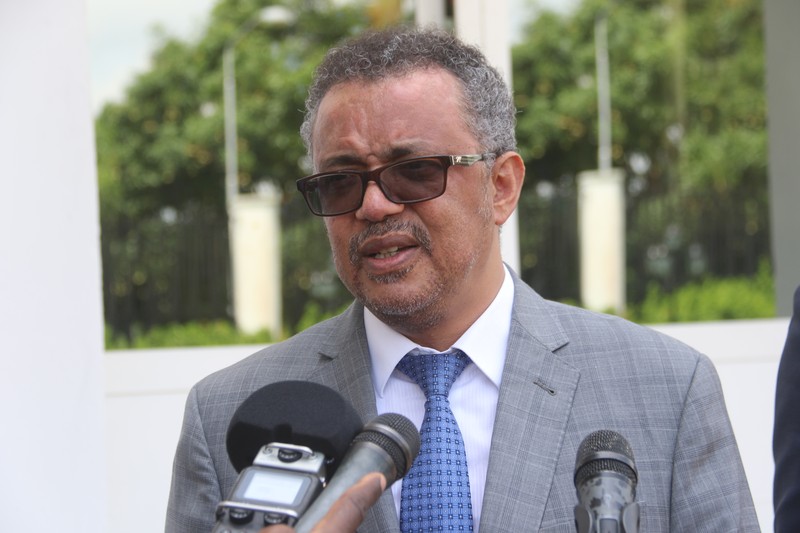
Five patients have recovered, WHO Director-General Tedros Adhanom Ghebreyesus reported Sunday during the opening of a new treatment center in Bunia, the capital of Ituri Province. “Of course, we’re still working on vaccines and treatments but that doesn’t mean that people cannot recover from Ebola,” Tedros said.
The recoveries are real. They are also five against a tide of more than a thousand suspected cases in a region where diagnostic kits for Bundibugyo are in critically short supply.
Containment Under Strain
The WHO declared the outbreak a Public Health Emergency of International Concern on May 17, citing confirmed spread to Uganda, high positivity rates in initial testing, and what it called “significant uncertainties” around the true scale of infection. The declaration noted that the event did not yet meet the criteria for a pandemic emergency.
Since then, the virus has been detected in three Congolese provinces — Ituri, North Kivu, and South Kivu — areas where multiple armed groups operate. The Allied Democratic Forces, an Islamic State-affiliated militia, and a coalition of ethnic militias have carried out attacks in Ituri. In North Kivu and South Kivu, the Rwanda-backed M23 rebel group controls key cities including Goma and Bukavu. The rebels have reported two cases in territory they administer.
Community resistance compounds the security challenges. At least three health centers have been attacked by residents angry at burial protocols that conflict with local funeral rites. MSF’s medical lead for epidemic response, John Johnson, has emphasized that community engagement is essential but far harder in a context of insecurity and limited healthcare access.
The Brazil Question
In São Paulo, a 37-year-old Congolese man exhibited fever consistent with Ebola. He has tested positive for meningitis and remains in serious condition at a specialized infectious disease facility. In Rio de Janeiro, a Belgian man who arrived from Uganda showed cough, chills, and diarrhea. He has tested positive for malaria.
Both diagnoses are compatible with concurrent Ebola infection, officials said. Initial tests on the São Paulo patient did not detect the Ebola virus, but he remains isolated as a precaution.
The WHO has “stressed repeatedly” that global spread is highly unlikely, pointing to Ebola’s transmission profile — direct contact with bodily fluids, not airborne dispersal — and existing surveillance infrastructure.
But “highly unlikely” is not impossible, and 263 confirmed cases with community resistance, no vaccine, and active conflict zones leaves a lot of distance between the current reality and confident containment. Health ministers from the DRC, Uganda, and South Sudan have adopted a $319 million response plan. Africa CDC’s Kaseya called the outbreak a “serious test” for the agency and warned: “This outbreak will not be the last.”
The test is underway. The results are not yet in — not in the lab in São Paulo, not in Rio, and not across the provinces of eastern Congo.
Sources
- Epidemic of Ebola disease caused by Bundibugyo virus in the Democratic Republic of the Congo and Uganda determined a public health emergency of international concern — World Health Organization
- Africa CDC says over 1,100 suspected Ebola cases in DR Congo and Uganda — RFI / AFP
- Bundibugyo virus: Why this Ebola disease outbreak is different — Doctors Without Borders / MSF
- Brazil identifies 2 possible Ebola patients, as WHO reports some recoveries in Congo — CBS News
Discussion (10)