 lop News
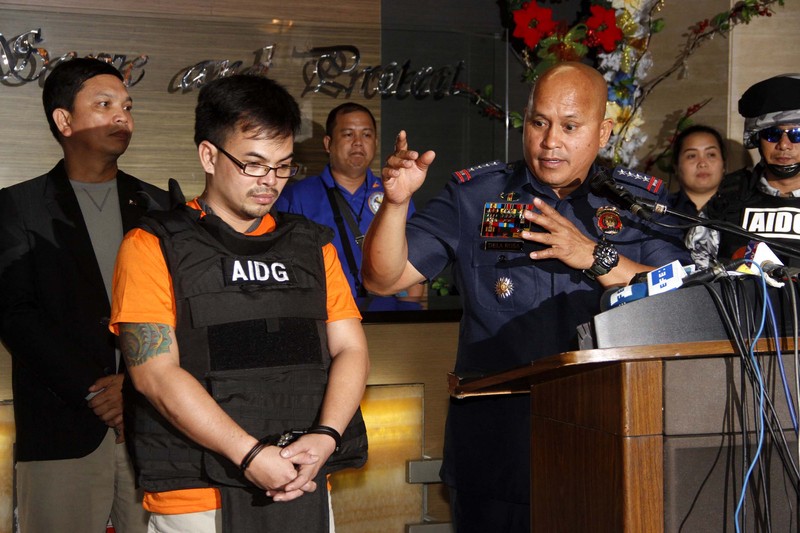
Security cameras in the Philippine Senate captured an improbable chase on Monday: a 68-year-old former national police chief sprinting down hallways, stumbling on a staircase, agents of the National Bureau of Investigation in close pursuit. The fugitive was Senator Ronald “Bato” dela Rosa — the man who oversaw Rodrigo Duterte’s war on drugs — and the warrant they carried came from the International Criminal Court in The Hague.
By nightfall, dela Rosa had barricaded himself inside a fellow senator’s office while barbed wire and riot police surrounded the Senate compound. The chamber’s newly installed president, Alan Peter Cayetano — another Duterte loyalist — declared the Senate would only honor arrest warrants issued by a Philippine court. The NBI backed down, saying they would not arrest the senator while he remained under the Senate’s protective custody.
A national legislature had become a shelter from international criminal proceedings.
The Warrant
The ICC confirmed Monday evening that the warrant, issued confidentially under seal on November 6, 2025, was genuine. It charges dela Rosa as an “indirect co-perpetrator” in the killing of no fewer than 32 people between July 2016 and April 2018 — the period he served as Philippine National Police chief under Duterte.
The court’s Pre-Trial Chamber found reasonable grounds to believe that dela Rosa joined senior officials and police officers in a “common plan” to, in their words, “neutralise” alleged criminals. The chamber noted the term was used and understood to mean “kill.” The warrant identifies four specific acts by dela Rosa as essential contributions to the crimes: implementing the “Tokhang” police operations model nationwide, issuing the official anti-drug campaign directive, publicly authorising and promoting the killing of suspects, and placing loyal officers in strategic positions.
The chamber ordered his arrest rather than issuing a summons, citing “no reasonable expectation that he would cooperate” and pointing to his public threats against a prosecution investigator and his characterisation of those cooperating with the court as “traitors.”
A Senate Under Siege
Dela Rosa had been in hiding for months after unconfirmed reports of the warrant began circulating. He chose Monday to return to the Senate — the same day Cayetano was elected its new president in a vote dela Rosa himself joined.
The timing was deliberate. Cayetano’s installation underscores the Duterte camp’s stronger position in the upper chamber, a fact with consequences well beyond dela Rosa’s fate. Earlier that same day, the House of Representatives — dominated by allies of President Ferdinand Marcos Jr — voted to impeach Vice-President Sara Duterte, Rodrigo Duterte’s daughter, on charges including misuse of public funds and threats against the president and first lady.
Her trial will take place in the Senate. She needs only nine of 24 senators to acquit her, preserving her path to a presidential run in 2028.
Jean Encinas-Franco, a political science professor at the University of the Philippines Diliman, noted that Senate control would determine what evidence and witnesses are permitted in that trial. “If [the Dutertes] have the majority in the senate then they can actually allow or not allow some pieces of evidence to appear,” she said.
Sovereignty vs. Accountability
Dela Rosa has framed his refusal to submit to the ICC as a defence of Philippine sovereignty. “If I have an obligation, I will answer it in the local court, not a foreign one,” he told reporters on Tuesday, calling on Marcos to file a domestic case if he believed him guilty.
The Philippines withdrew from the ICC’s founding Rome Statute in 2019 under Duterte. But last month, the ICC’s Pre-Trial Chamber rejected the argument that this insulated Philippine officials from prosecution, ruling that the alleged crimes occurred between 2011 and 2019 — while the country was still a member state.
Rodrigo Duterte has been in ICC custody since his arrest in March 2025. He has refused to recognise the proceedings.
Human rights organisations estimate the drug war’s overall death toll may have reached 30,000, though the warrant against dela Rosa concerns a specific subset of 32 documented killings. Dela Rosa has denied any wrongdoing.
On Tuesday morning, dela Rosa emerged from his colleague’s office in shorts and a T-shirt, urging supporters gathered outside to “keep vigil in front of the Senate until the Supreme Court decides.” His lawyers have asked the Philippine Supreme Court to block his arrest, arguing that no valid local judicial warrant exists.
Llore Pasco, whose two sons were killed during the anti-drug crackdowns, was direct. “He played a major role in carrying out Duterte’s bloody war on drugs,” she said. Like Duterte, dela Rosa “deserves to be jailed and held accountable.”
Discussion (10)