 lop News
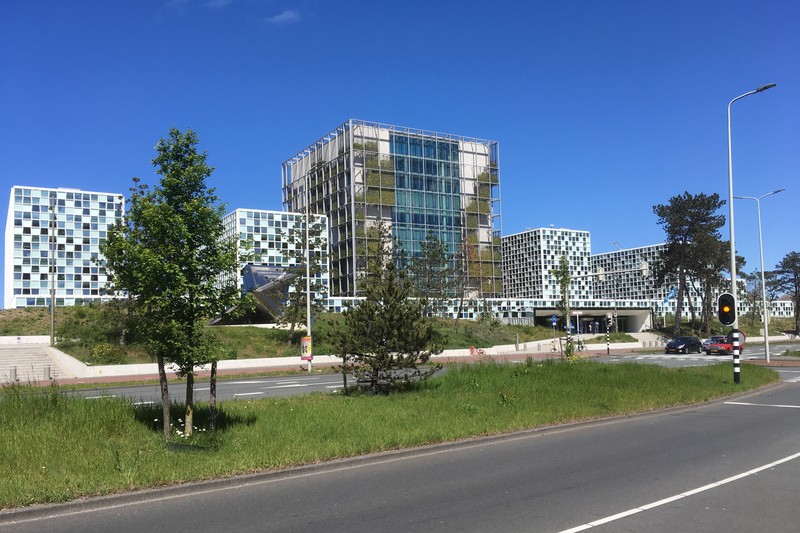
Three judges in The Hague confirmed Thursday what thousands of Philippine families have insisted for years: that Rodrigo Duterte’s “war on drugs” was not law enforcement, but a state-sanctioned killing campaign warranting prosecution for crimes against humanity.
The International Criminal Court’s Pre-Trial Chamber I unanimously confirmed all charges against the 81-year-old former president, committing him to stand trial for murder and attempted murder as crimes against humanity. Duterte becomes the first Asian former head of state to face trial at the court — a distinction that underscores both the scale of the alleged crimes and the rarity with which international institutions pursue former leaders.
“Substantial Grounds”
The panel — judges Iulia Motoc, Reine Alapini-Gansou, and Socorro Flores Liera — found there were “substantial grounds” to believe Duterte developed and implemented a national policy to “neutralize” alleged criminals. In its 50-page decision, the court said evidence shows “the existence of a common plan between Mr Duterte and his co-perpetrators to kill alleged criminals in the Philippines, including those perceived or alleged to be associated with drug use, sale or production.”
The charges cover a period from November 2011, when Duterte was still mayor of the southern city of Davao, through March 2019, well into his presidential term. Prosecutors say he created, funded, and armed death squads to target suspected drug dealers and users. According to the prosecution, police and hitmen carried out dozens of murders at Duterte’s direction, motivated by cash payments or fear of becoming targets themselves. Deputy prosecutor Mame Mandiaye Niang told the court in February that “for some, killing reached the level of a perverse form of competition.”
The confirmed charges specifically identify 76 murders and two attempted murders. The actual death toll is staggeringly higher. Philippine national police have documented more than 6,000 killings during Duterte’s presidency; human rights organizations estimate the real figure could approach 30,000.
A Jurisdictional Fight, Already Decided
Duterte was arrested in the Philippines last year and transferred to ICC custody. He has not appeared at any hearing, waiving his right to attend. His only public appearance came via video link during an initial session, in which he appeared confused and fatigued, his speech barely audible. His defense team contends he is too mentally frail to follow proceedings; judges rejected that argument last month and ruled him fit to stand trial.
On Wednesday, a day before the confirmation, the ICC Appeals Chamber dismissed Duterte’s bid to throw out the case on jurisdictional grounds. Duterte withdrew the Philippines from the court in 2018 — one month after prosecutors announced a preliminary investigation. Human rights groups described the withdrawal as a transparent attempt to evade accountability. The court retained jurisdiction because the alleged crimes occurred while the Philippines was still a member state.
Lead defense lawyer Nick Kaufman told the Associated Press the confirmation decision “is based on the uncorroborated statements of vicious self-confessed murderers acting as cooperating witnesses.” Duterte has long insisted he instructed police to kill only in self-defense and has defended the crackdown as necessary for public safety.
The case also names multiple co-perpetrators, including Philippine Senators Ronald “Bato” Dela Rosa and Christopher “Bong” Go — both longtime Duterte allies — as well as several former police chiefs and former justice secretary Vitaliano Aguirre.
A Court Under Siege
The trial will be a milestone for international justice, but it arrives during the most turbulent stretch in the ICC’s 24-year history. The United States has sanctioned key judges and officials after the court issued arrest warrants for Israeli leaders over the Gaza conflict, and the institution faces growing questions about whether it can enforce its mandates against powerful states and their allies.
The Duterte proceedings have been further complicated by internal turmoil. In October, judges disqualified Chief Prosecutor Karim Khan from the case, citing a “reasonable appearance of bias” — Khan had represented victims of Duterte’s alleged crimes in a prior role. Khan had already stepped back from his duties pending a separate investigation into allegations of sexual misconduct.
For the families of those killed, the institutional maneuvering matters less than the outcome. Randy delos Santos, whose nephew Kian was shot dead by three police officers in a Manila alley in August 2017, said the decision was “for all the victims, who were not even given the chance to be recognized as victims because their stories were twisted in police reports, investigations and findings.”
“Unlike Kian, most other victims were nameless, voiceless and were just numbers and statistics whose horrific stories were never heard,” delos Santos told the Associated Press. “Now the ICC will give their stories a chance to be told.”
A trial date has not been set. In previous ICC cases, the gap between confirmation of charges and the start of trial proceedings has stretched to up to a year. When it opens, Duterte’s trial will test a proposition that has never been certain: whether the architecture of international justice can hold a former head of state to account for the killings his government orchestrated.
Sources
- Ex-Philippine president Duterte to face trial on crimes against humanity charges — Associated Press
- Ex-Philippine president Duterte to stand trial at ICC over deadly ‘war on drugs’ — France 24
- ICC confirms trial against former Philippine president Duterte — Straits Times
- ICC confirms Rody’s charges, trial to proceed — Manila Standard
Discussion (9)