 lop News
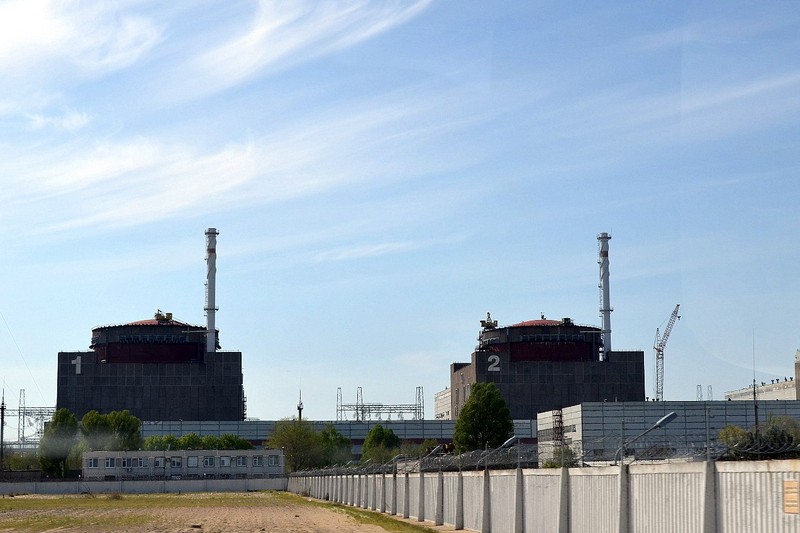
A drone tore a hole in the wall of a turbine hall at Europe’s largest nuclear power plant on Saturday. Who sent it depends on whom you ask.
Russia’s state nuclear energy company Rosatom said a Ukrainian “kamikaze combat drone” struck the turbine hall building of Power Unit No. 6 at the Zaporizhzhia Nuclear Power Plant, causing a detonation that punched through the exterior wall. Rosatom Director General Alexei Likhachev called the strike “deliberate” but acknowledged the blast caused no damage to primary equipment.
Ukraine’s military denied the accusation. In a statement, it called Russia’s claims “yet another propaganda ploy” and said Ukrainian forces “act strictly within the international humanitarian law and are fully aware of the consequences of any actions targeting nuclear facilities.” The military said no active fighting or weapons use was recorded on the relevant section of the frontline at the time.
The IAEA Responds
The International Atomic Energy Agency said it had been informed of the incident by the plant’s administration. IAEA Director General Rafael Grossi expressed serious concern without assigning blame. “Attacking nuclear sites is like playing with fire,” Grossi said. The agency’s on-site team has requested access to examine the affected turbine building firsthand.
The Zaporizhzhia plant, captured by Russian forces in March 2022, sits near the frontline in southeastern Ukraine. All six reactors are offline, but the facility still requires continuous electrical power to cool its shut-down reactors and spent nuclear fuel — a process vulnerable to any sustained disruption. Likhachev pressed the point, asking rhetorically what would be struck next: “The reactor hall? The reactor and safety systems?”
No radiation anomalies have been reported. The IAEA has not yet released inspection findings.
A Nuclear Plant in a War Zone
Zaporizhzhia occupies an uneasy place in the history of nuclear energy. No other nuclear facility has operated — even in shutdown — inside an active combat zone for this duration. The closest precedent may be the Iran-Iraq war of the 1980s, when Iraqi aircraft bombed the partially constructed Bushehr nuclear plant in southwestern Iran. Bushehr, however, was years from operation and contained no radioactive material. Zaporizhzhia houses six reactors and decades of accumulated spent fuel.
The IAEA has maintained a continuous presence at the plant since September 2022, when Grossi personally led an inspection mission amid repeated shelling that Kyiv and Moscow each blamed on the other. The plant has periodically lost external power since then, forcing reliance on backup diesel generators — a scenario nuclear safety experts describe as one prolonged outage away from a crisis in the spent fuel cooling pools.
Under IAEA safeguards and the Geneva Conventions, attacks on nuclear facilities are subject to strict prohibitions. The legal framework grows murkier when a facility has been militarized. Russia has stationed troops and equipment at the plant since seizing it, a move Ukraine and Western governments have condemned as using the site as a military shield — which in turn complicates the question of what constitutes a legitimate military target in the immediate vicinity.
A Night of Escalation
The nuclear incident capped a night of intense aerial exchanges across both countries.
Ukraine launched coordinated drone attacks on Russian energy infrastructure across multiple regions overnight. The most significant strike hit the port of Taganrog in Rostov Oblast, where a tanker, fuel tank, and administrative building caught fire, according to Rostov Governor Yury Slyusar. Two civilians were injured when a drone struck a private home. Slyusar said Russian air defenses destroyed additional drones across four districts.
Additional Ukrainian strikes ignited fuel tanks near Yaroslavl, forced the shutdown of a Volgograd oil refinery, and set an oil depot ablaze in Armavir, Krasnodar Krai — roughly 500 kilometers from the Ukrainian border. President Zelenskyy noted the distance pointedly. “We are rightfully bringing the war back to where it came from,” he wrote on X.
Attacks on Russian oil infrastructure have become routine, part of Kyiv’s strategy to choke off the revenue stream funding Moscow’s war effort. Taganrog has been targeted repeatedly; a March drone attack on the city killed one person and wounded eight, per Russian authorities.
Russia, meanwhile, launched 90 drones and two ballistic missiles — Iskander-M and KN-23 types — at Ukraine overnight, according to Ukrainian reports. The Sumy region suffered damage to infrastructure, homes, and vehicles. Zelenskyy warned on Friday that intelligence pointed to a broader Russian offensive. “Russia is organising a new large-scale assault,” he said on Telegram. “Our services are reacting swiftly and are ready.” He called on allies to accelerate deliveries of Patriot missile systems.
Moscow separately warned foreign nationals to leave Kyiv, saying it planned “systematic strikes” on defense infrastructure across the capital.
The violence also crossed a NATO border. A Russian drone crashed into an apartment building in eastern Romania on Friday, injuring two people — an incident almost certain to sharpen tensions between Moscow and the alliance.
Zelenskyy Convenes Emergency Meeting
Behind the military escalation, Zelenskyy held what he described as a special meeting with top aides to determine Ukraine’s next steps. Three priorities emerged.
First, diplomacy: near-daily contacts with American and European envoys, focused on air defense supplies and what Zelenskyy termed “arrangements more broadly.” He cited anti-ballistic capabilities and a planned “Drone Deal” with the European Union as priorities for the coming weeks, along with preparations for negotiations he said could not yet be discussed publicly. “We are preparing for important negotiations — for now, without public details,” he wrote on X.
Second, the humanitarian track: Zelenskyy instructed his team to engage partners who could accelerate prisoner-of-war exchanges already agreed upon.
Third, energy — both domestic resilience and broader international support. “We are finalising the details,” Zelenskyy said.
The Unresolved Question
The competing claims around Saturday’s drone strike may never be independently verified — at least not quickly. The IAEA’s inspection team has requested access to the turbine hall, but the agency operates within constraints imposed by the plant’s Russian military controllers. Both sides have reason to shape the narrative: Russia to cast Ukraine as reckless with nuclear safety, Ukraine to discredit what it sees as manufactured pretexts.
What is not disputed is that a drone detonated inside the perimeter of a nuclear power plant housing six reactors and their spent fuel. In a war that has already redefined the boundaries of conventional conflict in Europe, that fact alone warrants sustained attention.
Sources
- Russia says Ukrainian drone struck Zaporizhzhia nuclear plant, Kyiv denies — The Star / Reuters
- Ukraine drones strike Russian oil facility, as Kyiv and Moscow trade blows — Al Jazeera
- Ukraine war briefing: Kyiv denies its drone ‘deliberately’ hit Zaporizhzhia nuclear plant — The Guardian
- Zelenskyy identifies 3 key areas for Ukraine’s next steps at special meeting — Ukrainska Pravda
Discussion (14)