 lop News
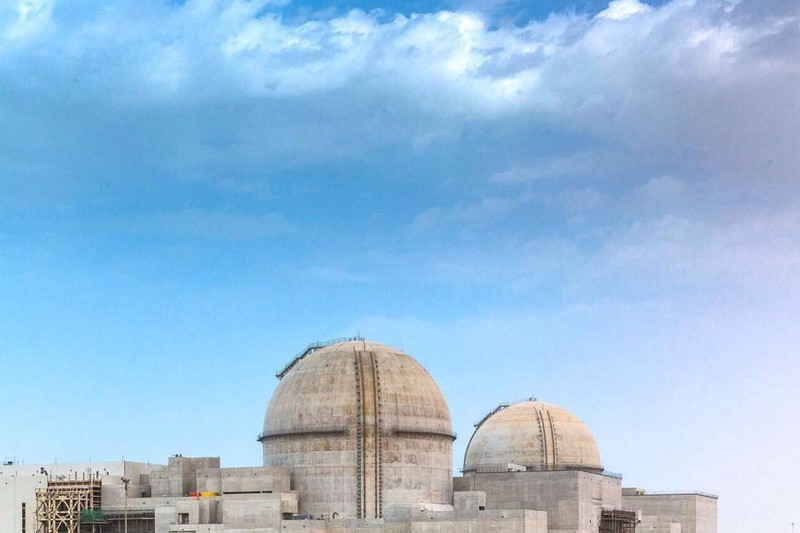
Three drones crossed into UAE airspace from the western border with Saudi Arabia on Sunday. Air defenses intercepted two of them. The third struck an electrical generator at the perimeter of the Barakah nuclear power plant — the only commercial nuclear facility in the Arab world — starting a fire and forcing one reactor onto emergency diesel generators.
No one was injured. No radiation was released. And no one has claimed responsibility.
The UAE Defense Ministry confirmed the strike and said an investigation is underway. The statement did not name a suspect. This is, by itself, extraordinary. The Emirates have spent the past ten weeks publicly accusing Iran of firing hundreds of missiles and drones at their territory. When Iranian projectiles hit the port city of Fujairah last week, Abu Dhabi said so openly. When drones struck Dubai International Airport, the attribution was swift.
A nuclear plant is different.
The Silence That Speaks
The UAE’s pointed refusal to name an attacker — even as its own defense ministry described the drones’ flight path from the western border, the same corridor Iranian munitions have traveled since the war began on February 28 — is the most revealing detail of the incident.
Abu Dhabi is not a government that practices quiet diplomacy when it feels wronged. Its Foreign Ministry issued a statement on Friday rejecting Iranian attempts to justify attacks on Emirati territory and said it reserved the right to respond. Two days later, a drone hits a nuclear facility, and the rhetoric stops.
The likely calculation is straightforward. Naming Iran as the attacker of a nuclear power plant creates an obligation to respond that no one in the region is prepared to fulfill. The US-Iran ceasefire, announced on April 8, is already hanging by a thread. US President Donald Trump has suggested hostilities could resume. Israeli Prime Minister Benjamin Netanyahu told his cabinet on Sunday that “our eyes are also open” regarding Iran and that Israel is “prepared for any scenario.” Two people familiar with the situation, including an Israeli military officer, told the Associated Press that Israel is coordinating with Washington about a possible resumption of attacks.
If the UAE formally accuses Iran of striking Barakah, the ceasefire likely collapses. If Iran denies involvement — which it has every incentive to do — the denial changes nothing on the ground but gives everyone an off-ramp. Nobody has to act on something nobody has admitted.
A Nuclear Red Line, Tested
The International Atomic Energy Agency confirmed that the strike caused a fire in an electrical generator and that one of Barakah’s four reactors was temporarily relying on emergency diesel generators. IAEA director-general Rafael Mariano Grossi expressed “grave concern” and said military activity threatening nuclear safety was “unacceptable.”
This is the language the IAEA uses when the alternatives are much worse.
The UAE’s nuclear regulator offered a more reassuring read, posting on social media that the fire had not affected plant safety and “all units are operating as normal.” Both statements can be true: the plant is safe, and someone just fired a drone at a nuclear reactor.
The $20 billion Barakah plant, built with South Korean assistance and operational since 2020, can provide roughly a quarter of the UAE’s energy needs. It sits in Al Dhafra, about 225 kilometers west of Abu Dhabi, near the Saudi border — close enough to the western approach corridor that any drone crossing from that direction would have limited time in UAE airspace before reaching the facility.
The UAE’s nuclear program was designed to be uncontroversial. Abu Dhabi signed a strict “123 agreement” with the United States, forgoing domestic uranium enrichment and reprocessing of spent fuel. Its uranium comes from abroad. By every diplomatic measure, Barakah is the “good” nuclear program in a region where the word usually triggers alarms about weapons proliferation.
That did not protect it.
A Ceasefire in Name
The April 8 ceasefire between the United States and Iran was always more aspiration than achievement. According to UAE Defense Ministry figures, Iran has fired over 500 ballistic missiles and more than 2,200 drones at the Emirates since February 28. UAE air defenses — THAAD and Patriot systems acquired from the US — intercepted the vast majority. Thirteen people have been killed and 224 injured, many by debris from successful interceptions.
The strikes did not stop when the ceasefire was announced. They slowed, but continued. Last week’s attack on Fujairah injured three Indian nationals and started a fire at the oil industry zone. The Strait of Hormuz remains under Iranian control, with a US naval blockade in effect, and Iran has warned that countries hosting American military bases or Israeli-linked assets could become targets. The UAE hosts both. Israel has deployed Iron Dome air defense systems and personnel to Emirati territory, according to US Ambassador to Israel Mike Huckabee.
On Iranian state television, the signals point away from de-escalation. Presenters on at least two channels appeared armed during live broadcasts. One, Hossein Hosseini, received basic firearms training from a masked Revolutionary Guard member and mimed firing a shot at the UAE flag. Another, Mobina Nasiri, told viewers she was “ready to sacrifice my life for this country.” Iran’s foreign minister, Abbas Araghchi, spoke by phone with his South Korean counterpart on Sunday — a call likely focused on the South Korean-built plant now operating on backup power.
Fighting has also heated up between Israel and the Iran-backed Hezbollah militant group in Lebanon despite a nominal ceasefire there, further straining the wider truce.
The Question Nobody Wants Answered
The Barakah strike is the first time a nuclear power plant has been directly targeted in this conflict. Nuclear facilities have become fair game in modern warfare — Russia’s invasion of Ukraine normalized the threat in ways the international community has struggled to address. Iran claimed its own Bushehr nuclear plant came under attack during the war, though no direct damage to the Russian-run reactor was confirmed. Iran struck near Israel’s Dimona nuclear facility during the war.
The pattern is clear. In a region where nuclear sites were once considered untouchable, they are now part of the battlespace.
Whoever launched the drone on Sunday understood this. They also understood that the UAE’s response would be shaped not by what happened, but by what admitting what happened would require. The Barakah plant is running on diesel generators and diplomatic ambiguity. One of those is temporary. The other may not be.