 lop News
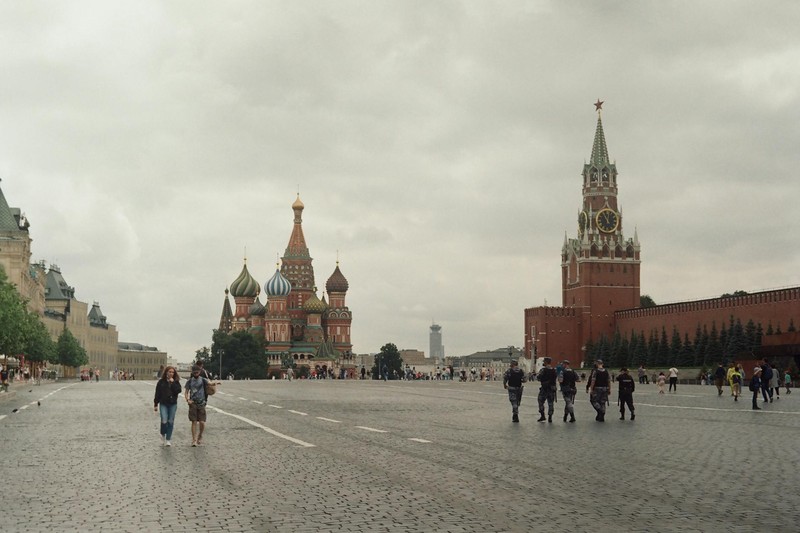
Six kilometres from the Kremlin, in one of Moscow’s most exclusive neighbourhoods, a Ukrainian drone tore into the upper floors of a residential tower on Monday morning. No one was killed. The damage, in purely military terms, was negligible.
The symbolism is harder to dismiss.
Moscow’s air defenses intercepted one of two drones approaching the capital, according to Mayor Sergei Sobyanin, who confirmed the incident in a public post. The second struck a building on Mosfilmovskaya Street, in a rare penetration of the city’s central airspace. Emergency services were dispatched to the scene. No casualties were reported, according to the mayor’s statement. Local media broadcast images of damage to the building’s upper floors.
A Parade Stripped Down
The strike came days before Russia’s Victory Day parade on May 9 — the country’s most important secular holiday, commemorating the Soviet defeat of Nazi Germany in what Russia calls the Great Patriotic War. The annual procession of armor, missiles, and soldiers through Red Square has long served as a projection of Russian military power and, under President Vladimir Putin, a cornerstone of domestic political legitimacy.
This year’s edition will be markedly different. Russia’s Defence Ministry announced last week that the parade would proceed without heavy military equipment — no tanks, no mobile missile launchers, no armored columns — for the first time since 2007. The official explanation cited potential security threats. A Ukrainian drone cratering a luxury apartment block in central Moscow, days later, lends that precaution a grim credibility.
Putin has ruled Russia for over 25 years and has made Victory Day integral to his political project. He has repeatedly drawn explicit parallels between the Soviet war effort and Russia’s ongoing invasion of Ukraine — what the Kremlin terms its “special military operation” — framing the conflict as a continuation of the same existential struggle against fascism. A drone penetrating Moscow’s defensive ring days before that narrative is broadcast to millions complicates the choreography considerably.
Inside the Defensive Perimeter
Mosfilmovskaya Street sits approximately 6-8km (4-5 miles) from the Kremlin, in a district known for high-end real estate and proximity to Moscow’s political and business elite. Drone strikes on the Russian capital are not unprecedented — Ukraine has struck targets in and around Moscow before — but successful hits this close to the city centre remain rare. Moscow’s layered air defense systems, bolstered and refined over more than three years of full-scale war, typically intercept incoming drones at the periphery or over outlying suburbs.
That one reached a neighbourhood minutes from the seat of government suggests either an expansion of Ukrainian strike range or a gap in the defensive architecture that Moscow has spent considerable resources constructing. It may well indicate both. For a capital that has presented itself as insulated from the conflict’s physical consequences, the incident is a pointed reminder that the war’s reach has grown.
The target area itself carries weight. Upscale central Moscow houses much of the country’s decision-making class — officials, executives, and figures whose daily lives have largely continued unaffected by a war being fought hundreds of kilometres to the south and west. A strike there, even an imprecise one with no casualties, communicates that the capital’s geographic buffer no longer guarantees the separation the elite have enjoyed.
A War of Persistent, Expanding Threats
The incident fits into the broader escalation of drone warfare that has come to define the conflict. Ukraine has steadily increased the range and sophistication of its drone operations, striking military bases, oil refineries, and logistics hubs deep inside Russian territory. Russia, in turn, has intensified its own drone and missile campaigns against Ukrainian cities, energy infrastructure, and civilian targets.
Both sides have turned unmanned aerial vehicles from a supplementary battlefield tactic into a central feature of the war — one that extends the fighting far beyond traditional front lines and into population centres on both sides of the border.
Russian officials have offered no comment beyond Sobyanin’s brief statement. The silence is itself a kind of acknowledgment. Victory Day is carefully choreographed spectacle. It requires the appearance of total control. A damaged residential tower six kilometres from where Putin will deliver his speech is a visual the Kremlin did not script.
Sources
- Drone hits upscale Moscow tower as Russian capital readies for Victory Day parade — South China Morning Post
Discussion (9)