 lop News
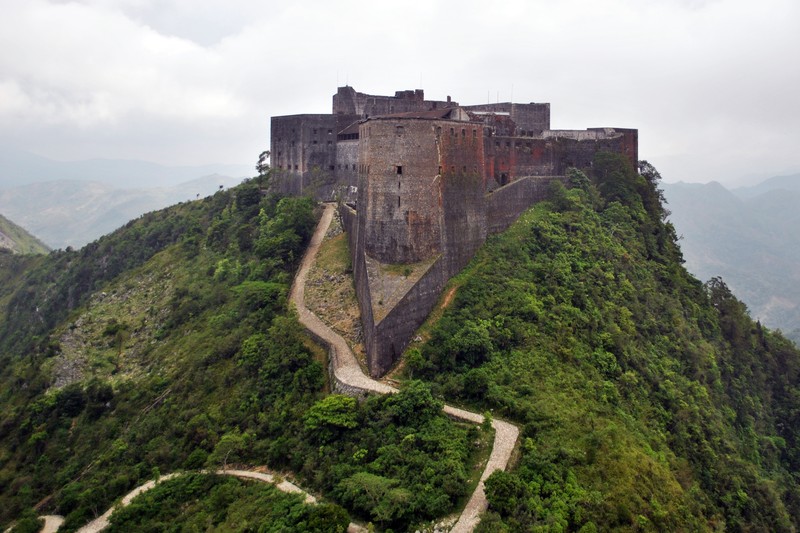
It was supposed to be a celebration. Rain fell on a crowd packed tight at the gates of a mountaintop fortress, and by the time the pushing stopped, at least 30 people were dead — many of them young people who had come to mark the fortress’s anniversary.
The stampede at the Citadelle Laferrière in northern Haiti unfolded on Saturday during what officials described as an annual Easter gathering at the 19th-century UNESCO World Heritage site near the town of Milot. The event had been advertised on social media — local media cited TikTok in particular — drawing an exceptional crowd of students and young visitors to one of the country’s most recognizable landmarks.
Culture Minister Emmanuel Ménard said preliminary findings pointed to a catastrophic bottleneck at the entrance. “While some people wanted to leave, others were trying to enter,” Ménard said in an audio message. “People began pushing. Some fell, and others trampled over them. Consequently, some people died from suffocation.”
Heavy rain appeared to trigger the surge, according to officials. Some local media also carried unconfirmed reports that police used teargas to break up a fight near the citadel, which may have intensified the panic. Those accounts have not been independently verified.
A death toll that could still rise
The provisional count stood at 30 as of Saturday evening, according to Ménard. Jean Henri Petit, head of civil protection for Haiti’s Nord department, told the newspaper Le Nouvelliste that the number could climb further because a significant number of people remained unaccounted for.
Of the 30 confirmed dead, 13 bodies were recovered at the fortress and 17 had been transported to a nearby hospital, Ménard said. Several dozen injured were receiving treatment at medical centres across the region. HaitiLibre reported that the Sacré-Cœur hospital in Milot received the bodies of young people brought in by emergency services, and that witnesses on the ground suggested the final count could exceed 50 — a figure officials have not confirmed.
A fortress built to defend
The Citadelle Laferrière occupies a singular place in Haiti’s national story. Commissioned by Henri Christophe — Haiti’s first and longest-reigning king — shortly after the country won independence from France, the massive stone stronghold took more than a decade to build. It was the anchor of a network of fortifications designed to repel a possible French invasion that never came.
The fortress appears on Haitian currency, postage stamps, and tourism promotions. Listed as a UNESCO World Heritage site in 1982, it draws visitors primarily from within Haiti — a point of pride in a country with little domestic tourism infrastructure. The northern region around the citadel is considered one of the more stable parts of Haiti, even as gang violence has convulsed the capital, Port-au-Prince, and other areas.
Ménard said the site would remain closed to visitors until further notice.
A country already under strain
The tragedy comes as Haiti contends with compounding crises. It remains the poorest country in the Western Hemisphere, battered by successive disasters: a 2021 earthquake that killed roughly 2,000 people, a fuel tank explosion that same year that claimed 90 lives, and another fuel blast in 2024 that killed two dozen.
Gang violence has killed thousands and displaced huge numbers of civilians, while security forces have waged an increasingly deadly crackdown. That instability complicates even routine emergency responses. After Saturday’s stampede, the Cap-Haïtien municipal commission dispatched an ambulance and support teams through what it described as inter-municipal solidarity — a phrase that underscores how fragmented the country’s emergency infrastructure remains.
Economic pressures have sharpened further in recent weeks. On April 2, the government announced fuel price increases of 37 percent for diesel and 29 percent for gasoline, driven by rising global oil costs linked to the conflict in Iran. Supply chains have been disrupted, transport costs have doubled, and millions of undernourished people have been forced to cut back on already scarce meals, according to The Guardian.
The office of Prime Minister Alix Didier Fils-Aimé expressed “deep sorrow and immense sadness” and said all relevant authorities had been mobilised. The government called on citizens to remain calm while an investigation continues.
What caused the bottleneck at the citadel entrance — and whether crowd management and security protocols were adequate for the gathering’s size — will be central questions for the inquiry Ménard has promised. For now, a site built to protect Haitians from foreign invasion has become the scene of one of the country’s worst civilian disasters in recent memory.
Sources
- At least 30 killed in crush at historic fortress in Haiti — The Guardian
- Mass Stampede at Haitian Tourist Site Leaves Dozens Dead — The New York Times
- At least 30 feared dead in crush at Haitian tourist site — BBC News
- FLASH : Terrible drame en Haïti à la Citadelle Laferrière à Milot, au moins 30 morts — HaitiLibre
Discussion (10)