 lop News
Monday the diplomats land in Islamabad. Wednesday the ceasefire expires. Somewhere in that 72-hour window, two countries that have been trading fire for nearly eight weeks are supposed to agree on peace.
President Donald Trump announced Sunday that US negotiators will travel to Pakistan on Monday for a second round of talks with Iran, aiming to extend a fragile ceasefire before it expires on April 22. But Iran has not confirmed it will attend — and its semiofficial Tasnim news agency reported that no decision has been made to send a delegation “as long as there is a naval blockade” on Iranian ports.
That blockade, imposed by the United States on April 13, is one of the central obstacles to any agreement. Iran considers it a violation of the ceasefire and, in the words of foreign ministry spokesman Esmail Baghaei, “both unlawful and criminal.” The United States considers it leverage.
The Strait That Holds the World Hostage
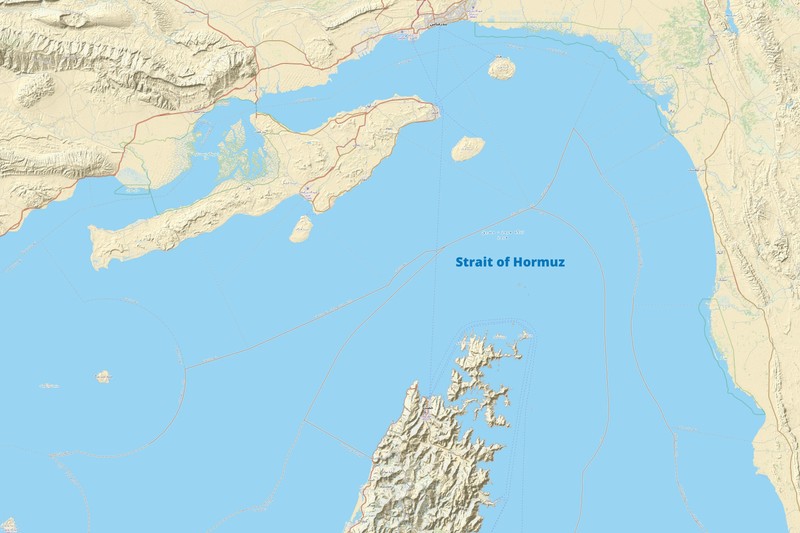
The Strait of Hormuz, through which roughly one-fifth of global oil trade normally passes, has been effectively closed for over a month. Iran reopened it briefly on Saturday, only to shut it again within 24 hours after Trump declared the US blockade would “remain in full force” until Tehran reaches a deal.
The result: hundreds of vessels waiting at each end of the waterway, oil prices pushing $100 a barrel, and a global energy crisis deepening by the day. Critical supplies of fertilizer, natural gas, and humanitarian aid for countries including Afghanistan and Sudan are stranded.
On Saturday, Iranian forces fired on two Indian-flagged merchant ships attempting transit, forcing them to turn around. India summoned Iran’s ambassador over what it called a “serious incident.” Iranian media also reported that Botswana- and Angola-flagged vessels were forced to change course for what was described as “unauthorized transit.”
Iran’s position is blunt. “It is impossible for others to pass through the Strait of Hormuz while we cannot,” said Mohammad Bagher Qalibaf, Iran’s parliament speaker and chief negotiator, on state television. Iran’s Supreme National Security Council has said it will maintain control over strait traffic “until the war fully ends.”
Threats and Quiet Machinery
Trump’s public posture has oscillated between diplomatic optimism and outright menace. In the same social media post announcing the talks, he threatened to “knock out every single Power Plant, and every single Bridge, in Iran” if Tehran rejects the deal. “NO MORE MR. NICE GUY!” he wrote.
International law scholars have previously warned that strikes on civilian infrastructure could constitute war crimes. Energy Secretary Chris Wright, asked about those concerns on CNN’s “State of the Union” on Sunday, defended the president’s approach: “The president’s looking for maximum leverage, maximum negotiation,” he said, adding that while “a lot” of Iranian infrastructure supports civilians, “a lot of it supports only their war machine.”
Behind the rhetoric, the diplomatic machinery grinds on. The first round of talks, held in Islamabad on April 11-12 over 21 hours and led by Vice President JD Vance, ended without a deal. The White House had said Vance would lead the delegation with envoys Steve Witkoff and Jared Kushner, but Trump told ABC News on Sunday that Vance would not attend this round, citing security concerns. Witkoff and Kushner are still expected to travel. Pakistani authorities have already begun tightening security in Islamabad, and US advance teams are on the ground.
What Divides Them
The gaps are fundamental. Iran’s deputy foreign minister, Saeed Khatibzadeh, told the AP that US demands on Iran’s nuclear program are “maximalist” and that handing over Iran’s stockpile of 970 pounds (440 kilograms) of enriched uranium to the United States is “a nonstarter.”
Iran wants the blockade lifted before any further concessions. The United States wants the strait reopened and Iran’s nuclear enrichment program curtailed. Each side views the other’s core demand as a precondition rather than an outcome to be negotiated.
Qalibaf, the Iranian chief negotiator, acknowledged progress but cautioned that “many gaps and some fundamental points remain.” He added: “We are still far from the final discussion.”
Pakistan, the mediator, is pressing ahead regardless. Foreign Minister Ishaq Dar spoke by phone with Iranian counterpart Abbas Araghchi on Sunday, and a Pakistani military delegation led by army chief Asim Munir visited Tehran on April 15 with new proposals from Washington. The Iranian and Pakistani presidents are expected to speak later on Sunday.
The Clock Runs Down
The war, launched on February 28 by the US and Israel during talks over Tehran’s nuclear program, has killed at least 3,000 people in Iran, more than 2,290 in Lebanon, 23 in Israel, and more than a dozen in Gulf Arab states. Fifteen Israeli soldiers have been killed in Lebanon and 13 US service members across the region.
Trump has insisted the two parties are “very close to a deal.” Iran’s public statements suggest otherwise. By Wednesday, one of those assessments will face a test that diplomacy alone may not be able to postpone.
Sources
- Trump says US negotiators will go to Pakistan on Monday for more talks with Iran — AP News
- Trump says US negotiators to head to Pakistan for Iran talks — Al Jazeera
- Trump Says Negotiators Heading To Pakistan, Urges Tehran To Take ‘The Deal’ — Radio Free Europe/Radio Liberty
- Trump says US-Iran talks to continue Monday in Pakistan — Politico
Discussion (10)