 lop News
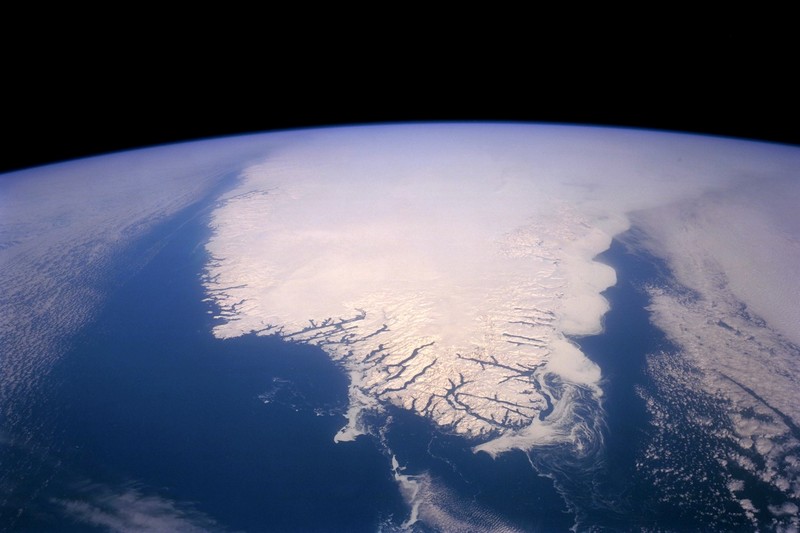
Donald Trump wanted to buy Greenland. When Denmark said no, he threatened to take it “the easy way or the hard way.” Six weeks later, the prime minister who told him to back down is favoured to win re-election in an election that never should have been about American territorial ambitions.
That it is says something uncomfortable about the state of the Atlantic alliance.
Denmark votes Tuesday in snap Elections called by Prime Minister Mette Frederiksen after her polling numbers surged in response to her defiant stance against Trump’s push to annex the semi-autonomous Arctic territory. What looked like a political death spiral just months ago has become a plausible path to a third term — and potentially the longest Danish premiership since the Second World War.
A Crisis Salvaged a Career
Frederiksen’s Social Democrats were polling at 16 per cent months ago — a historic low for a party that has dominated Danish politics for generations. Government sources were privately conceding they couldn’t see a way forward. Her administration, elected in 2019, was tired and out of ideas, according to Elisabet Svane, a political analyst at the newspaper Politiken.
Then Trump launched his campaign for Greenland.
The prime minister’s firm rejection resonated. Her party’s support jumped to roughly 21 per cent almost overnight — not because Danes found her more sympathetic, Svane told ABC News, but because they trusted her leadership in difficult times. The surge prompted Frederiksen to call snap elections last month, gambling that the momentum would hold.
It’s a playbook that has worked elsewhere. Canadian Prime Minister Mark Carney and Australia’s Anthony Albanese have both capitalised on anti-Trump sentiment in recent elections. The pattern suggests a measurable political cost for American allies when Washington treats them as something less than sovereign.
The Campaign That Wasn’t About Greenland
Here’s the strangeness: for all that Trump’s ambitions transformed Frederiksen’s fortunes, Greenland barely featured in the actual campaign.
In the final leaders’ debate last week, the territory wasn’t mentioned at all. Instead, parties argued over drinking water quality, agricultural pollution, welfare standards at pig farms, and immigration. A 21-year-old voter named Clemens Duval Thomsen told France 24 that Greenland is “not something I think about when I go to vote.”
Yet the issue hovers in the background. Voters may be deciding on domestic concerns, but they’re doing so with a clearer sense of who they want at the table when the next crisis arrives.
In Greenland itself, the stakes are more direct. The election has generated unusual interest in Nuuk, with more than 20 candidates standing. Naaja Nathanielsen, Greenland’s business minister and a candidate for the left-wing IA party, told AFP that “fear of the United States” has been central to the campaign there. Even Naleraq, a party advocating immediate independence from Denmark, has seen its members meet with Trump officials — a reminder that Greenlandic politics has its own currents, some of which may cut against Copenhagen’s interests.
What the Result Will Signal
Polls suggest Frederiksen’s centre-left bloc holds a slight lead, but neither side appears likely to secure a majority in the 179-seat parliament. The four overseas seats — two for Greenland, two for the Faroe Islands — could prove decisive if the result is close.
The likely outcome is another coalition government, with Frederiksen at its head. The open question, as Euractiv reported, is whether she builds her majority with left-wing or centrist parties.
But the larger signal is already clear. A US president’s expansionist rhetoric has become an electoral asset for a NATO ally’s leader — not because she embraced it, but because she resisted it. For European governments watching from Berlin, Paris, and Warsaw, the lesson is straightforward: in 2026, standing up to Washington carries less political risk than capitulating to it.
That’s not how alliances are supposed to work. But it’s where we are.
Sources
- Denmark votes in close election overshadowed by Trump’s Greenland bid — France 24/AFP
- Donald Trump’s Greenland threat likely to salvage Danish PM’s political future — ABC News Australia
- Frederiksen tipped for third term as Denmark votes — Euractiv
- Polls open in key Denmark elections clouded by Trump’s Greenland threat — Al Jazeera
Discussion (7)