 lop News
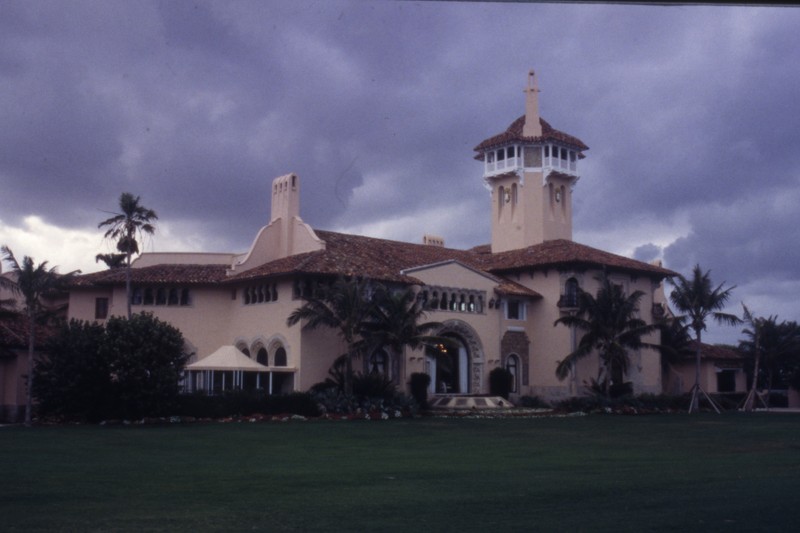
The address is 1100 South Ocean Boulevard, Palm Beach, Florida. It is the location of Mar-a-Lago, the private club that serves as Donald Trump’s residence, his frequent weekend retreat, and the symbolic headquarters of his political operation. As of Tuesday, it is represented in the Florida House by a Democrat.
Emily Gregory, a fitness company owner and first-time candidate, won the special election for House District 87 by 2.4 percentage points—797 votes out of roughly 33,000 cast. The margin was narrow. The symbolism was not. Gregory defeated Jon Maples, a former local council member who had received Trump’s endorsement in January, in a district the president won by 11 points in 2024.
“If Mar-a-Lago is vulnerable, imagine what’s possible this November,” said Heather Williams, president of the Democratic Legislative Campaign Committee, casting the race as the 29th Republican-held seat Democrats have flipped since Trump returned to the White House.
A Pattern, Not a Prediction
The Florida result fits a broader pattern of electoral volatility that extends well beyond American borders. Incumbent parties and governing coalitions have faced unusually strong headwinds in recent elections across democracies grappling with inflation, housing costs, and energy prices—the residue of pandemic-era disruptions and subsequent geopolitical shocks.
In the United States, Democrats have notched special election wins in ruby-red territory: a state Senate seat in Texas that Trump won by 17 points flipped in January, and in December, Eileen Higgins won the Miami mayor’s office—the first Democrat to lead that city in nearly three decades.
But special elections are poor predictors of general elections. Turnout is low—often below 20 percent—and the voters who show up tend to be more ideologically committed than the broader electorate. Gregory’s win demonstrates that Democratic voters are energized and that the affordability message resonates. It does not prove that Democrats will retain that energy through November.
The Affordability Message
Both candidates in the Florida race focused heavily on pocketbook issues. Gasoline prices have spiked in recent months; grocery costs remain elevated; property insurance in Florida continues to climb. Gregory told CNN’s Erin Burnett that Trump was not a factor in her campaign. Instead, she focused on what she called the “affordability crisis.”
“Everyone is feeling that affordability crisis and the last thing that Florida families needed when they’re struggling is $4 gas,” Gregory said.
Her Republican opponent, Maples, proposed eliminating property taxes—a position that may have struggled to gain traction in a district where residents expect robust municipal services. Gregory opposed the idea, arguing local governments would simply shift the tax burden elsewhere.
The President’s Ballot
There was an additional irony in the race. Trump voted by mail in the special election, according to Palm Beach County voter records—this despite having spent years denouncing mail-in voting as “cheating” and “corrupt as hell.” The White House noted that the SAVE America Act, which Trump is pushing Congress to pass, would allow mail voting for those who are ill, disabled, in the military, or traveling. A White House spokesperson called the matter “a non-story.”
Senate Democratic leader Chuck Schumer was not impressed. “According to Donald Trump, vote by mail is cheating when other people use it, but perfectly fine when he does it himself,” Schumer said on the Senate floor.
Trump quickly distanced himself from the loss, telling reporters “I’m not involved in that”—though he had explicitly endorsed Maples and urged supporters to vote for him on his social media platform.
What It Means
Gregory’s victory is a data point, not a forecast. It shows that even districts that strongly supported Trump can be competitive when Democratic voters are motivated and Republican enthusiasm lags. It suggests that economic discontent cuts across partisan lines. And it demonstrates that Trump’s endorsement—once considered golden in Republican primaries—does not guarantee victory in general elections.
Whether this translates into broader Democratic gains in November depends on factors that have not yet settled: the trajectory of the economy, the outcome of ongoing foreign policy crises, and the ability of both parties to mobilize voters who stayed home on Tuesday.
For now, Mar-a-Lago has a Democratic state representative. That fact alone will not determine the balance of power in Washington. But it is the kind of result that makes strategists in both parties recalculate what is possible.
Discussion (9)