 lop News
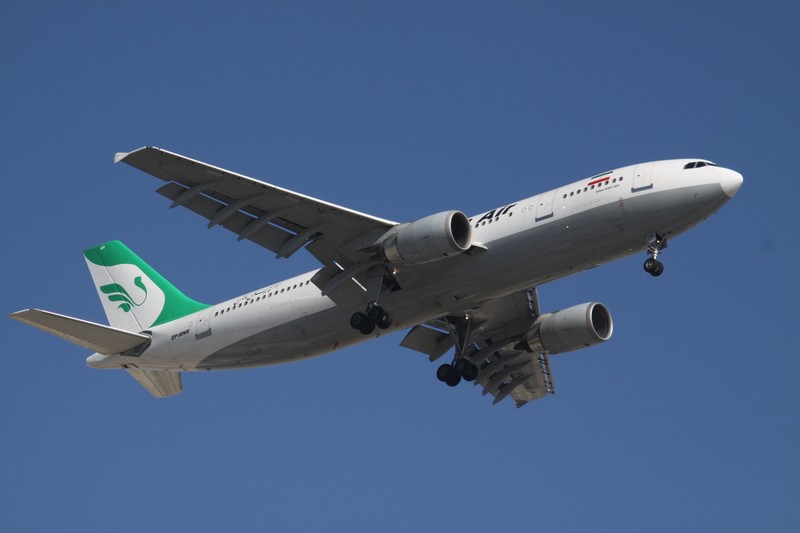
A Mahan Air aircraft sat on the tarmac at Mashhad International Airport in northeastern Iran. It had been transporting medicines and medical equipment from several countries to Iran and was scheduled to fly on to New Delhi on April 1 to pick up additional humanitarian supplies — part of an ongoing aid corridor India has quietly built with Iran since the US-Israel war began. Then a US airstrike hit the airport.
The plane was damaged. The aid mission was grounded. And within hours, Tehran was demanding the world call it a war crime.
What Happened at Mashhad
According to Indian news agency ANI, citing unnamed Iranian officials, a Mahan Air aircraft was struck during a US airstrike on Mashhad Airport on Monday. The plane was on the ground and due to depart for New Delhi within days as part of ongoing humanitarian coordination between the two countries. Iran’s Civil Aviation Organisation said the aircraft was transporting medicines and medical equipment from several countries to Iran.
The full extent of the damage is unclear. The United States has not confirmed carrying out a strike on Mashhad. CNN cited a witness reporting multiple explosions near the airport on Saturday evening, and Iranian state media listed Mashhad among several cities under attack. Whether the aircraft was specifically targeted or caught in a broader strike on the airport remains unknown.
The Legal Case
Iran’s Civil Aviation Organisation did not hedge. In a statement shared by the Iranian embassy in India on X, it said the attack on an aircraft “carrying medicines and medical equipment constitutes a war crime and a clear violation of international law.”
The statement invoked the Chicago Convention of 1944 and the Montreal Convention of 1971, both of which classify acts endangering civilian aircraft as international criminal offenses. It also cited Article 52 of Additional Protocol I to the Geneva Conventions, which prohibits attacks on civilian objects, including those engaged in humanitarian missions.
Iran called on international bodies to investigate and prosecute those responsible.
The legal argument carries weight in principle — international law does protect civilian aircraft and humanitarian shipments. Whether it holds in practice depends on facts that remain contested: the exact nature of the cargo, the aircraft’s flight plan, and, critically, the status of the airline itself.
The Mahan Air Problem
Mahan Air is one of Iran’s largest private carriers. It has also been under US sanctions for years. Washington has alleged ties between the airline and Iran’s Islamic Revolutionary Guard Corps, accusing it of transporting personnel and equipment linked to regional conflicts. Tehran has consistently denied this.
That sanctions history complicates the war crime framing considerably. The US treats Mahan Air not as a conventional civilian airline but as an entity linked to a military force it designates as terrorist. From Tehran’s perspective, the aircraft was a civilian plane on a humanitarian mission. From Washington’s, Mahan Air may be a legitimate target regardless of what any particular flight was carrying.
India’s Tightrope
This is where the incident becomes more than a legal dispute between belligerents. India has tried to stay neutral in the US-Israel war with Iran — a position that grows harder to maintain each week.
On March 18, New Delhi sent its first batch of medical supplies to Iran through the Iranian Red Crescent Society. The Iranian embassy publicly thanked “the kind people of India” for the support. India has framed the aid as a humanitarian obligation rooted in what it calls “long-standing civilisational and humanitarian ties,” not a political statement.
A US strike on a plane bound for the Indian capital — one expected to facilitate the very aid pipeline India helped establish — changes the shape of the problem. New Delhi has not yet commented on the incident. That silence is itself a diplomatic act, and an increasingly difficult one to sustain.
India depends on the United States as a strategic and defense partner, and as a counterweight to China. It also has deep economic and cultural ties with Iran, and critical interests in maintaining access through the Strait of Hormuz for energy imports. Every escalation in this conflict forces a choice between those relationships — or forces the choice of not choosing, which carries its own costs.
An Accidental Escalation
The Mashhad incident illustrates something uncomfortable about modern conflict. No war plan included a step called “draw India into a diplomatic crisis.” But a single airstrike on a single aircraft — one that happened to be part of a humanitarian corridor New Delhi helped build — has done precisely that.
The war crime allegation, whether or not it ever reaches a courtroom, is a diplomatic instrument. Iran is not merely seeking accountability; it is forcing governments like India’s to take a public position. The longer New Delhi stays silent, the more pressure builds from Tehran. The moment it speaks, it risks friction with Washington.
The aircraft on the tarmac in Mashhad may never fly again. The diplomatic fallout is just beginning.
Sources
- India news: Iran calls Delhi-bound plane strike ‘war crime’ — Deutsche Welle
- US strike hits India-bound aircraft at Mashhad airport; Iran calls it war crime — India Today
- ‘War crime’: Iran says US strike hit aid plane headed for India — what we know — WION
- Day 29 of Middle East conflict — Iran-backed Houthis enter war, firing missiles at Israel — CNN
Discussion (8)