 lop News
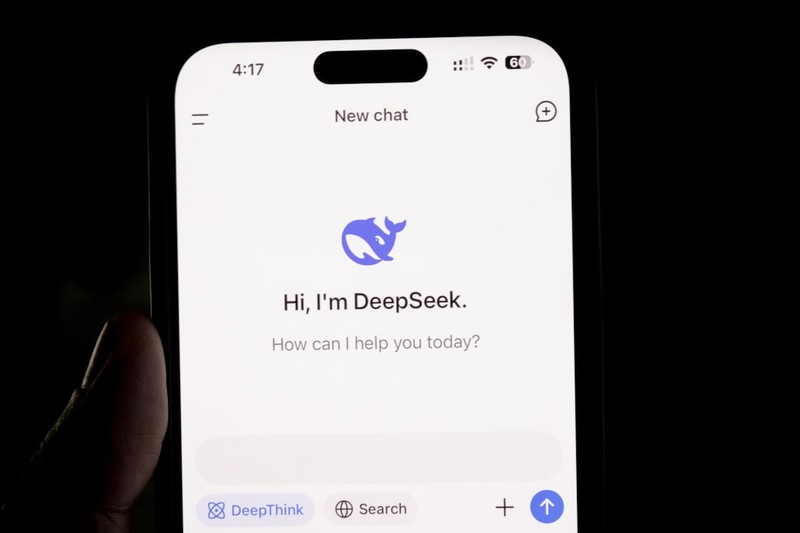
The last time DeepSeek launched a model, it wiped roughly a trillion dollars off US tech stocks. This time, the message is quieter but arguably more consequential: the Chinese AI lab doesn’t need Western hardware anymore.
DeepSeek released V4 on Friday, a preview of its latest model family. The technical headlines are eye-catching — a 1.6 trillion parameter flagship, a one-million-token context window, and what the company describes as “drastically reduced compute & memory costs.” But the strategic signal sits in a single sentence from Huawei Technologies: its Ascend supernode, built on domestically produced 950 AI chips, will “fully support” DeepSeek V4.
That pairing matters more than any benchmark.
What V4 Actually Does
Two models launched. DeepSeek-V4-Pro has 1.6 trillion total parameters with 49 billion activated per query; DeepSeek-V4-Flash, the lighter variant, has 284 billion parameters with 13 billion activated. Both use Mixture-of-Experts architecture — only a fraction of the model fires for any given token, the structural trick that made V3 so cheap to run.
V4 extends that efficiency considerably. According to the company’s technical report, the Pro model requires just 27 percent of the per-token inference compute and 10 percent of the key-value memory cache that its predecessor, V3.2, needed at full one-million-token context. A hybrid attention mechanism combining what DeepSeek calls Compressed Sparse Attention and Heavily Compressed Attention handles the gains.
Benchmarks are competitive, not dominant. V4-Pro scores 90.1 on MMLU, 76.8 on HumanEval, and 92.6 on GSM8K. DeepSeek claims it leads all current open-source models in coding, math, and STEM reasoning, trailing only Google’s Gemini-3.1-Pro on world knowledge. Strong. Not a blowout.
The Huawei Factor
This is where the story shifts from technical incrementalism to geopolitical significance.
Huawei’s Ascend 950 chips are not Nvidia GPUs. They are Chinese-designed silicon, built under US export controls that have tried — and so far failed — to choke off China’s access to cutting-edge AI hardware. DeepSeek running natively on Ascend infrastructure tells you something benchmarks don’t: the Chinese AI stack is becoming self-contained.
Channel News Asia, citing Reuters, reported that Huawei’s Ascend supernode would “fully support” all DeepSeek V4 variants. The timing is deliberate. This is a demonstration — to Beijing, to Washington, to the global developer community — that you can build and deploy frontier AI without a single American chip.
The Price Gap
DeepSeek’s API pricing has always been aggressive. Third-party analysis from Wavespeed.ai estimates V4 costs between $0.028 and $0.28 per million tokens, compared to $15 or more for comparable OpenAI services — a 20-to-50-fold difference. Cache-hit discounts of 90 percent and off-peak pricing push costs lower still.
The MoE architecture explains the gap. When only a slice of your parameters activates per token, you spend less compute per query. V4’s architecture amplifies this: the efficiency gains over V3.2 are not incremental adjustments but order-of-magnitude shifts in memory and compute requirements.
This is the cost curve that should concern Western AI labs pouring tens of billions into GPU clusters. DeepSeek is not matching their performance by outspending them. It is approaching it by spending differently.
The Geopolitical Backdrop
The launch lands one day after the White House accused Chinese firms of running “industrial-scale distillation campaigns to steal American AI.” Michael Kratsios, the Trump administration’s science and technology advisor, posted the claim on X ahead of an expected summit between Donald Trump and Xi Jinping in Beijing next month, according to France 24.
DeepSeek, for its part, acknowledged the recent attention in its announcement, advising users to rely only on official DeepSeek accounts for news and noting that “statements from other channels do not reflect our views.” Carefully phrased. Deliberately ambiguous about what “other channels” might have said.
The scheduling is hard to ignore. A White House accusation of theft on Thursday, a Chinese AI lab releasing a frontier model on domestic silicon on Friday. Whether coordinated or coincidental, the optics write themselves.
Substance and Signal
Strip away the geopolitics and what remains is a technically solid but evolutionary release. V4 extends DeepSeek’s efficiency lead, adds genuine long-context capability, and lands on domestic hardware. Real accomplishments. Not the shock that V3 delivered — but not designed to be.
V3 was a proof of concept: Chinese AI can compete. V4 is a proof of sustainability: Chinese AI can iterate, improve, and do it on its own silicon.
That is a harder proposition for Washington to counter with export controls alone.
Sources
- US-China AI race intensifies as DeepSeek releases ‘reduced’ cost model — France 24
- DeepSeek V4 Preview Release — DeepSeek
- DeepSeek-V4-Pro — Hugging Face
- Huawei Ascend supernode to support Deepseek V4 — Channel News Asia
- DeepSeek V4 Pricing: 20-50x Cheaper Than OpenAI (Cost Breakdown) — Wavespeed.ai
Discussion (11)