 lop News
Terry Pitchford was 18 when a Mississippi jury sentenced him to die. He is 40 now, and still on death row — because for two decades, no court would fully examine whether that jury was built to exclude people who looked like him.
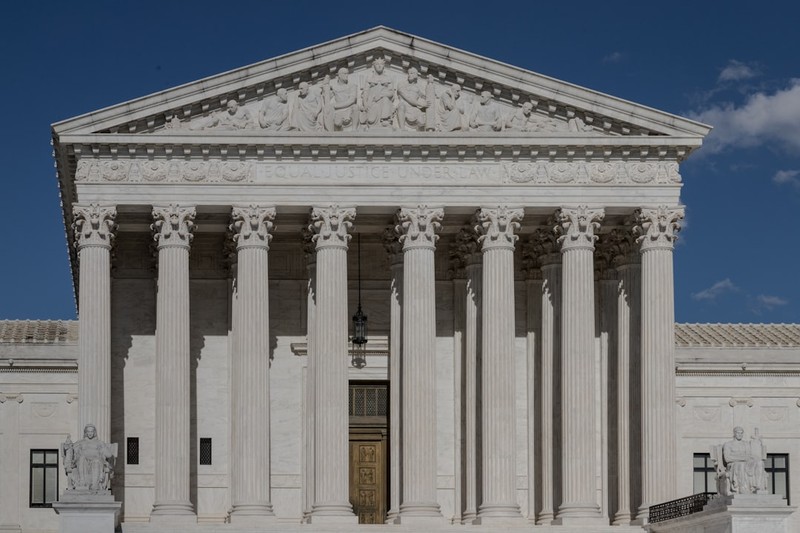
On Thursday, the US Supreme Court changed that. By a 5-4 vote, the justices threw out Pitchford’s conviction and death sentence, ruling that the trial judge had failed to conduct a proper inquiry into whether the prosecutor systematically struck Black jurors from the panel.
The Prosecutor and the Pattern
The case stretches back to 2004, when Pitchford and a 16-year-old accomplice robbed the Crossroads Grocery just outside Grenada, Mississippi. The younger teen, Eric Bullins, fired the shots that killed store owner Reuben Britt. Because Bullins was a minor, he was ineligible for the death penalty; he pleaded guilty and received 20 years. Pitchford, legally an adult, was charged with capital murder and condemned to death.
At trial, the local district attorney — Doug Evans — used his peremptory challenges to excuse four of five potential Black jurors. The resulting jury: 11 white jurors and one Black juror, in a county where roughly 40 percent of the population is Black.
Pitchford’s lawyers objected, invoking the Supreme Court’s 1986 ruling in Batson v. Kentucky, which established that excluding jurors on the basis of race violates the Constitution. But the trial judge, Joseph Loper, allowed the strikes.
Evans is no stranger to this court. In 2019, the Supreme Court overturned the conviction of Curtis Flowers, another Black Mississippi death row inmate, with Justice Brett Kavanaugh writing that Evans had demonstrated a “relentless, determined effort to rid the jury of Black individuals.” Loper had presided over the final two of Flowers’ six trials. Same prosecutor. Same judge. Same allegation.
Where the Process Broke Down
A Batson challenge follows three steps: the defendant must first show evidence of racial discrimination in jury selection; the prosecutor must then offer race-neutral explanations; and finally, the defense gets a chance to argue that those explanations are pretextual — a cover for bias. The trial judge then decides.
The third step never happened in Pitchford’s case. Kavanaugh, writing for the majority, was blunt: “whether due to confusion, oversight, an overly hurried jury selection process, or some other cause, things broke down, and the ordinary trial-court procedure for resolving Batson claims at step three never occurred — notwithstanding the repeated efforts of Pitchford’s counsel to pursue and preserve the Batson objection.”
The Mississippi Supreme Court upheld the conviction anyway, concluding Pitchford had waived his right to make the argument. A federal district judge disagreed and overturned the conviction in 2023, but the conservative 5th Circuit Court of Appeals reversed that ruling, holding that the state court’s decision was not “objectively unreasonable” enough to warrant federal intervention.
One Vote, Wide Repercussions
The Supreme Court disagreed with the 5th Circuit on Thursday. “Deference does not mean abdication,” Kavanaugh wrote, joined by Chief Justice John Roberts and Justices Sonia Sotomayor, Elena Kagan, and Ketanji Brown Jackson — a cross-ideological coalition.
Justice Neil Gorsuch dissented, joined by Justices Clarence Thomas, Samuel Alito, and Amy Coney Barrett. Gorsuch argued that Pitchford had failed to clear the high bar for federal post-conviction relief under the Antiterrorism and Effective Death Penalty Act, which requires showing that “no fairminded jurist” could have reached the state court’s conclusion.
The ruling revives the lower federal court’s decision invalidating Pitchford’s conviction. Prosecutors may choose to retry him — this time, presumably, with a jury selected under closer scrutiny.
The case underscores a persistent flaw in American criminal justice. Batson has been the law for 40 years, but enforcement depends on trial judges willing to press prosecutors on their reasons for striking jurors — and on appellate courts willing to second-guess them when they don’t. Pitchford spent two decades on death row before five justices decided the machinery had been rigged. The question that lingers is how many others are still waiting.
Sources
- Supreme Court rules for Black death row prisoner from Mississippi over racial bias in makeup of jury — AP News via PBS NewsHour
- Supreme Court sides with death row inmate in challenge to racial discrimination in jury selection — SCOTUSblog
- Supreme court sides with Mississippi man on death row in racial bias case — The Guardian
Discussion (10)