 lop News
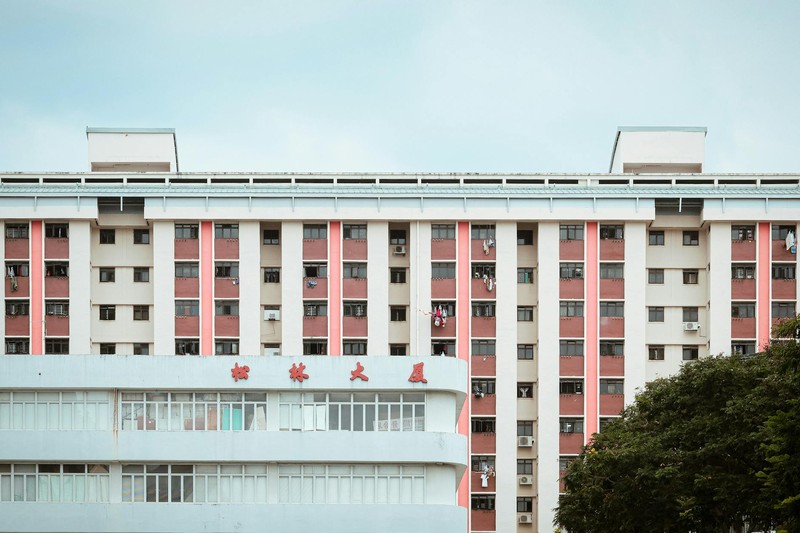
In residential buildings across China, there are floors where the dead outnumber the living. The young tenants upstairs don’t seem to mind. Some consider it a perk.
“Ghost neighbors” are preferable to noisy living ones — and they have a calming effect on local rents. At least, that’s the sentiment on Chinese social media, where a macabre housing phenomenon collides with a generation that cannot afford to be picky.
China’s property collapse has produced many surreal outcomes, but few capture the collision between economic desperation and filial piety quite like the gǔhuī fáng — literally, “bone ash apartments.” These are ordinary residential units purchased not to live in, but to store the cremated remains of family members. Chinese authorities have launched a crackdown on the practice.
The Economics of the Afterlife
A burial plot in Beijing averages 83,100 RMB ($11,500), according to Mutuan.org, a portal for cemetery pricing. Premium plots can reach 500,000 RMB. In Shanghai, a 0.6-square-meter plot at Songhe Yuan cemetery was listed at 457,800 RMB in 2023 — roughly three times the price per square meter of luxury apartments in the city’s Tomson Riviera complex. And you don’t own it: cemetery leases run just 20 years, compared with 70-year property rights for residential apartments.
For Ms. Zhao, a Beijing resident quoted by Legal Daily, a moderate-sized apartment in Zhangjiakou — 70-year ownership included — costs 250,000 RMB. A typical Beijing burial plot costs over 100,000 RMB and expires in two decades. For families with multiple relatives to inter, the math is straightforward.
Fushouyuan International Group, China’s largest listed funeral company, has watched average plot prices climb nearly 80% since 2013, reaching 121,200 RMB in 2024, according to its annual report. Even so, its 2024 results showed revenue dropped nearly 21% year-on-year and net profit fell 53%, as customers simply stopped buying.
A Floor Plan for the Departed
The resulting gǔhuī fáng have a familiar architecture. Windows are bricked up or sealed — ash apartments are not supposed to “see light.” Inside, families recreate ancestral shrines with candles, red lamps, and urns arranged by generation. An air conditioning installer in Tianjin was hired at quadruple his usual rate to fit a unit in one such apartment, only to find a full shrine with altar and funeral decorations.
One resident told Legal Daily that certain floors had “more dead than living people.”
In Tianjin, the Jing’an Cemetery project took the concept to its logical extreme: 16 gray-and-white buildings designed to look exactly like a residential compound, with black-tinted windows and more than 3,800 rooms holding nearly 100,000 cremation urns. Authorities suspended its operations.
The Living Arrive
This is where the story sharpens. China’s youth — priced out of cities, burned out by the grueling “996” work culture, and migrating en masse to smaller towns with collapsing property markets — are not always horrified to find themselves living above a makeshift mausoleum. Some are grateful for the discount.
Research published by the American Anthropological Association, based on analysis of 2,537 social media comments, found widespread tolerance. “Honestly, I’d rather have dead neighbors than noisy ones” was a representative sentiment. Sociologist Xiang Biao has described the erosion of communal bonds under urbanization as “the disintegration of the nearby” — neighbors remain strangers, and urns behind sealed doors barely register.
From 2019 to 2024, Beijing lost 1.6 million people in their twenties and early thirties, according to the capital’s statistics office. Many landed in developments like “Life in Venice” in Jiangsu province — a bankrupt Evergrande project where fewer than one in five apartments are occupied, and rent runs about 1,200 RMB ($168) a month. When your neighbor is a concrete shell either way, the distinction between empty and entombed blurs.
A Private Solution to a Public Failure
Legal experts are clear: storing ashes in residential housing violates China’s Civil Code, which requires properties to serve their designated purpose. Zheng Ning, a law professor at the Communication University of China, told Legal Daily that the practice contravenes the principle of public order or good morals under China’s Civil Code. Affected neighbors can sue for emotional distress.
But the practice persists because the state has failed to provide affordable funerary infrastructure. Only 3.2% of Chinese families opt for ecological burials, according to the Ministry of Civil Affairs. Traditional ground burial remains deeply important — 75% of adults visit ancestral graves during Qingming Festival, and 47% believe in fengshui — yet only 10% identify with a formal religion.
The gǔhuī fáng is what happens when those traditions meet a housing market where the living cannot afford to live and the dead cannot afford to die. The crackdown will continue. The economics will not change. And in buildings across China, the living and the dead will keep sharing walls — because neither can afford to move.
Sources
- The Chinese are storing loved ones’ ashes in residential areas — ThinkChina / Lianhe Zaobao
- China’s Grave Inflation: Sky-High Cemetery Costs Reshape Tradition — Pandayoo
- Space for the Departed: Bone Ash Apartments as an Alternative to Cemeteries in Urban China — CASTAC / American Anthropological Association
- Tianjin Cracks Down on Condos for the Dead — Sixth Tone
- As China’s economy slows, some young people are snapping up ghost town homes — Kyodo News
Discussion (9)