 lop News
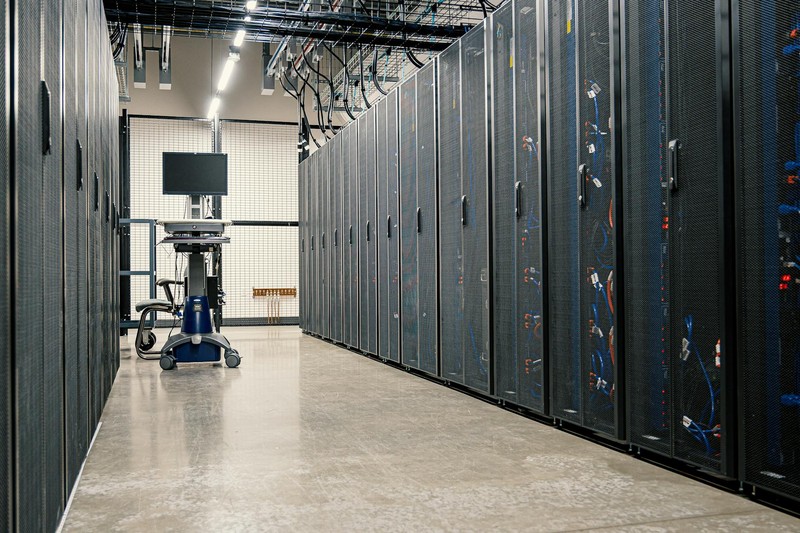
Inside a facility in Melbourne, 120 shoebox-sized devices are quietly processing data. Nothing remarkable about that, except the computation isn’t happening on silicon alone — it’s happening on living human brain cells.
Australian startup Cortical Labs has deployed what it describes as the world’s first commercial biological computing system. The CL1 grows neurons from stem cells — derived from blood or skin samples — and places them on silicon chips equipped with microelectrodes. The chips send electrical signals to the neurons and read their responses in real time. The approach, sometimes called “wetware,” requires the cell cultures to be bathed in nutrient-rich liquid to stay alive.
What previously required months or years of specialised lab work can now be done in hours or days, according to the company, which has standardised the process of connecting living cell cultures to electronic interfaces.
Brett J. Kagan, Cortical Labs’ chief scientific officer, said the appeal lies in what biology does naturally: learn efficiently and handle uncertainty. His toddler needed only a few pictures to understand what a dog is. Machine learning models can require hundreds of thousands of examples for comparable tasks.
The company is planning biological computing facilities in Melbourne and Singapore where multiple units could be accessed remotely.
Not everyone is convinced the current approach delivers meaningful advantages. Alysson R. Muotri, who directs stem cell research at the University of California, San Diego, told Euronews that flat networks of neurons may not outperform traditional silicon systems. He said more complex three-dimensional brain-like structures, known as organoids, could offer greater potential — though these remain experimental.
Those more complex structures also raise sharper ethical questions. Muotri warned that organised brain tissue “can likely generate some kind of experience in a dish” and might approach something resembling consciousness — territory that would demand new oversight.
Kagan counters that the system could reduce animal testing and offers greater control over biological variables. The future, he suggested, is hybrid: integrating biological and silicon-based approaches to achieve what neither could manage alone.
Traditional computers still handle precise mathematical calculations far more effectively. But the line between processor and petri dish just got considerably blurrier.
Discussion (6)