 lop News
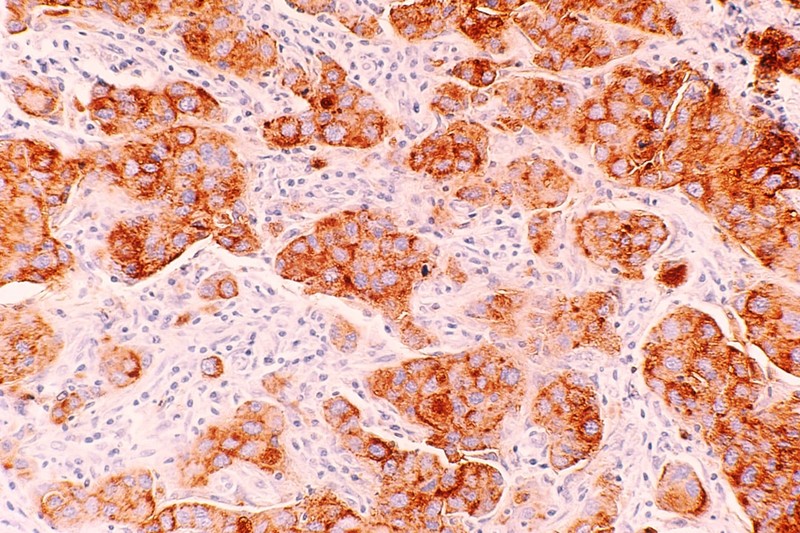
For decades, pancreatic cancer has been oncology’s most stubborn opponent. Incremental gains measured in weeks. A five-year survival rate stuck at 13%. A standard of care built on the same intravenous chemotherapies that have been in use for a generation.
Data presented today at the American Society of Clinical Oncology meeting in Chicago may finally change that. A daily pill called daraxonrasib, made by Revolution Medicines, nearly doubled how long patients lived compared to chemotherapy — extending median survival to 13.2 months from 6.7 months. It is the first time any drug has pushed median survival past one year in a Phase 3 pancreatic cancer trial.
“These results are landscape-changing for metastatic pancreatic cancer patients with a KRAS mutation,” said Rachna Shroff, chief of hematology and oncology at the University of Arizona Cancer Center, in a statement provided by ASCO.
The numbers behind the claim
The Phase 3 trial enrolled patients whose pancreatic cancer had already spread despite a previous treatment — a population with few remaining options. The study’s primary objective focused on patients whose tumors carried a specific RAS G12 mutation, but investigators also evaluated the drug across the entire trial population.
The results held up in both groups. In the overall trial population, daraxonrasib extended survival to a median of 13.2 months, compared with 6.7 months for chemotherapy. Among patients with RAS G12 mutations who received chemotherapy, median survival was 6.6 months. The drug also doubled the time patients lived without their disease progressing — holding tumors in check for a median of 7.2 months, compared with 3.6 months for chemo.
Patients noticed the difference quickly. Pashtoon Kasi, a gastrointestinal oncology specialist at City of Hope and a study investigator, said researchers saw improvement in pain and tumor markers “within a week or two of starting treatment. That’s how quickly things worked.”
For context on just how unusual these numbers are: Shubham Pant, a gastrointestinal oncologist at MD Anderson Cancer Center, said previous positive trials in pancreatic cancer extended survival by a few weeks or months — not half a year. Pant, who has been involved in daraxonrasib trials since their earliest days, described the outcomes as “truly transformational.”
How the drug works
Daraxonrasib targets RAS proteins — molecular switches that drive tumor growth and are present in roughly 90% of pancreatic cancers. For decades, these proteins were considered essentially undruggable. Earlier drugs that targeted a specific KRAS mutation, Lumakras and Krazati, have had limited commercial impact. Daraxonrasib works differently: it binds to the RAS protein in its active state and shuts it off, and appears effective across a broader range of RAS mutations.
The drug comes as a daily pill rather than an hours-long chemotherapy infusion. Vicky Stinson, an Arizona woman who participated in the trial for 13 months, told NPR the convenience was its own form of relief: “I mean I had a full year of normalcy.” Her cancer eventually returned, but she described feeling hopeful that science is catching up with the disease.
Side effects are real but, according to investigators, manageable. Roughly a third of patients experienced moderate to severe effects, most commonly rash and diarrhea. Former US Senator Ben Sasse, who is taking daraxonrasib and has seen his tumors shrink by 76%, has spoken publicly about severe facial rash. No patients discontinued the trial due to side effects, Revolution reported.
What comes next
Revolution plans to seek FDA approval soon and carries a Commissioner’s National Priority Voucher — a mechanism that could lead to a clearance within weeks of an approval submission. If approved, daraxonrasib would initially be available as a second-line treatment for patients whose cancer has progressed after chemotherapy.
The company is already testing the drug in newly diagnosed patients through a new Phase 3 trial called RASolute303, which will evaluate daraxonrasib alone and in combination with chemotherapy in the first-line setting. Early data presented in April at the American Association for Cancer Research meeting showed tumors shrank or disappeared in 47% of patients receiving daraxonrasib alone, and 58% of those receiving it with chemotherapy — compared with response rates of 23% to 43% for standard first-line chemo.
Analysts estimate daraxonrasib could represent a market opportunity exceeding $10 billion in pancreatic cancer alone. Revolution’s stock has climbed roughly 274% over the past year, pushing its market valuation past $30 billion.
Researchers see the drug less as a finish line than a foundation. Andrew Aguirre, co-director of the Center for RAS Therapeutics at Dana-Farber Cancer Institute, called the results a “whopping improvement” and said daraxonrasib could become the backbone for combination therapies that extend survival further — or, eventually, produce something pancreatic cancer patients have rarely had reason to expect.
Sources
- ‘Unprecedented’ Revolution data point to paradigm shift in pancreatic cancer — BioPharma Dive
- Pancreatic cancer drug daraxonrasib from Revolution Medicines succeeds in trial — CNBC
- She’s trying to outrun pancreatic cancer. Breakthrough treatments give her hope — NPR
- Revolution drug shows promise in early pancreatic cancer — BioPharma Dive
Discussion (9)