 lop News
More than twenty prisoners walked out of La Lima penitentiary in east Havana on Friday morning, clutching release papers, weeping, reaching for relatives who had waited all morning. Albis Gainza, 46, who had served half of a six-year robbery sentence, told AFP he couldn’t sleep after learning he would walk free. “Thank you for this opportunity that they gave us,” he said. “This needs to keep going … [and] more are released.”
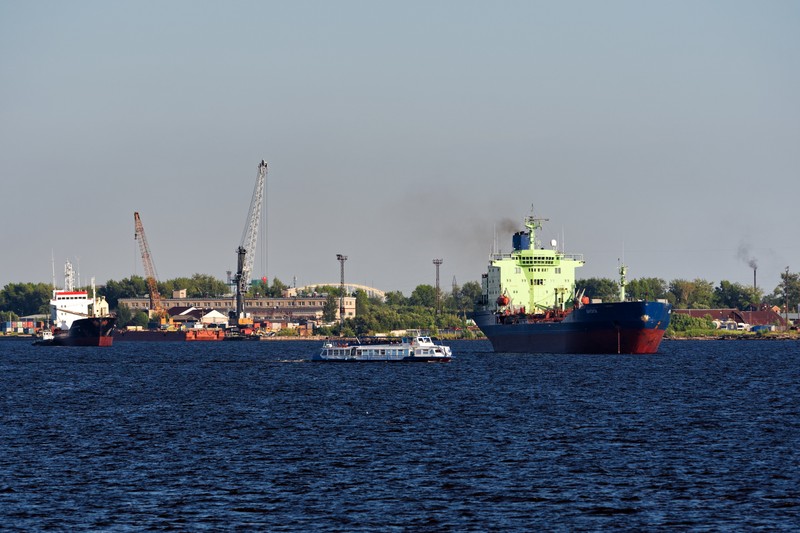
Three days earlier, a sanctioned Russian oil tanker called the Anatoly Kolodkin docked at Cuba’s Matanzas terminal and unloaded 700,000 barrels of crude, after Donald Trump eased his de facto oil blockade of the island.
The sequencing was hard to miss.
A Pardon, Timed for Holy Week
Cuba’s government announced late Thursday it would pardon 2,010 inmates as a “humanitarian” gesture marking Holy Week — the fifth such mass pardon since 2011, bringing the cumulative total past 11,000. Authorities said the selection was based on the nature of crimes, good behaviour, health and time served, and would include young people, women and prisoners over 60 due for early release within six months to a year. Those convicted of murder, sexual assault, drug offences, theft, illegal slaughter of livestock or crimes against state authority were excluded.
The government did not identify those being released, making it difficult to assess whether political prisoners are among them — a core US demand. The timing was notable regardless. Cuba confirmed on March 13 that talks with US officials had taken place, one day after announcing it would free 51 prisoners as a goodwill gesture toward the Vatican, which has often mediated between the two governments.
“It seems not far-fetched to think that this is a sign that some of the conversation between both governments is advancing,” said Michael Bustamante, chair of Cuban studies at the University of Miami. “Perhaps slowly, but advancing. To where? Unclear.”
The Blockade That Bent
Trump had been emphatic. In January, he posted on social media: “THERE WILL BE NO MORE OIL OR MONEY GOING TO CUBA – ZERO!” Last week, he reversed course. “If a country wants to send some oil into Cuba right now, I have no problem with it,” he told reporters, waving the Kolodkin through.
A second tanker, the Sea Horse, carrying 200,000 barrels of Russian fuel, waited in the Atlantic. As the Kolodkin reached Cuba, the Sea Horse moved toward Venezuela, whose government has been keen to appease Trump’s demands since the US abduction of Nicolás Maduro. The choreography suggested a sequence of concessions rather than a one-off.
William LeoGrande, professor of government at American University in Washington, said the reciprocal gestures pointed to deliberate negotiation. “It suggests that the two sides may be making reciprocal gestures of good will to advance the conversations they have been having,” he said, noting similar patterns in earlier détente efforts.
The Castros at the Table
The talks have been led on the Cuban side by Raúl Guillermo Rodríguez Castro — grandson of former president Raúl Castro and son of the late Luis Rodríguez López-Calleja, who headed Gaesa, the military conglomerate controlling much of the island’s economy. His involvement signals that Cuba’s military-commercial elite is angling to preserve its position in any opening.
That suits Trump, who has spoken of a “friendly” takeover. It sits less comfortably with Secretary of State Marco Rubio, a Cuban-American and longstanding advocate of dismantling the Castro apparatus. “You cannot fix their economy if you don’t change their system of government,” Rubio told Fox News on Tuesday, adding that more news would come “fairly soon.”
The People Below
Cuba’s 9.5 million remaining residents — after an exodus of 2 million in five years — face daily blackouts, shuttered petrol stations and collapsing public services. Tourism has all but vanished as airlines from Canada, Russia, China and France ceased operations. “Everything is collapsing — health, education, transport, everything,” one man told The Guardian outside a church in El Cobre, in eastern Cuba.
Roughly 40 per cent of the population, many elderly, depend on state systems that no longer deliver what was promised. Whatever deal is forming, it is being negotiated above their heads. The tankers and pardons suggest a transaction in motion. Whether it becomes a genuine opening or merely the managed survival of those already in power is the question neither side has answered.
Discussion (9)