 lop News
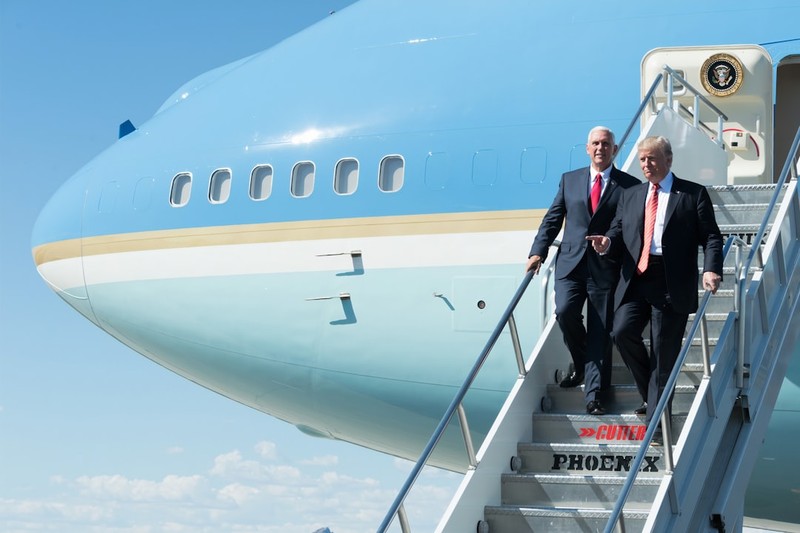
The United States is negotiating an end to its war with Iran and threatening military action against Cuba. Both things happened this week. Both came from the same president, on the same stage.
On Friday, President Donald Trump told attendees of the Future Investment Initiative — a Saudi-backed conference held at Miami Beach’s Faena Forum — that Cuba was next on his list after military operations in Venezuela and Iran.
“I built this great military. I said, ‘You’ll never have to use it.’ But sometimes you have to use it. And Cuba is next by the way,” Trump said, according to Reuters. He immediately added: “But pretend I didn’t say that. Pretend I didn’t.”
He repeated the request — “Please, please, please media, please disregard that statement” — a rhetorical flourish that did not soften the message in Havana, where officials have been preparing for exactly this possibility.
A War in Progress, a Threat in Reserve
The timing is remarkable. The U.S.-Israeli military campaign against Iran, launched February 28, is ongoing. Trump used the same speech to signal progress in negotiations with Tehran, telling the audience “we’re negotiating now” and pressing for the reopening of the Strait of Hormuz, through which roughly one-fifth of the world’s oil supply flows.
The dual track — pursuing diplomacy with one adversary while brandishing force against another — has become the administration’s signature foreign policy posture. The Venezuelan precedent looms over both theaters. In January, U.S. forces captured then-President Nicolás Maduro in a raid on his Caracas residence and flew him to New York to face narcoterrorism charges. Venezuela’s new government, under Delcy Rodríguez, has cooperated with Washington — most critically by cutting off oil shipments that had sustained Cuba’s economy for decades.
Havana Between Talks and Threats
Cuba’s economy is in freefall. The Venezuelan oil cutoff has crippled power generation and transportation. Cuba’s chief of mission in the United States, Lianys Torres Rivera, told Politico that as many as 11,000 children are on waiting lists for surgeries at strained health clinics.
President Miguel Díaz-Canel confirmed this month that Havana is in talks with Washington to avert confrontation. Secretary of State Marco Rubio — the son of Cuban immigrants who has long advocated regime change — is leading the American side. According to Politico, the U.S. negotiating counterpart has been Raúl Rodríguez Castro, grandson of former president Raúl Castro, despite holding no official government position.
Cuba has attempted to signal goodwill. The foreign ministry pledged to release 51 prisoners in consultation with the Vatican. But Torres Rivera drew a firm line on Cuba’s political system: “The conversations are not about Cuba’s internal affairs — our constitutional system, our political model.”
Cuba’s deputy foreign minister, Carlos Fernández de Cossio, told TRT World that the military is “preparing these days for the possibility of (US) military aggression,” adding: “We would be naive if not looking at what’s happening around the world.”
Allies Left Guessing
Trump used his Miami remarks to criticize NATO’s absence from Iran negotiations, calling it a “tremendous mistake” and suggesting the alliance’s relevance was in question. “We spent hundreds of billions of dollars a year on NATO,” he said, according to Fox News. “And we would have always been there for them. But now, based on their actions, I guess we don’t have to be, do we?”
For European governments already uneasy about the Iran war, the prospect of another front in the Caribbean complicates an already strained transatlantic relationship. For Latin American leaders, the threat against Cuba — coming weeks after the Maduro operation — underscores a return to direct military pressure in the hemisphere. The two countries have been adversaries for 65 years, but the current escalation is without recent precedent.
The contradiction at the heart of the administration’s approach is stark. While Rubio negotiates with Cuban officials over ports, energy, tourism, and a potential off-ramp for Díaz-Canel, the president is publicly musing about whether a “friendly takeover” of Cuba might turn unfriendly. “It wouldn’t matter because they’re really, they’re down to, as I say, fumes,” Trump said on March 9, according to USA Today.
Whether the talks or the threats define what comes next may depend on which one Havana believes.
Sources
- Trump says ‘Cuba is next’ in speech touting US military successes — Reuters
- Trump says ‘Cuba is next’ following Iran negotiations at FII summit — Fox News
- Trump signals Cuba could be his next target — TRT World
- Cuban president confirms talks with US officials amid Trump pressure — Politico
- Trump says regime change in Cuba may be ‘friendly takeover’ or not — USA Today
Discussion (9)