 lop News
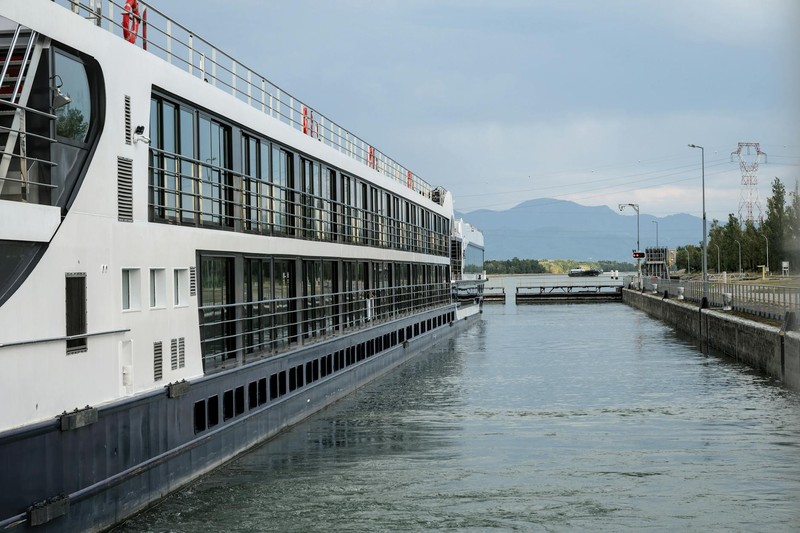
A man died on the MV Hondius on April 11, and for weeks nobody knew why.
It wasn’t until May 2 that the World Health Organization confirmed the first case of hantavirus on the Dutch-flagged cruise ship. By then, a second passenger had died and more than two dozen people from at least 12 countries had disembarked at the South Atlantic island of St. Helena, scattering across four continents with no health screening and no contact information collected.
Three passengers have died in total. Five cases of hantavirus have been confirmed. The first confirmed case was not reported until May 4, according to the ship’s operator, Oceanwide Expeditions — nearly a month after the first death.
A Virus That Shouldn’t Do This
Hantavirus is usually straightforward: you inhale dust contaminated by infected rodent droppings, you get sick. It is not supposed to spread easily between people. WHO Director-General Tedros Ghebreyesus told reporters that the first two confirmed cases had “travelled through Argentina, Chile and Uruguay on a bird-watching trip which included visits to sites where the species of rat known to carry the virus was present.”
That points to a classic environmental exposure — the kind hantavirus is known for. But experts believe the virus may also have passed between passengers in close contact aboard the ship, an unusual and unwelcome development for a pathogen that rarely behaves this way.
The WHO confirmed Friday that a KLM flight attendant who fell ill after briefly sharing a Johannesburg-to-Amsterdam flight with an infected passenger has tested negative, easing concerns about casual transmission. The UK Health Security Agency has stressed that the virus is not spread through everyday contact, noting that in rare instances of person-to-person spread, individuals had “close and prolonged” exposure.
The Passengers Who Left
Among those who disembarked at St. Helena on April 24 was a 69-year-old Dutch woman whose husband had died on the ship 13 days earlier. She boarded a flight to Johannesburg the next day, became too ill to continue to Amsterdam, and was taken off the plane. She died on April 26. Her death is the only one confirmed to have been caused by hantavirus.
The two other deaths — her husband on April 11 and a German woman — have not been confirmed as hantavirus cases, according to the BBC.
Health authorities are now tracing contacts across multiple countries. A third British national is suspected of having the virus and is currently on the remote Atlantic island of Tristan da Cunha, where the ship stopped in mid-April. Two other Britons are confirmed cases: a 56-year-old expedition guide hospitalized in stable condition in the Netherlands, and a 69-year-old man in intensive care in South Africa who officials say is “doing better.”
Two Britons who returned home after disembarking are self-isolating voluntarily without symptoms. Four remain on St. Helena. A seventh has not yet been traced, according to the UK Health Security Agency.
The Ship Heads for Port
The MV Hondius is expected to reach Tenerife in the Canary Islands this weekend with roughly 140 passengers and crew still on board. None are symptomatic, according to Oceanwide Expeditions. Spanish authorities say the vessel will dock at a “completely isolated, cordoned-off area,” per Virginia Barcones, Spain’s head of emergency services. The US is sending a plane to repatriate 17 American citizens. Britain is chartering a flight for nearly two dozen Britons, who will be asked to self-isolate for 45 days upon return.
The origin of the outbreak remains unknown. The ship carried birdwatchers through South American ports where carrier rodents live, then sailed into the Atlantic, where the virus found something it rarely gets: weeks of close human contact in a sealed environment, and a long head start before anyone thought to look for it.
Discussion (9)