 lop News
A French woman lies in a Paris intensive care unit, her blood cycling through an artificial lung — a machine doing the work her heart and lungs cannot. She is, according to her doctors, at “the final stage of supportive care.”
Eleven confirmed or suspected cases. Three dead. An entire cruise ship emptied by workers in full protective suits.
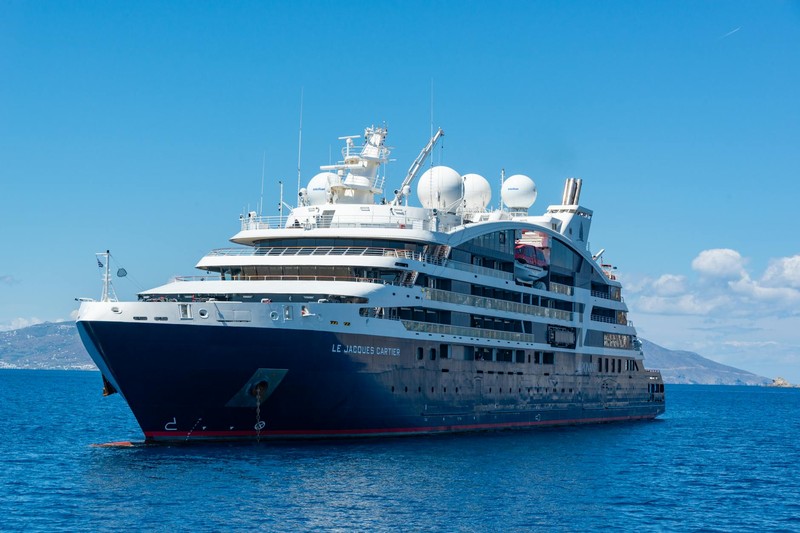
The MV Hondius, a Dutch-flagged expedition vessel, is now the site of the first hantavirus outbreak ever documented on a cruise ship. The Andes strain, confirmed in at least six patients through PCR testing, kills roughly one in three people it infects.
A lethal virus, but not a fast one
As of May 13, nine cases have been laboratory-confirmed and two remain probable, according to France 24 reporting. Three people have died. A Spanish passenger tested positive Tuesday and is quarantined at a military hospital in Madrid. The French woman in Paris and patients in the Netherlands, Switzerland, and South Africa remain hospitalized.
WHO Director-General Tedros Adhanom Ghebreyesus struck a measured tone. “At the moment, there is no sign that we are seeing the start of a larger outbreak,” he said, while warning that the virus’s incubation period — up to eight weeks — means additional cases could still emerge.
Matt McKee, professor of European public health at the London School of Hygiene and Tropical Medicine, draws a clear line between this virus and the one that shut down the world six years ago. Hantavirus is “a serious disease” with “a fatality rate of about one in three,” he told France 24, but “it does not spread at anything like the rate that COVID does.”
The distinction is critical. Hantavirus typically reaches humans through contact with rodent excrement and rarely spreads between people. The cruise ship — what McKee calls “an institutional amplifier” — created “a very unusual set of circumstances” for transmission: close quarters, shared air, weeks at sea.
From Patagonia to the headlines
Investigators believe the outbreak began before anyone boarded. A Dutch couple who spent more than three months traveling through Argentina, Chile, and Uruguay developed symptoms days after the Hondius departed Ushuaia, the Patagonian port at the tip of South America. The husband died onboard April 11. His wife was medically evacuated and died in Johannesburg on April 26.
Argentine officials say the couple visited a garbage dump during a birdwatching tour where they may have been exposed to infected rodents. A scientific team is being dispatched to investigate.
Ushuaia, a city that depends on cruise tourism, has pushed back hard. Local authorities insist the probability of infection during the couple’s 48 hours in the city was “almost zero,” the South China Morning Post reported. For Ushuaia, the outbreak has already revived the stigma and suspicion that characterized the earliest days of Covid-19 — a city branded as ground zero for a virus it may never have harbored.
The containment machinery
Eighty-seven passengers and 35 crew members were evacuated from the Hondius in Tenerife this week. Workers in full protective gear and breathing masks escorted them ashore in what France 24 described as a carefully choreographed operation. Flights carried passengers to the Netherlands for quarantine. The empty ship is sailing to Rotterdam for disinfection.
The logistical response has been substantial. WHO has advised all returning passengers to quarantine for 42 days. Twelve employees at Radboud University Medical Center in Nijmegen were placed under six-week preventive quarantine after improperly handling bodily fluids from an infected patient — the hospital said the risk was low but required the precaution. Health officials in three US states are monitoring passengers who disembarked early. A flight attendant who briefly interacted with an infected passenger was hospitalized in the Netherlands with possible symptoms.
What the stress test reveals
The WHO assesses the global risk as low. The transmission chain is documented. Every case traces back to the ship. There is no evidence of community spread anywhere in the world.
Yet the public reaction has arrived at a familiar register. The outbreak has already “revived bitter memories of the emergence of Covid-19,” the South China Morning Post reported. Ushuaia is learning what Wuhan learned in 2020: being associated with a virus, even tentatively, carries economic and social costs that outlast the epidemiology.
This is the stress test. The medical infrastructure — contact tracing, international coordination, quarantine protocols — appears to be functioning. The question is whether public discourse can distinguish between a contained, traceable outbreak of a dangerous virus and the beginning of another pandemic. So far, the answer is not encouraging.
The virus itself gets the final word. With incubation running up to eight weeks, the clock is still ticking.
Sources
- French woman battling hantavirus is critically ill and on an artificial lung — France 24
- ‘Serious disease’: Hantavirus less infectious than COVID, yet has significant fatality rate - 1 in 3 — France 24
- Hantavirus cluster linked to cruise ship travel, Multi-country (Update 1) — World Health Organization
- Argentine city tries to shrug off hantavirus ship ‘patient zero’ suspicions — South China Morning Post
- Medical epidemiologist explains what to know about the cruise ship hantavirus outbreak — PBS NewsHour
Discussion (10)