 lop News
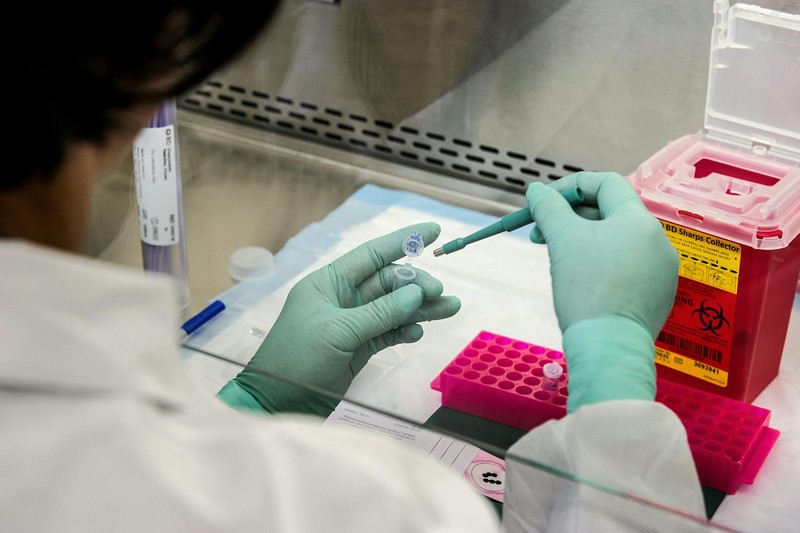
Human cells carry 23 pairs of chromosomes. In Down syndrome, there is a 47th — an extra copy of chromosome 21, present in every cell from conception, shaping development, cognition, and health across a lifetime. For the first time, scientists have used CRISPR gene editing to silence that extra chromosome in lab-grown cells, with success rates reaching 40 percent in some experiments.
That is the breakthrough. Here is what it is not: a cure, a therapy, or anything remotely close to one.
What the researchers actually did
The study, published Monday in the Proceedings of the National Academy of Sciences, comes from neurologists at Beth Israel Deaconess Medical Center and Harvard Medical School. Led by Volney Sheen, the team borrowed a mechanism the human body already uses.
In female cells, one of the two X chromosomes is naturally shut down by a molecule called XIST — a long piece of RNA that coats the chromosome and silences its genes. For years, researchers have asked whether the same process could be applied to the extra copy of chromosome 21. The problem was that existing gene-editing tools could only insert XIST into a small fraction of cells, making the approach impractical.
Sheen’s team developed a modified version of CRISPR-Cas9 that overcomes this bottleneck. By fusing a specially engineered enzyme with Cas9 and designing guide RNAs that home in on specific genetic variations, they integrated XIST into 20 to 40 percent of trisomy 21 cell lines. Critically, the technique affected only one of the three chromosome copies — a key safety feature for any eventual therapeutic use.
“This approach overcomes a major hurdle,” Sheen told Gizmodo.
A long road from petri dish to patient
These results come from cells in a dish. Not mice. Not humans. The team is now planning animal studies to work out delivery methods and timing. Even partial silencing might be enough to reduce the most severe effects of Down syndrome, which include early-onset Alzheimer’s disease, heart defects, and cognitive impairment. But no one yet knows whether that assumption will hold in a living organism.
A separate team, led by Ryotaro Hashizume, took a different approach in a study published in February 2025 in PNAS Nexus — using CRISPR to physically remove the extra chromosome rather than silence it. Both strategies share the same obstacle: delivering gene-editing machinery to brain cells in a living person remains one of the field’s hardest unsolved problems.
Off-target effects remain a concern, though the Harvard researchers believe their method carries risks comparable to other CRISPR therapies already in human trials.
The harder questions
This is where the conversation becomes larger than the science.
Down syndrome is the most common chromosomal condition in humans, occurring in roughly one in 700 births. It is also a condition with a distinct community, culture, and identity. Many people with Down syndrome and their families describe it as an integral part of who they are — not a defect awaiting elimination.
The word “treatment” does significant work in discussions like these. It assumes that Down syndrome is something to be treated, a framing not universally shared. Who decides what constitutes a correction? If the technology works for chromosome 21, what about other chromosomal conditions? Where is the line between addressing severe health complications and engineering toward a genetic norm?
These questions are not abstract. They will shape how this research is funded, regulated, and deployed — and who gets access if it eventually works.
The team’s mouse studies will determine whether the approach is viable enough to justify human clinical trials. Even under optimistic timelines, any therapeutic application is years away.
What exists right now is an elegant proof of concept: an extra chromosome can be selectively silenced in a laboratory. The question of whether it should be is a conversation that belongs to more than the scientists holding the pipettes.
Sources
- Scientists Discover Potential Path to Treating Down Syndrome — Gizmodo
- Down Syndrome Chromosomal Therapy Draws Closer — Inside Precision Medicine
- CRISPR Snips Away Extra Chromosomes, Offering New Hope for Down Syndrome Treatment — SciTechDaily
Discussion (9)