 lop News
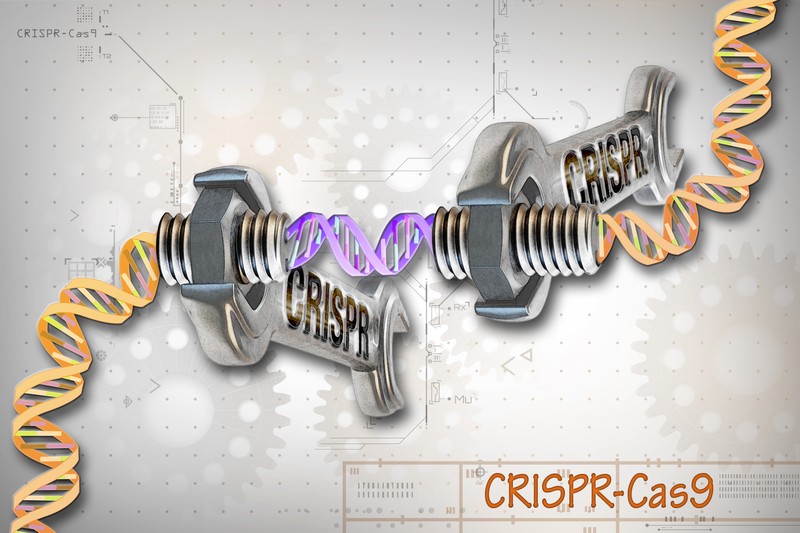
Intellia Therapeutics reported the first positive Phase 3 results for a CRISPR therapy that edits genes directly inside the living human body — a milestone that rewrites what medicine can realistically attempt, permanently and from the inside out.
The treatment, lonvoguran ziclumeran — known as lonvo-z — targets hereditary angioedema (HAE), a rare genetic condition that causes severe, unpredictable, and potentially fatal swelling attacks. Roughly one in 50,000 people live with the disease worldwide.
In the 80-patient HAELO trial, a single infusion reduced swelling attacks by 87% compared with placebo over a six-month evaluation period. More strikingly, 62% of treated patients experienced zero attacks and needed no other therapy for the full six months. Just 11% of placebo patients could say the same. All results were statistically significant (p<0.0001).
The results mark a dividing line for CRISPR-based medicine — not because gene editing is new, but because of where the editing happened.
Inside the body, not in a dish
The only FDA-approved CRISPR therapy to date, Vertex Pharmaceuticals’ Casgevy, treats sickle cell disease through an ex vivo process: doctors extract a patient’s blood stem cells, edit them in a laboratory, then reinfuse them. The procedure takes months, requires a bone marrow transplant, and carries a price tag north of $2 million.
Intellia’s approach is categorically different. Lonvo-z is administered through an intravenous infusion lasting several hours. The therapy travels through the bloodstream to the liver, where CRISPR’s molecular scissors — the same Nobel Prize-winning technology — locate and disable a gene called KLKB1. That gene produces kallikrein, a protein that, when overactive, drives the inflammatory cascades responsible for HAE attacks.
Once the gene is silenced, it stays silenced. Intellia CEO John Leonard told CNBC that across nearly six years of clinical testing, the company has not observed a single case where the editing effect diminished.
“I think this is a tipping point for the disease and tipping point for CRISPR-based in vivo therapy where you can make a change [and] it’s permanent,” Leonard said.
A fitting first target
HAE is a well-chosen proving ground for in vivo editing for several reasons. The disease is driven by a single, well-understood gene. The target organ — the liver — is unusually accessible to intravenous therapies. And kallikrein inhibition is already a validated clinical strategy: existing drugs suppress the same inflammatory pathway, but patients must take them continuously, sometimes via twice-weekly injections or daily pills.
Breakthrough attacks still occur despite those treatments. The burden of chronic therapy is significant. Leerink Partners analysts called lonvo-z a potential “functional cure” positioned to “disrupt the HAE market.”
If approved, lonvo-z would compete with roughly a dozen chronic HAE medications. The commercial question is whether patients and insurers will embrace a one-time gene edit over familiar regimens. Genetic medicines have stumbled commercially before — BioMarin withdrew its hemophilia A gene therapy over weak sales. Leonard countered that BioMarin’s therapy faced durability questions, whereas Intellia’s editing appears permanent.
A clean safety readout — with a shadow nearby
The HAELO trial reported favorable safety data. The most common side effects were infusion-related reactions, headaches, and fatigue. All treatment-emergent adverse events were mild or moderate. No serious adverse events occurred in the lonvo-z arm, and no liver toxicity was reported as of the February 10, 2026 data cutoff.
That last detail carried real weight. Analysts at William Blair flagged liver safety as a key concern ahead of the readout, citing a separate Intellia program. In October 2025, the FDA placed a hold on two Phase 3 trials of nex-z — another Intellia CRISPR therapy, for transthyretin amyloidosis — after a patient developed severe liver enzyme elevations and died days later. The FDA lifted that hold in March 2026. The two therapies share a similar drug design, which raised pre-trial questions about platform-level risk.
Leerink Partners concluded Monday that lonvo-z showed “clean” safety with no “platform/technology read-across risk from the ATTR program.”
What comes next
Intellia has initiated a rolling biologics license application with the FDA and expects to complete the filing in the second half of 2026. A US launch could follow in the first half of 2027, if approved.
Additional HAELO data will be presented at a 2026 medical conference, and longer-term follow-up will be closely watched. Six months is a rigorous window for regulatory filing, but narrow for a therapy designed to last a lifetime.
The larger significance extends well beyond one rare disease. In vivo CRISPR has now demonstrated that it can locate a target inside a living organ, make precise edits, and produce clinically meaningful results safely enough to clear a Phase 3 bar. That proof of concept, if it holds across larger populations and longer timelines, could eventually reach conditions affecting millions rather than thousands: cardiovascular disease, neurological disorders, cancers driven by known genetic mutations.
For now, one gene in one rare disease has been permanently silenced inside living patients. The evidence suggests it will not be the last.
Sources
- Intellia Therapeutics Reports Positive Phase 3 Results in Hereditary Angioedema, Marking a Global First for In Vivo Gene Editing — Intellia Therapeutics / GlobeNewswire
- Crispr gene editing treatment from Intellia succeeds in Phase 3 trial — CNBC
- Intellia heads to FDA after notching first late-stage win for in vivo gene editor — BioSpace
Discussion (9)